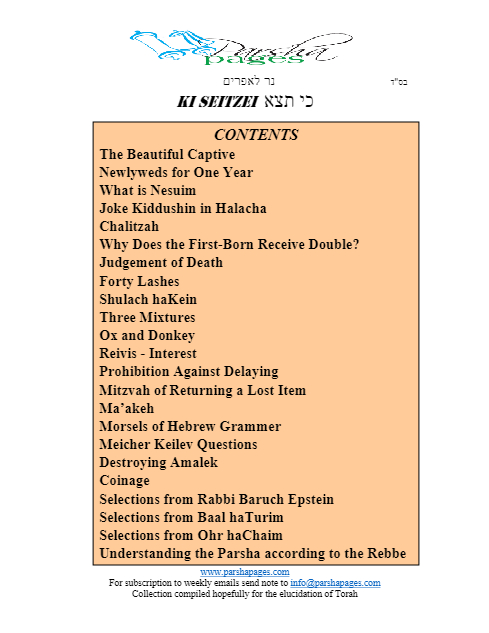
Prohibition Against Delaying
Parsha Pages | September 12, 2024
Print This Article
View Original PDF

Prohibition Against Delaying

Parsha Pages | June 27, 2025

Rosh HaShana 4a-6b, Nedarim 3 discusses the commandment of bal te’acher “not to delay.” The Gemara derives that the Torah specifies that it is prohibited to delay fulfillment of one’s vow beyond a certain period. This prohibition applies not only to vowed sacrificial offerings, but also to several other obligations.

What is the source from Torah?

כִּי-תִּדֹּר נֶדֶר לַה 'אֱלֹקֶ יךָ לֹּא תְאַחֵר לְשַלְמוֹ כִּי-דָרֹּש יִּדְרְ שֶנּוּ ה 'אֱלֹקֶיךָ מֵעִּמָךְ וְהָיָה בְךָ חֵטְא: (דברים כג, כב )
“When you make a vow to HaShem, your G-d, you should not delay in paying it since HaShem, your G-d will be sure to exact it from you, and you will have sinned.”

This verse teaches that a person who accepts upon himself to bring a sacrifice cannot postpone fulfilling his promise. This mitzvah, referred to by the Sages as bal te’acher - "do not be late [in bringing your sacrifice]" - is followed by another pasuk (Devarim 23,24), that emphasizes the need for one to fulfill all promises that one makes as a positive commandment, including - according to Chaza”l - promises made to charity.

A Nedar (a vowed offering) and a Nedavah (donated offering) are subject to the prohibition against delaying.

כִּי-תִּדֹּר נֶדֶר
The following are included since they are given completely to HaShem with no part given even to the Kohanim: Value vows, erech vows, cherem vows and consecrations.
לַה 'אֱלֹקֶיךָ
Liable for delaying these items and not for delaying its substitute.
לֹּא תְאַחֵר לְשַלְמוֹ
There words refer to obligatory offerings which HaShem “demands of you” such as: chatos, ashamos, olos, shelamim.
כִּי-דָרֹּש יִּדְרְ שֶנּוּ
Words are extra, thus, available to include commitments that the Torah mentions elsewhere with the Divine name, such as: Tzedakah, maaser, and bechor offering.
ה 'אֱלֹקֶיךָ
Since referred to elsewhere with the same word with respect to the poor, also included are: Leket, Peah and Shichchah.
מֵעִּמָךְ
The sin will be only in the person if delayed and not in the offering (which does not become invalid).
וְהָיָה בְךָ חֵטְא

How long does a person have to carry out his/her obligations before being held liable for bal te’acher?

Regarding sacrifices, the generally accepted position is that a person has a full cycle of holidays – Pesach, Shavuos, and Sukkos - to bring the commitments that were made to the Bais haMikdash. Regarding charity, however, Rava teaches that it must be given immediately after the commitment is made. He explains that, unlike a sacrifice that must be brought to the Temple, poor people are always accessible.

Several positions exist in understanding Rava's teaching.

  • According to the Ri”f, the Ritva and others, Rava's halacha only applies when there are, in fact, poor people located in the vicinity. If no poor people were immediately available, the person would not have to search for a poor person until three festivals had passed.
  • The Rashba argues that there is no difference whether a deserving poor person is available or not. In either case there is an immediate mitzvas aseh - a positive commandment - to find a poor person who will accept the charity. Nevertheless, no transgression of bal te’acher, the negative commandment, will take place until after the cycle of holidays has passed. Rava's statement that poor people are readily available merely explains why the mitzvas aseh is immediately incumbent upon him.
  • The Ran explains that the year-long extension allowed to the person who takes upon himself the obligation of a korban only makes sense in the context of sacrifices that will be brought to the Temple, usually during one of the pilgrimage holidays. Rava teaches that this concept has no place in a discussion about charity; therefore, Tzedakah must be given immediately, and someone who does not do so both misses his opportunity to fulfill the positive command and also transgresses bal te’acher.
Rosh HaShana 4a-6b, Nedarim 3 discusses the commandment of bal te’acher “not to delay.” The Gemara derives that the Torah specifies that it is prohibited to delay fulfillment of one’s vow beyond a certain period. This prohibition applies not only to vowed sacrificial offerings, but also to several other obligations.

What is the source from Torah?

כִּי-תִּדֹּר נֶדֶר לַה 'אֱלֹקֶ יךָ לֹּא תְאַחֵר לְשַלְמוֹ כִּי-דָרֹּש יִּדְרְ שֶנּוּ ה 'אֱלֹקֶיךָ מֵעִּמָךְ וְהָיָה בְךָ חֵטְא: (דברים כג, כב )
“When you make a vow to HaShem, your G-d, you should not delay in paying it since HaShem, your G-d will be sure to exact it from you, and you will have sinned.”

This verse teaches that a person who accepts upon himself to bring a sacrifice cannot postpone fulfilling his promise. This mitzvah, referred to by the Sages as bal te’acher - "do not be late [in bringing your sacrifice]" - is followed by another pasuk (Devarim 23,24), that emphasizes the need for one to fulfill all promises that one makes as a positive commandment, including - according to Chaza”l - promises made to charity.

A Nedar (a vowed offering) and a Nedavah (donated offering) are subject to the prohibition against delaying.

כִּי-תִּדֹּר נֶדֶר
The following are included since they are given completely to HaShem with no part given even to the Kohanim: Value vows, erech vows, cherem vows and consecrations.
לַה 'אֱלֹקֶיךָ
Liable for delaying these items and not for delaying its substitute.
לֹּא תְאַחֵר לְשַלְמוֹ
There words refer to obligatory offerings which HaShem “demands of you” such as: chatos, ashamos, olos, shelamim.
כִּי-דָרֹּש יִּדְרְ שֶנּוּ
Words are extra, thus, available to include commitments that the Torah mentions elsewhere with the Divine name, such as: Tzedakah, maaser, and bechor offering.
ה 'אֱלֹקֶיךָ
Since referred to elsewhere with the same word with respect to the poor, also included are: Leket, Peah and Shichchah.
מֵעִּמָךְ
The sin will be only in the person if delayed and not in the offering (which does not become invalid).
וְהָיָה בְךָ חֵטְא

How long does a person have to carry out his/her obligations before being held liable for bal te’acher?

Regarding sacrifices, the generally accepted position is that a person has a full cycle of holidays – Pesach, Shavuos, and Sukkos - to bring the commitments that were made to the Bais haMikdash. Regarding charity, however, Rava teaches that it must be given immediately after the commitment is made. He explains that, unlike a sacrifice that must be brought to the Temple, poor people are always accessible.

Several positions exist in understanding Rava's teaching.

  • According to the Ri”f, the Ritva and others, Rava's halacha only applies when there are, in fact, poor people located in the vicinity. If no poor people were immediately available, the person would not have to search for a poor person until three festivals had passed.
  • The Rashba argues that there is no difference whether a deserving poor person is available or not. In either case there is an immediate mitzvas aseh - a positive commandment - to find a poor person who will accept the charity. Nevertheless, no transgression of bal te’acher, the negative commandment, will take place until after the cycle of holidays has passed. Rava's statement that poor people are readily available merely explains why the mitzvas aseh is immediately incumbent upon him.
  • The Ran explains that the year-long extension allowed to the person who takes upon himself the obligation of a korban only makes sense in the context of sacrifices that will be brought to the Temple, usually during one of the pilgrimage holidays. Rava teaches that this concept has no place in a discussion about charity; therefore, Tzedakah must be given immediately, and someone who does not do so both misses his opportunity to fulfill the positive command and also transgresses bal te’acher.
PDF Preview