A Memorial Museum or Days of Light
In the ancient village on the border between France and Germany stood a rare, old synagogue from two hundred years ago. It served as a station for Torah giants en route to the Holy Land. In the shul one could find the very table upon which the Rambam learned, the oven on which the Ibn Ezra slept, and the pillar where Rabbenu Bachyai poured out his heart in prayer. All this aside from the inner purity and earnest desires of the community members and the rabbanim of the village, which produced tremendously pure and holy tzaddikim.
The bitter day came when enemies of Yisrael burst into the shul, destroyed and pillaged and burned. In their arrogance, they then placed a despicable idol upon the ruins of the holy site.
The shul stood desolate for a time, until the gabba’im dared to go in to check the premises. Their eyes saw black. What to do? How do you start all over again?
If I were there at the time, I would have suggested transforming the place into a memorial museum. What a pity that we lost out on the auspiciousness of the site and the giants who stood and prayed there; but one has to accept the painful reality. It would also be appropriate to examine one’s deeds and to establish a day of prayer for all generations in memory of the pogrom.
But our Sages felt otherwise, and under much more painful circumstances – when the Mizbeichos were destroyed, the golden Menorah was stolen, and everything in the Beis Hamikdash was defiled. Yidden returned from the war on the 25th of Kislev, and their eyes saw black. It would seem that the most appropriate thing to do under the circumstances would be to establish a fast day, a day of crying and eulogy.
But our Sages taught us: No! This is not how we view the situation. If something so sad happened, then certainly something good must be hidden there, something that had not been there before.
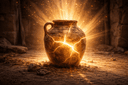
Everyone started searching. They believed that they would find something good. They saw the debris, the broken pieces, and they stubbornly insisted on looking until they found the jug of pure oil. Everything in the Beis Hamikdash had been made impure, so they lit a copper Menorah b’chatzros kodshecha.
Once again, they might have become depressed. What have we found? Oil for only one day! Anyone could have been broken by this and despaired, but again, they didn’t break down. We do what Hashem wants, with joy; we light with what there is.
Hakadosh Baruch Hu then showed Am Yisrael: Were you searching for light? You found it! The oil in the Menorah will burn for eight days, and from these days, the days of Chanukah will be established for all time – days that are all light, days of praise and thanksgiving, miracles and wonders.
This light teaches us how a Jew is meant to look at everything, at every challenge, every obstacle. We know that there is hidden light here, and we search for it.
And when we search — we find.
Gut Shabbat
Pinchas Shefer
Parshas Mikeitz -Vayigash 5784 ■ Issue 154
Related Articles