In the Heart of a child
“So Pharaoh sent and summoned Yosef, and they rushed him from the dungeon...” (41:14)
Little children find it difficult to do things alone. They need constant help and encouragement. They can be bold when a parent is near, but when out of sight, tears replace bravado until, once again, the child feels the parental hand that comforts.
Our first steps as babies are greeted by parental glee; hands reach out and guide our every step. When we falter, Mom and Dad are there to stop the fall.
A day comes, however, when we stumble and fall. Tears fill our eyes, dismay fills our hearts. We look around: "Mommy? Daddy? Are you there?"
Only when our parents let us fall can we learn to walk. Only when our parents let us become adults can we stop being children. If, as parents, we never let our children fall, they will never learn to stand by themselves. Everything has its season, of course, and a child challenged beyond his capabilities may lose hope in himself, but a challenge at the right time is an opportunity to grow and discover who we really are.
Chanukah celebrates two events: The defeat of the vast Seleucid Greek army by a handful of Jews and the miracle of the one flask of pure oil that burned for eight days. At first glance, the defeat of our oppressors seems the greater cause for celebration; yet our focus rests on the miracle of the lights. Why?
Chanukah occurred after the last of the Prophets - Chagai, Zecharia and Malachi - passed away. Hashem no longer communicated directly with humans. We were suddenly like children alone in the dark. From the darkness, we would need to forge our connection with Hashem in the furnace of our own hearts. We needed to grow up.
But growing up is difficult. "Mommy, Daddy...Are you still there?" The heart can grow a little cold with longing. We needed a little help.
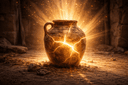
The joy of Chanukah is not so much because we got what we prayed for - the defeat of our oppressors - but that our prayers were answered...with a miracle. From the center of a world where spiritual decay had tainted the holiest places, light burst forth; Hashem was still there.
That little flask would burn and burn, not just for eight days but for millennia. We would take those lights with us into the long dark night of exile and we would know that Hashem is there with us, even in the darkest of nights.
More Jews observe Chanukah than any other Jewish festival. Those lights burned for more than just eight days. They’ve been burning for over two thousand years. However far one may be from their Jewish roots, a menorah still burns in their window. A little spark lingers on; a holy spark hidden in the heart of a child.
Related Articles