Levels of Performing the Mitzvah of Chanukah Lights
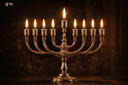
There are three levels of how one can perform the mitzvah of Chanukah lecht. (1) וביתו איש נר, which means one candle per home. This is the simplest level. (2) מהדרין, those who seek to beautify the mitzvah, light one candle for each member of the household. (3) המהדרין מן מהדרין, those who perform mitzvos in the best manner light lamps in accordance with the day of Chanukah.
The Sfas Emes (5646) explains, "This demonstrates that the days of Chanukah shine on all types of people of Bnei Yisrael." Some people are on low levels, and they keep the mitzvah in its simplest manner, and there are others who perform the mitzvah in more beautiful ways. The laws of Chanukah discuss the laws for all types and levels of Yidden because Chanukah is for everyone, to elevate them to higher levels.
The Magan Avraham (670) teaches "Impoverished youths (נערים) are accustomed to go door to door on Chanukah." The Sifsei Tzaddik zy'a explains that נערים, youths, hint to the people who are המצות מן וריקם מנוער, empty from mitzvos, chas v'shalom. They are poor in wisdom (בדעת עני). They are מבחוץ, outside of the kedushah. But on Chanukah, they can come close to kedushah. At this time, פתח נפתח, a door opens in heaven to accept them. This is why there is a custom of הפתחים על יסובבו, that they go around the doorways." They go around the doorways of heaven, which are opened to accept their teshuvah.
When one can’t light Chanukah lecht, but he sees someone else's lecht, there is a brachah that he must say (see Shulchan Aruch 676:3). This hints at people who are distant from the kedushah – because one sees from afar – he also has a way to connect to the mitzvah of Chanukah lecht and to grow from that level.
People call Chanukah וואכן די אין טוב יום, yom tov on a weekday because it is like a weekday, but it is a holiday. Work is permitted on Chanukah, and we wear regular clothes. The expression also hints at the potential of Chanukah. The holiday is for people who are weekday-like people, people who aren't perfect in their actions. Chanukah is for them, to raise them.
The Gemara (Shabbos 22.) says that if one lights the Chanukah lecht above twenty amos, it is pasul because people don't see it. Nachal Yitzchak of Zutchke zt'l explains that the Gemara is hinting that if a person feels that Chanukah is too high and exalted for him and says that he doesn't see it and it doesn’t relate to him, that is a problem. A person should know that Chanukah lecht is for him. It elevates him from the level he is on to higher levels.

Related Articles