Haneiros Halalu
Lighting The Neiros According to Sefer Kedushas Levi:
Sefer Siach Zekeinim writes the following in the name of the Makava Rov of Kiryas Ata shlita, who heard it from the Rachamstrivke Rebbe (of Eretz Yisroel) zy”a:
One year before Chanukah, someone brought a copy of Sefer Kedushas Levi to Hagaon Rav Isser Zalman Meltzer zt”l. When the man who had brought the sefer came a while later to take it back, Rav Meltzer told him, “I have lit Chanukah licht for many years and I have read the Megillah on Purim, but I have never felt the essence of the mitzvos until I opened this sefer!”
From then on, Rav Meltzer would ask for this sefer every year.
The Benefit of the Neiros Even for Simple People:
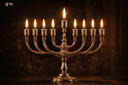
One shouldn’t think that the holiness of Chanukah is reserved for great, lofty individuals and cannot be experienced by simple people, who are unable to comprehend the holy aspects behind the mitzvah. This is simply not true. Every Jew who lights the menorah can reach exalted levels.
In Sefer Raza D’Uvdah, my ancestor, Rav Eliezer Zev of Kretchnif zy”a, describes how Shabbos Chanukah looked in the home of his father, Rav Meir’l of Kretchnif zy”a. Many guests joined him for Shabbos Chanukah, but olive oil was not easy to obtain at the time; therefore, many people lit candles on the windowsill of the bais medrash. This made the bais medrash very hot, which caused the candles to burn quicker, and for them to burn out before burning the required amount of time.
When Rav Eliezer Zev saw this, he suggested to his father that perhaps it would be better for everyone to chip in a prutah and be yotzi with one person lighting an oil menorah for all of them. His father replied, “Hadlakah oseh mitzvah. Lighting the neiros is a mitzvah. When every Jew, including the simple people, make the brachos and light the neiros, the Heavenly angels tremble. When the damaging angels see the black spots in the bais medrash that are left from the candles that were lit there, they run away in fear and say that they will leave the people in this place alone until Pesach.”
In this vein, the Chidushei Harim zy”a related that a group of chasidim once came to the Chozeh of Lublin zy”a on Chanukah with a kvitel in which they wrote that there was a moser in their town who was causing them a lot of harm. They asked the Rebbe to cause this man’s downfall.
When the Rebbe read this kvitel, he said, “He is shining in all worlds!”
No one could understand this until they found out that at the time that the Rebbe read the kvitel, this man was lighting Chanukah neiros.
Experiencing the Miracles Today:
There is a widespread minhag to sit and look at the neiros after lighting the menorah.
Sefer Yitav Lev Panim writes that the reason for this is to connect with the miracles and wonders, as looking at something has a power of connecting to its influence.
The Holiness of the Neiros:
Sefer Kav Hayashar (Perek 96) writes that every ner that is kindled for a mitzvah contains incredible, unlimited holiness. If we would merit ruach hakodesh, the hadlakas neiros would bring us to profound levels of seeing the future because a ner of a mitzvah contains prophecy like a navi who speaks the word of Hashem.
Uplifting the Neiros:
Sefer M’Zekeinim Esbonen quotes Rav Yisroel Shimon Kostelonitz zt”l as saying: I remember the Chanukah licht by the Bais Avrohom zy”a. It was an amazing sight that no words could describe. A long time before the hadlakah, everyone was standing, immersed in exceptional enthusiasm and fervor. When the Rebbe came to the doorway of the bais knesses, a charge went through the crowd like electricity. Everyone pushed to get a closer look.
The Rebbe looked like the Kohen Gadol as he lit the menorah. After the hadlakah, R’ Itche Gunitzer began to sing. Standing at his side was R’ Yitzchok Aharon, who accompanied him in song. It was something to see!
After the Rebbe lit the neiros and went out to the street, he gazed upon the people who were walking around in the street as if he were looking at clueless people who didn’t know what was going on at all.
This reminded me of a story that I once heard about Rav Yechiel of Mush zy”a. One Shabbos, the Kobriner Rebbe zy”a was with him in the bais knesses and he davened with great pleasantness. In the middle of davening, Rav Yechiel went out to the street and saw people walking around. He said to them, “Why are you just wandering around? Come inside and you will see how beautifully we serve Hashem here.”
Arousing Emunah:
Rav Shmuel Shmaryahu of Ostrovtza zy”a (Sefer Zichron Shmuel) writes as follows:
The Gemara says (Shabbos 21B): “Ner Chanukah is a ner for a man and his household.” He explains this to mean that the neiros are meant to arouse the heart of a man and all those around him. The main point of the hadlakah is to light a fire of emunah within every Jew and remind us that Hashem’s kindness is always with us.
We recite that the Yevanim gathered against, broke holes in the walls of our tower, and made all of the oil impure. But from the remaining jugs, a miracle arose for “the roses”. This means that the Greeks wanted to destroy us. They made holes in the walls of “the tower of Dovid” and tried to create impurity in the chachmei Yisroel, who are compared to oil.
But Hashem performed a miracle with “the remaining jugs of oil.” This refers to the spark of emunah that always exists within each Jew. Through this spark, Hashem performed a miracle for “the shoshanim”, i.e., Klal Yisroel, who are compared to a rose. He caused this emunah to spread to the heart of every Jew.
The Chashmonaim caused this miracle to occur to Yidden in every generation. During Chanukah, everyone can come to serve Hashem with full emunah.
He thus further explains the Gemara to mean that the ner of Chanukah is for a “man” – i.e., Hashem – “and His household – i.e., Klal Yisroel. He puts this fire within each of us to be aroused to serve Him.
Lighting Neiros Under the Nazis:
The following story involving my great-grandfather, Rav Tzvi Hirsch of Kretchnif zy”a, which occurred 80 years ago in a Nazi death camp, was printed in a certain newspaper:
The paper tells the story of an elderly Jew named R’ Shalom Ungarischer of Bnei Brak, who is originally from Lithuania and whose family had no connection to chasidus. While he still has no ties to chasidus, he went every year to attend the hadlakos neiros of the Kretchnifer Rebbe zy”a, and he remained at the hadlakah from beginning to end. People wondered about this. Why did this Litvisher Yid come to the Rebbe’s hadlakah every year?
One year, someone asked him about this, and he told him his story. He related:
I was with the Rebbe in a Nazi camp. I was an expert electrician and, therefore, the Nazis ym”sh gave me the job of camp electrician. I was in the same barracks as the Rebbe and drew close to him, even though I am a full-fledged Litvack.
One day, the Red Cross visited the camp and gave each prisoner a few supplies, including a piece of margarine. When the Rebbe saw the margarine, his face lit up. He said, “Gevaldig! We will be able to light Chanukah licht!”
I told the Rebbe that it was important for him to eat the margarine because the body needs a little fat, and he replied, “The neshama also needs nutrition”, and he refused to eat it.
On the first night of Chanukah, we arrived at the barracks very late, after a full day of labor, and the Rebbe began to pace back and forth, reciting the “L’shem Yichud” with the Kretchinfer nusach, with much passion and enthusiasm. He then placed a bit of margarine in a bottle cap, twined together a few strings to make a wick, loudly said the bracha, and lit the ner. He then sang all of the traditional songs “with the Kretchnifer feeling”.
Suddenly, the door opened and a Nazi guard rushed in. He screamed, “Who is singing like he thinks he is at a concert?”
When he saw the fire that the Rebbe had lit, he hit him in the stomach with his gun, knocking him to the ground. He then walked out while still screaming. With much difficulty, the Rebbe revived himself.
The next day, the Rebbe lit the neiros again. As he was singing the last song, the same Nazi ran in. When he saw the two lights, he hit the Rebbe in the stomach twice, knocking him unconscious. On the third day, he hit the Rebbe three times...
The other inmates begged the Rebbe not to light neiros again the next night but he told them, “All the rasha is doing is hitting me. It’s worth it to get hit in order to fulfill this mitzvah.”
When the Nazi came in the next day, he got so angry that he threw the Rebbe to the ground and hit him three times in the head. The Rebbe lay unconscious until midnight, when he finally got up.
The next day, the Rebbe said, “I don’t think I can survive any more blows. But the Rambam writes that in a time of shmad, one must risk his life to do any mitzvah. But I will light as early as I can and I won’t spend a lot of time singing.”
Surprisingly, the Nazi came in early that day and saw the Rebbe lighting the neiros. He was flabbergasted and said, “I have a lot of respect for you, rabbi. I see that you are willing to die for your religion. I admire you for that!”
He walked out of the barracks and did not return for the rest of Chanukah. The Rebbe lit the neiros on the remaining nights with much joy, using up the rest of the margarine.
The old man concluded, “After witnessing this, isn’t it appropriate for me to come here every year to see the tzadik light the Chanukah licht?”