Light Up the Darkness
Nefesh Shimshon | December 27, 2024
Print This Article
View Original PDF

Light Up the Darkness

Nefesh Shimshon | June 27, 2025

The Light of a Holiday

The original light, with which Hashem created the world, enabled Adam Harishon to see from one end of the world to the other. However, Hashem knew that unworthy generations would later come along, so He hid this light away, to prevent resha’im from using it. He hid it away for the tzaddikim of future generations.

So say Chazal. Where did Hashem hide this light? It says in Seforim Hakedoshim that Hashem hid this light in the Jewish holidays of the year. When a chag comes, the light bursts forth and illuminates a person’s soul. This is why the holidays are called Yamim Tovim. It is because this hidden light is called tov, “good,” as it says:

וירא אלקים את האור כי טוב – G-d saw the light that it is good.

During the ordinary days of the year, this light is hidden in the Torah, as the Midrash says in the beginning of Bereishis Rabbah.

There are a lot of stories about Gedolei Yisrael who, thanks to their Torah erudition, had eyes that saw from one end of the world to the other. This is because someone who delves deeply into the Torah Hakedoshah finds in it the same hidden light by which Adam Harishon saw around the world.

Now, most Jewish holidays have a masechta devoted to it and its halachos. Chazal say:

Moshe enacted for the Jewish people that they should ask and expound in matters pertaining to the day: The laws of Pesach on Pesach, the laws of Shavu’os on Shavu’os and the laws of Sukkos on Sukkos.

This is because the “lifeblood,” the essence, of the holiday is hidden in the maseches that speaks about it. The main light of the holiday is in its Torah teachings.

Since the avodah and the wondrous spiritual influences of each holiday are to be found in the masechta pertinent to it, almost every holiday has its own maseches. Pesach has Pesachim, Sukkos has Sukkah, Rosh Hashanah has Rosh Hashanah, Yom Kippur has Yoma, Purim has Megilah. And Shavu’os is connected in some ways to Maseches Shavu’os. I don’t know the exact source for this last one, but it is a fact that Maseches Shavu’os is printed in the machzorim for the holiday of Shavu’os. Apparently, the reason is that the foundation of the Giving of the Torah at Sinai is the oath, the shevuah, that the Jewish people took there to keep the Torah.

Chazal composed a masechta for all these holidays. For all of them, but not for Chanukah! We do find a section about kindling the Chanukah lights in chapter Bameh Madlikin, which is the second chapter of Maseches Shabbos, and speaks about Shabbos candles. This implies that the Torah teachings pertinent to Chanukah are part of the Torah teachings of Shabbos. Chanukah is incorporated into Shabbos.

This shows the deep connection between Shabbos candles and Chanukah candles. If we grasp the deeper meaning of Shabbos candles, we can thereby understand what Chanukah is all about. And we can also appreciate the difference between them.

Shabbos Illuminates

So let’s discuss Shabbos candles.

The peak of light and kedushah on Shabbos is the Minchah prayer. This is the time described in Torah sources as Raava d’raavin, it is when Hashem’s innermost Will expresses itself. But we don’t start there. The entry gate to the holiness of Shabbos is kindling the Shabbos candles.

Shabbos candles are indeed an exceptionally great and precious mitzvah. Chazal say that if a person has limited means, and he is forced to choose between Shabbos candles and Chanukah candles, Shabbos candles come first. They are top priority. This is because Shabbos candles enhance shalom bayis by illuminating the home. And Chazal saw this as even more important than kindling Chanukah candles, which publicize miracles, for which reason they come before Kiddush over wine, despite the fact that Kiddush is essentially a Biblical mitzvah.

Why do Chanukah candles come before Kiddush in importance and priority? Because publicizing the Chanukah miracle is a demonstration of our faith in Hashem, in His Hashgachah and His closeness to us. This is basic to the Jewish belief. It is so important that, ostensibly, it should be the greatest thing of all. After all, the Ramban said:

The purpose of all the mitzvos is that we should believe in our G-d... and this is the purpose of all Creation.

Yet, Shabbos candles take precedence over Chanukah candles. Let’s understand why.

Shabbos, which in Hebrew is שבת, comes from the verb שביתה, meaning “cessation.” When Shabbos comes, everything ceases, everything fades away. During the six days of the workweek, there is the regular world, and it follows the natural order of things. (As the Chazon Ish explains, “That which we call ‘natural’ is the more constant Will of He Who brings everything into existence.”)

But when Shabbos commences, there is a change in the way the world runs. Everything ceases, and the only thing left in the world is the honor and glory of Hashem. The true nature of Shabbos is Hashem’s Oneness.

This is why specifically melachah is forbidden on Shabbos. There is no prohibition on working hard. It is likely that one may carry heavy tables from one place to another on Shabbos. (Only according to the Ramban would this be forbidden.) The thing we may not do on Shabbos is melachah, which means the 39 types of creative work that were performed in the Mishkan. They entail creating things.

What’s wrong with creating things?

Any act, any melachah, by which the world is built up, is forbidden on Shabbos. Because Shabbos is a time when everything ceases to exist, so to speak, and there is nothing in the world but Hakadosh Baruch Hu.

Now let’s understand what makes everything cease to exist.

The truth is that this is not a question at all, because that’s how Hashem created things to be: ששת ימים תעבוד ועשית כל מלאכתך ויום השביעי שבת לה' אלוקיך – “Six days you shall work and do all your labor, and the seventh day is Shabbos for Hashem your G-d.”

But practically speaking, we see that Shabbos commences by means of lighting Shabbos candles.

What does this signify?

When Shabbos leaves, we recite Havdalah, in which we say המבדיל בין קודש לחול – “He differentiates between holy and mundane.” Shabbos is the holy, and the weeks are the mundane. Shabbos is the opposite of the weekdays. Shabbos is light, and the weekdays are darkness, as we go on to say in Havdalah. And this is actually the difference between this world and the World to Come.

ואמונתך בלילות – “And Your faith in nights.” This refers to this world, which is compared to the night, as it says, תשית חשך ויהי לילה בו תרמוש כל חיתו יער – “You place darkness, and it becomes night, in which all the animals of the forest creep around.”

Now, is it true that all the animals of the forest creep around only at night, and at day, they do not creep around at all? Rather, this verse comes to teach us that this world is compared to night.

Weekdays in this world are days of darkness. Shabbos Kodesh is like Olam Haba. It is a day of light. This is why we kindle lights when Shabbos comes in.

What’s the difference between light and dark? It’s not that in the light, things exist, and in the dark, they don’t. Even in the dark, everything is still there, you just don’t seem them because the darkness hides them. It causes a lacking in the person’s faculty of sight, not a lacking in the object itself.

Let’s say a person goes into the beis midrash on a dark night. There is not even moonlight. And the electricity is out. He gropes around by feeling the walls, and he can’t find the books he came in to look for. It’s not because the books flew out the window and are gone. The books are right there in front of his eyes, just like in the middle of the day. But he can’t see them. The problem is with him, not with the books.

The truth that will be revealed in Olam Haba is right here in this world, in front of our eyes. קדוש קדוש קדוש ה' צבאות מלוא כל הארץ כבודו – “Hashem of H-sts is holy, holy, holy. The whole world is full of His glory.” That’s right. The whole world is full of Hashem’s glory, it’s right in front of our eyes, but we have difficulty seeing it, because of the great darkness of this world. But in Olam Haba, the truth reveals itself to our eyes, because it is a world of light, and we will see the Oneness of Hashem.

The whole nature of this world is to cover over the truth that is actually right here in front of us the whole time.

Shabbos commences with kindling lights. When the candles are lit, everything is suddenly illuminated, and we can perceive the true reality that is in front of our eyes. This changes the whole way we view ourselves and the world around us.

Let’s say a Jewish farmer is sitting on his front lawn on Shabbos afternoon, perusing a sefer. Along comes a non-Jew, and, upon noticing the Jew sitting there in total tranquility, shouts out in an alarmed voice, “Hey there, your whole tomato field is drying up because of the heat! Go turn on the irrigation quick, or the whole crop is toast!!”

What does the Jew reply? Well, he could say, “I am willing to lose everything I have in order not to desecrate the Sabbath day.” This would be an appropriate response for someone who doesn’t really have a proper feeling for what Shabbos is all about.

A better response would be, “Why should I trouble myself to go out to the field and turn on the irrigation, in order to rescue my whole livelihood, when Hashem can send me my parnassah straight to my home without any effort on my part? I don’t need to sweat and labor in the field in order to make a living.”

But wait, after Shabbos is over, something changes. The farmer Jew rushes out to his field early Sunday morning, despite his advanced age, and toils and sweats out there to take care of his tomato plantation. Why? Because Shabbos is a time of light. On Shabbos, the reality of the world is different, and the way we look at this reality is different. On Shabbos, it’s crazy to go to work. In fact, it’s forbidden! There is nothing but Hakadosh Baruch Hu, and He takes care of everything for us. But the reality of the weekdays is different. Work isn’t crazy, and in fact, it is permitted. We live in the natural world.

Chanukah’s Special Light

As we said, a Jew is gripped by a lofty feeling and outlook on Shabbos. But as soon as he recites Havdalah on Motzaei Shabbos, it’s over. He is back down in the natural world.

Kindling the Chanukah candles brings the light and kedushah of Shabbos into the mundane workdays.

How so?

The Gemara states that the Shechinah never descended lower than ten tefachim from the ground. This is because ten tefachim defines an independent domain, as we see in Hilchos Shabbos. A height of ten tefachim thus constitutes a division, a separation. Therefore, the Shechinah never descended all the way into this world. There was always a mechitzah of ten tefachim.

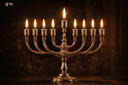
But the Chanukah Menorah is to be placed next to the entrance to the public domain, lower than ten tefachim, as stated in Halachah. This position shows the special purpose of the light of Chanukah. It illuminates this world. It brings the reality and the outlook of Shabbos into the mundanity of the workweek.

Chanukah is not a special, uplifted domain unto itself. Thus it does not have its own dedicated masechta. It brings the reality of Hashem’s absolute Oneness down to the ground, into the public domain, into the workweek, into this mundane world.

The Light of a Holiday

The original light, with which Hashem created the world, enabled Adam Harishon to see from one end of the world to the other. However, Hashem knew that unworthy generations would later come along, so He hid this light away, to prevent resha’im from using it. He hid it away for the tzaddikim of future generations.

So say Chazal. Where did Hashem hide this light? It says in Seforim Hakedoshim that Hashem hid this light in the Jewish holidays of the year. When a chag comes, the light bursts forth and illuminates a person’s soul. This is why the holidays are called Yamim Tovim. It is because this hidden light is called tov, “good,” as it says:

וירא אלקים את האור כי טוב – G-d saw the light that it is good.

During the ordinary days of the year, this light is hidden in the Torah, as the Midrash says in the beginning of Bereishis Rabbah.

There are a lot of stories about Gedolei Yisrael who, thanks to their Torah erudition, had eyes that saw from one end of the world to the other. This is because someone who delves deeply into the Torah Hakedoshah finds in it the same hidden light by which Adam Harishon saw around the world.

Now, most Jewish holidays have a masechta devoted to it and its halachos. Chazal say:

Moshe enacted for the Jewish people that they should ask and expound in matters pertaining to the day: The laws of Pesach on Pesach, the laws of Shavu’os on Shavu’os and the laws of Sukkos on Sukkos.

This is because the “lifeblood,” the essence, of the holiday is hidden in the maseches that speaks about it. The main light of the holiday is in its Torah teachings.

Since the avodah and the wondrous spiritual influences of each holiday are to be found in the masechta pertinent to it, almost every holiday has its own maseches. Pesach has Pesachim, Sukkos has Sukkah, Rosh Hashanah has Rosh Hashanah, Yom Kippur has Yoma, Purim has Megilah. And Shavu’os is connected in some ways to Maseches Shavu’os. I don’t know the exact source for this last one, but it is a fact that Maseches Shavu’os is printed in the machzorim for the holiday of Shavu’os. Apparently, the reason is that the foundation of the Giving of the Torah at Sinai is the oath, the shevuah, that the Jewish people took there to keep the Torah.

Chazal composed a masechta for all these holidays. For all of them, but not for Chanukah! We do find a section about kindling the Chanukah lights in chapter Bameh Madlikin, which is the second chapter of Maseches Shabbos, and speaks about Shabbos candles. This implies that the Torah teachings pertinent to Chanukah are part of the Torah teachings of Shabbos. Chanukah is incorporated into Shabbos.

This shows the deep connection between Shabbos candles and Chanukah candles. If we grasp the deeper meaning of Shabbos candles, we can thereby understand what Chanukah is all about. And we can also appreciate the difference between them.

Shabbos Illuminates

So let’s discuss Shabbos candles.

The peak of light and kedushah on Shabbos is the Minchah prayer. This is the time described in Torah sources as Raava d’raavin, it is when Hashem’s innermost Will expresses itself. But we don’t start there. The entry gate to the holiness of Shabbos is kindling the Shabbos candles.

Shabbos candles are indeed an exceptionally great and precious mitzvah. Chazal say that if a person has limited means, and he is forced to choose between Shabbos candles and Chanukah candles, Shabbos candles come first. They are top priority. This is because Shabbos candles enhance shalom bayis by illuminating the home. And Chazal saw this as even more important than kindling Chanukah candles, which publicize miracles, for which reason they come before Kiddush over wine, despite the fact that Kiddush is essentially a Biblical mitzvah.

Why do Chanukah candles come before Kiddush in importance and priority? Because publicizing the Chanukah miracle is a demonstration of our faith in Hashem, in His Hashgachah and His closeness to us. This is basic to the Jewish belief. It is so important that, ostensibly, it should be the greatest thing of all. After all, the Ramban said:

The purpose of all the mitzvos is that we should believe in our G-d... and this is the purpose of all Creation.

Yet, Shabbos candles take precedence over Chanukah candles. Let’s understand why.

Shabbos, which in Hebrew is שבת, comes from the verb שביתה, meaning “cessation.” When Shabbos comes, everything ceases, everything fades away. During the six days of the workweek, there is the regular world, and it follows the natural order of things. (As the Chazon Ish explains, “That which we call ‘natural’ is the more constant Will of He Who brings everything into existence.”)

But when Shabbos commences, there is a change in the way the world runs. Everything ceases, and the only thing left in the world is the honor and glory of Hashem. The true nature of Shabbos is Hashem’s Oneness.

This is why specifically melachah is forbidden on Shabbos. There is no prohibition on working hard. It is likely that one may carry heavy tables from one place to another on Shabbos. (Only according to the Ramban would this be forbidden.) The thing we may not do on Shabbos is melachah, which means the 39 types of creative work that were performed in the Mishkan. They entail creating things.

What’s wrong with creating things?

Any act, any melachah, by which the world is built up, is forbidden on Shabbos. Because Shabbos is a time when everything ceases to exist, so to speak, and there is nothing in the world but Hakadosh Baruch Hu.

Now let’s understand what makes everything cease to exist.

The truth is that this is not a question at all, because that’s how Hashem created things to be: ששת ימים תעבוד ועשית כל מלאכתך ויום השביעי שבת לה' אלוקיך – “Six days you shall work and do all your labor, and the seventh day is Shabbos for Hashem your G-d.”

But practically speaking, we see that Shabbos commences by means of lighting Shabbos candles.

What does this signify?

When Shabbos leaves, we recite Havdalah, in which we say המבדיל בין קודש לחול – “He differentiates between holy and mundane.” Shabbos is the holy, and the weeks are the mundane. Shabbos is the opposite of the weekdays. Shabbos is light, and the weekdays are darkness, as we go on to say in Havdalah. And this is actually the difference between this world and the World to Come.

ואמונתך בלילות – “And Your faith in nights.” This refers to this world, which is compared to the night, as it says, תשית חשך ויהי לילה בו תרמוש כל חיתו יער – “You place darkness, and it becomes night, in which all the animals of the forest creep around.”

Now, is it true that all the animals of the forest creep around only at night, and at day, they do not creep around at all? Rather, this verse comes to teach us that this world is compared to night.

Weekdays in this world are days of darkness. Shabbos Kodesh is like Olam Haba. It is a day of light. This is why we kindle lights when Shabbos comes in.

What’s the difference between light and dark? It’s not that in the light, things exist, and in the dark, they don’t. Even in the dark, everything is still there, you just don’t seem them because the darkness hides them. It causes a lacking in the person’s faculty of sight, not a lacking in the object itself.

Let’s say a person goes into the beis midrash on a dark night. There is not even moonlight. And the electricity is out. He gropes around by feeling the walls, and he can’t find the books he came in to look for. It’s not because the books flew out the window and are gone. The books are right there in front of his eyes, just like in the middle of the day. But he can’t see them. The problem is with him, not with the books.

The truth that will be revealed in Olam Haba is right here in this world, in front of our eyes. קדוש קדוש קדוש ה' צבאות מלוא כל הארץ כבודו – “Hashem of H-sts is holy, holy, holy. The whole world is full of His glory.” That’s right. The whole world is full of Hashem’s glory, it’s right in front of our eyes, but we have difficulty seeing it, because of the great darkness of this world. But in Olam Haba, the truth reveals itself to our eyes, because it is a world of light, and we will see the Oneness of Hashem.

The whole nature of this world is to cover over the truth that is actually right here in front of us the whole time.

Shabbos commences with kindling lights. When the candles are lit, everything is suddenly illuminated, and we can perceive the true reality that is in front of our eyes. This changes the whole way we view ourselves and the world around us.

Let’s say a Jewish farmer is sitting on his front lawn on Shabbos afternoon, perusing a sefer. Along comes a non-Jew, and, upon noticing the Jew sitting there in total tranquility, shouts out in an alarmed voice, “Hey there, your whole tomato field is drying up because of the heat! Go turn on the irrigation quick, or the whole crop is toast!!”

What does the Jew reply? Well, he could say, “I am willing to lose everything I have in order not to desecrate the Sabbath day.” This would be an appropriate response for someone who doesn’t really have a proper feeling for what Shabbos is all about.

A better response would be, “Why should I trouble myself to go out to the field and turn on the irrigation, in order to rescue my whole livelihood, when Hashem can send me my parnassah straight to my home without any effort on my part? I don’t need to sweat and labor in the field in order to make a living.”

But wait, after Shabbos is over, something changes. The farmer Jew rushes out to his field early Sunday morning, despite his advanced age, and toils and sweats out there to take care of his tomato plantation. Why? Because Shabbos is a time of light. On Shabbos, the reality of the world is different, and the way we look at this reality is different. On Shabbos, it’s crazy to go to work. In fact, it’s forbidden! There is nothing but Hakadosh Baruch Hu, and He takes care of everything for us. But the reality of the weekdays is different. Work isn’t crazy, and in fact, it is permitted. We live in the natural world.

Chanukah’s Special Light

As we said, a Jew is gripped by a lofty feeling and outlook on Shabbos. But as soon as he recites Havdalah on Motzaei Shabbos, it’s over. He is back down in the natural world.

Kindling the Chanukah candles brings the light and kedushah of Shabbos into the mundane workdays.

How so?

The Gemara states that the Shechinah never descended lower than ten tefachim from the ground. This is because ten tefachim defines an independent domain, as we see in Hilchos Shabbos. A height of ten tefachim thus constitutes a division, a separation. Therefore, the Shechinah never descended all the way into this world. There was always a mechitzah of ten tefachim.

But the Chanukah Menorah is to be placed next to the entrance to the public domain, lower than ten tefachim, as stated in Halachah. This position shows the special purpose of the light of Chanukah. It illuminates this world. It brings the reality and the outlook of Shabbos into the mundanity of the workweek.

Chanukah is not a special, uplifted domain unto itself. Thus it does not have its own dedicated masechta. It brings the reality of Hashem’s absolute Oneness down to the ground, into the public domain, into the workweek, into this mundane world.

PDF Preview