Permission for a Doctor to Heal
Parsha Pages | February 04, 2024
Print This Article
View Original PDF

Permission for a Doctor to Heal

Parsha Pages | December 10, 2025

The Gemara (Bava Kama 85b) derives from the extra phrase of "Rapo Yerapei" (Shmos 21:19) that a doctor is permitted to heal sick people.

(The subject matter that follows extends beyond the pursuit of health and healing. It is in no way all encompassing, nor does it come to a clear conclusion. Nevertheless, a panoramic view of the opinions of many Torah commentators will be presented.)

Why would one have thought that a doctor is not permitted to heal a sick person, had the Torah not included the extra word "Yerapei"? The verse refers to a situation in which one person causes bodily damage to another, and the victim needs to pay a doctor to heal him. It is obvious from the verse, even without the extra word, that a person who is harmed does not have to passively accept the fate of being wounded by the other person, but that he may go to a doctor to be healed.

(1) Rashi and Tosfos seem to understand that the Gemara learns from the extra word that even when a person becomes sick or bruised without human intervention, but rather as a Divine decree, a doctor still is permitted to heal him. One might have thought that this is a matter of faith in HaShem and that a person should trust that just as HaShem brought the illness upon him, HaShem will take it away. The verse teaches that it is not considered a lack of faith to turn to a doctor for healing (as long as he recognizes that it is ultimately HaShem who enables the doctor to heal him; Teshuvos haRashba 1:413. This is clearly stated in Divrei Hayomim 2:16:12, where King Assa was criticized for placing his trust in doctors only.).

(2) Tosfos gives a second answer. The extra word teaches us that a doctor may take payment for his services. He adds that this is indicated by the expression of the word form HEAL which will more likely be successful when done for pay rather than gratis, as the gemara says (ad loc), "A doctor for nothing (for free) is worth nothing." (See Shulchan Oruch Y.D. 336:1 regarding doctors' fees.)

(3) The Ramban (Vayikra 26:11) indeed writes that a person with a high level of trust in HaShem will not turn to a doctor but will ask HaShem to heal him directly.

(4) Chovas Hal'vovos in Shaar haBitochone chapter #4 writes that in any endeavor a person should pursue paths according to the laws of nature, to the best of his ability. However, he should not feel that his efforts have brought him success, but rather that his success comes solely from Hashem. This is true in matters of health and sickness as well.

(5) Rabbeinu Bachyei and the Ibn Ezra say that one should pursue the healing skills of a doctor when dealing with disorders which affect the surface of the body, as is the case in this chapter, where someone afflicted a wound upon another. However, when a person has an internal disorder, he should not turn to a doctor, but instead only rely on Hashem's healing powers. This is the complaint of the verse in Divrei Ha'yomim 2:16:12 about the King Assa, "Gam b'cholyo lo dorash es HaShem ki im b'rofim." King Asso had an internal health disorder. (The verse says that he had a sickness in his legs. Perhaps it was a vascular problem, which is considered internal.)

(6) The Rashba adds that this verse teaches that one is even permitted to use methods that are poorly understood and apparently superstitious in order to heal the sick, as long as they have been proven to be effective. As Abaye and Rava teach in Shabbos (67a), anything done in order to heal is not a transgression of "Darchei Emori" (following the idolatrous ways of the Emorites). Accordingly, the verse teaches that healing in such a manner does not resemble idolatry in any way.

(7) The Moshav Zekenim (Shemos 21:19) explains that this Derashah is similar to the Derashah of "Shale'ach Teshalach" (Devarim 22:7; see Bava Metzia 31a and Chulin 141a), which teaches that one must send away the mother bird "even 100 times." Here, too, the verse teaches that a doctor may attempt to heal many times if previous efforts failed. One might have thought that if previous efforts failed, that is a Divine sign that HaShem wants the person to remain ill or maimed. The verse teaches that the failed efforts should not be construed as such, and the doctor may repeatedly attempt to cure the person.

(8) Rabeinu Chanael (cited by the Moshav Zekenim) explains that one might have thought that a doctor is prohibited to heal with strong medications, because the medications might adversely or mortally affect the person being treated. The verse teaches that the doctor may practice medicine to the best of his ability, as long as he genuinely intends to help the person.

(9) Tosfos HaRosh in Berachos (60a) cites Rabeinu Yaakov of Orleans who explains that the verse permits a doctor to receive wages for his services. Normally, one is not permitted to take money for a Mitzvah, such as for returning a lost object (see Nedarim 38b). A doctor, however, is permitted to take wages for his services.

(10) Shulchan Oruch Y.D. 336:1 states, "The Torah has given permission to doctors to heal, and it is a mitzvah for them to do so. Healing goes under the ruling of saving one's life. If one refrains from healing, he is guilty of spilling blood (a murderer). This is true even if another doctor is available, since an ill person does not always merit to be healed through just any doctor.

(11) The GR"A is quoted in the Maa'seh Rav as saying that the gemara gives permission to a doctor, but does not state that an ill person should go to a doctor for healing. It is incumbent upon a person who is truly reliant upon Hashem to place his full trust in Hashem for complete recovery from a health disorder.

(12) The Baal Haturim on Shmos 15:26 and Rabbeinu Bachyei point out that the two words "v'ra*P*o y'ra*P*ei have the letter Pei with a dot in them, called Pei kashya, a hard Pei. When a doctor is the agent for healing, his modalities come with difficulties, harsh medicines, surgery, demanding therapies, (fees,) hence the Pei kashya. The verses in Tanach which mention Hashem's healing are almost always expressions of healing, "r'fu'ah," written with a Fei without a dot, called Fei rofo, a soft Fei. This indicates soft healing, not accompanied by difficulties. Examples are, "Ani Hashem ro*F*echo (Shmos 15:26), and "R*F*o'eini Hashem v'eiro*F*ei" (Yirmiyahu 17:14).

(13) The Chozeh of Lublin noted that a doctor only has permission to heal; he doesn’t have the right to despair or be pessimistic about someone’s chance of recovery since HaShem has the final say and can bring about seemingly “miracles.”
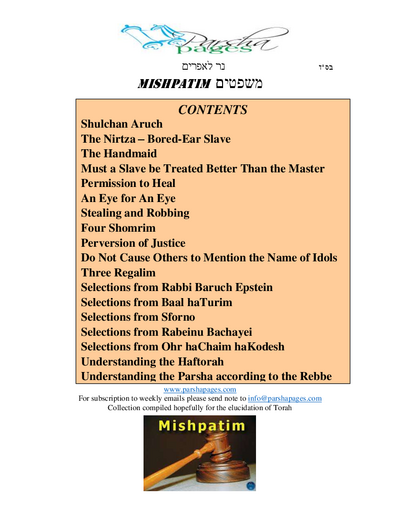

The Gemara (Bava Kama 85b) derives from the extra phrase of "Rapo Yerapei" (Shmos 21:19) that a doctor is permitted to heal sick people.

(The subject matter that follows extends beyond the pursuit of health and healing. It is in no way all encompassing, nor does it come to a clear conclusion. Nevertheless, a panoramic view of the opinions of many Torah commentators will be presented.)

Why would one have thought that a doctor is not permitted to heal a sick person, had the Torah not included the extra word "Yerapei"? The verse refers to a situation in which one person causes bodily damage to another, and the victim needs to pay a doctor to heal him. It is obvious from the verse, even without the extra word, that a person who is harmed does not have to passively accept the fate of being wounded by the other person, but that he may go to a doctor to be healed.

(1) Rashi and Tosfos seem to understand that the Gemara learns from the extra word that even when a person becomes sick or bruised without human intervention, but rather as a Divine decree, a doctor still is permitted to heal him. One might have thought that this is a matter of faith in HaShem and that a person should trust that just as HaShem brought the illness upon him, HaShem will take it away. The verse teaches that it is not considered a lack of faith to turn to a doctor for healing (as long as he recognizes that it is ultimately HaShem who enables the doctor to heal him; Teshuvos haRashba 1:413. This is clearly stated in Divrei Hayomim 2:16:12, where King Assa was criticized for placing his trust in doctors only.).

(2) Tosfos gives a second answer. The extra word teaches us that a doctor may take payment for his services. He adds that this is indicated by the expression of the word form HEAL which will more likely be successful when done for pay rather than gratis, as the gemara says (ad loc), "A doctor for nothing (for free) is worth nothing." (See Shulchan Oruch Y.D. 336:1 regarding doctors' fees.)

(3) The Ramban (Vayikra 26:11) indeed writes that a person with a high level of trust in HaShem will not turn to a doctor but will ask HaShem to heal him directly.

(4) Chovas Hal'vovos in Shaar haBitochone chapter #4 writes that in any endeavor a person should pursue paths according to the laws of nature, to the best of his ability. However, he should not feel that his efforts have brought him success, but rather that his success comes solely from Hashem. This is true in matters of health and sickness as well.

(5) Rabbeinu Bachyei and the Ibn Ezra say that one should pursue the healing skills of a doctor when dealing with disorders which affect the surface of the body, as is the case in this chapter, where someone afflicted a wound upon another. However, when a person has an internal disorder, he should not turn to a doctor, but instead only rely on Hashem's healing powers. This is the complaint of the verse in Divrei Ha'yomim 2:16:12 about the King Assa, "Gam b'cholyo lo dorash es HaShem ki im b'rofim." King Asso had an internal health disorder. (The verse says that he had a sickness in his legs. Perhaps it was a vascular problem, which is considered internal.)

(6) The Rashba adds that this verse teaches that one is even permitted to use methods that are poorly understood and apparently superstitious in order to heal the sick, as long as they have been proven to be effective. As Abaye and Rava teach in Shabbos (67a), anything done in order to heal is not a transgression of "Darchei Emori" (following the idolatrous ways of the Emorites). Accordingly, the verse teaches that healing in such a manner does not resemble idolatry in any way.

(7) The Moshav Zekenim (Shemos 21:19) explains that this Derashah is similar to the Derashah of "Shale'ach Teshalach" (Devarim 22:7; see Bava Metzia 31a and Chulin 141a), which teaches that one must send away the mother bird "even 100 times." Here, too, the verse teaches that a doctor may attempt to heal many times if previous efforts failed. One might have thought that if previous efforts failed, that is a Divine sign that HaShem wants the person to remain ill or maimed. The verse teaches that the failed efforts should not be construed as such, and the doctor may repeatedly attempt to cure the person.

(8) Rabeinu Chanael (cited by the Moshav Zekenim) explains that one might have thought that a doctor is prohibited to heal with strong medications, because the medications might adversely or mortally affect the person being treated. The verse teaches that the doctor may practice medicine to the best of his ability, as long as he genuinely intends to help the person.

(9) Tosfos HaRosh in Berachos (60a) cites Rabeinu Yaakov of Orleans who explains that the verse permits a doctor to receive wages for his services. Normally, one is not permitted to take money for a Mitzvah, such as for returning a lost object (see Nedarim 38b). A doctor, however, is permitted to take wages for his services.

(10) Shulchan Oruch Y.D. 336:1 states, "The Torah has given permission to doctors to heal, and it is a mitzvah for them to do so. Healing goes under the ruling of saving one's life. If one refrains from healing, he is guilty of spilling blood (a murderer). This is true even if another doctor is available, since an ill person does not always merit to be healed through just any doctor.

(11) The GR"A is quoted in the Maa'seh Rav as saying that the gemara gives permission to a doctor, but does not state that an ill person should go to a doctor for healing. It is incumbent upon a person who is truly reliant upon Hashem to place his full trust in Hashem for complete recovery from a health disorder.

(12) The Baal Haturim on Shmos 15:26 and Rabbeinu Bachyei point out that the two words "v'ra*P*o y'ra*P*ei have the letter Pei with a dot in them, called Pei kashya, a hard Pei. When a doctor is the agent for healing, his modalities come with difficulties, harsh medicines, surgery, demanding therapies, (fees,) hence the Pei kashya. The verses in Tanach which mention Hashem's healing are almost always expressions of healing, "r'fu'ah," written with a Fei without a dot, called Fei rofo, a soft Fei. This indicates soft healing, not accompanied by difficulties. Examples are, "Ani Hashem ro*F*echo (Shmos 15:26), and "R*F*o'eini Hashem v'eiro*F*ei" (Yirmiyahu 17:14).

(13) The Chozeh of Lublin noted that a doctor only has permission to heal; he doesn’t have the right to despair or be pessimistic about someone’s chance of recovery since HaShem has the final say and can bring about seemingly “miracles.”

PDF Preview

