Sound the Shofar on the Month When It Is Hidden for the Day of Our Festival
Zera Shimshon | September 17, 2025
Print This Article
View Original PDF

Sound the Shofar on the Month When It Is Hidden for the Day of Our Festival

Zera Shimshon | December 10, 2025

Sound the shofar on the month, when it is hidden for the day of our festival. (Tehillim 81:4)

The Midrash (Vayikra Rabbah 29:6) says that in the month in which the moon sets and which is a holiday for us, the shofar must be blown, and we must renew and improve our actions. And what month is that? It is Tishrei. Because Tishrei is the only month whose holiday — Rosh Hashanah — falls on the first day of the month.

Hashem wanted it to be so, to favor Israel in the judgment. Because [on Rosh Hashanah] the Satan accuses the Children of Israel, but Hashem tells him to bring witnesses. So, the Satan looks for the sun and brings him as a witness. Hashem asks the Satan, “And where is the other witness?” So, the Satan goes looking for the moon to bring her as a witness, but he does not find her because she is hidden that day. Thus, without two witnesses, the Satan cannot accuse, and Israel comes out of the trial innocent.

But this “trick” by Hakadosh Baruch Hu to get Israel off the hook could produce an unwanted reaction. A man might think that if he is going to get away with it in the end, then he can afford to do whatever sins he wants, and he won’t have to put in the effort to do teshuvah, because he isn’t afraid of coming out of the trial guilty.

That is why the verse first says to “sound the shofar on the month,” because it is known that the sound of the shofar introduces the fear of judgment in the hearts of men. This fear drives man to perform mitzvot and renew and improve his actions, straightening what he has crooked. And man should not fear the accusations of the Satan, because he will not be able to gather the two necessary witnesses, since the moon “is hidden for the day of our feast.” And indeed, that day is “the day of our festival,” because man has to trust that, through Hashem’s kindness, he will come out of the trial innocent. For this reason, the Sages said that for Rosh Hashanah a man should shave, cut his nails, and wear white, trusting that, by the goodness of Hashem, he will come out innocent.

(Zera Shimshon, parashat Emor, letter dalet)
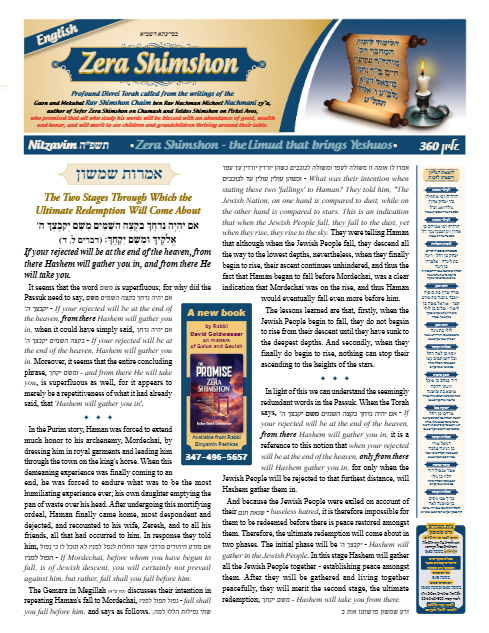
Sound the shofar on the month, when it is hidden for the day of our festival. (Tehillim 81:4)

The Midrash (Vayikra Rabbah 29:6) says that in the month in which the moon sets and which is a holiday for us, the shofar must be blown, and we must renew and improve our actions. And what month is that? It is Tishrei. Because Tishrei is the only month whose holiday — Rosh Hashanah — falls on the first day of the month.

Hashem wanted it to be so, to favor Israel in the judgment. Because [on Rosh Hashanah] the Satan accuses the Children of Israel, but Hashem tells him to bring witnesses. So, the Satan looks for the sun and brings him as a witness. Hashem asks the Satan, “And where is the other witness?” So, the Satan goes looking for the moon to bring her as a witness, but he does not find her because she is hidden that day. Thus, without two witnesses, the Satan cannot accuse, and Israel comes out of the trial innocent.

But this “trick” by Hakadosh Baruch Hu to get Israel off the hook could produce an unwanted reaction. A man might think that if he is going to get away with it in the end, then he can afford to do whatever sins he wants, and he won’t have to put in the effort to do teshuvah, because he isn’t afraid of coming out of the trial guilty.

That is why the verse first says to “sound the shofar on the month,” because it is known that the sound of the shofar introduces the fear of judgment in the hearts of men. This fear drives man to perform mitzvot and renew and improve his actions, straightening what he has crooked. And man should not fear the accusations of the Satan, because he will not be able to gather the two necessary witnesses, since the moon “is hidden for the day of our feast.” And indeed, that day is “the day of our festival,” because man has to trust that, through Hashem’s kindness, he will come out of the trial innocent. For this reason, the Sages said that for Rosh Hashanah a man should shave, cut his nails, and wear white, trusting that, by the goodness of Hashem, he will come out innocent.

(Zera Shimshon, parashat Emor, letter dalet)

PDF Preview