ABSTRACT Likkutei Sichos
Ben Chamesh L'Mikra | October 31, 2024
Print This Article
View Original PDF

ABSTRACT Likkutei Sichos

Ben Chamesh L'Mikra | June 27, 2025

Relationship between worries about livelihood, the Flood and Mikveh טבילה = הביטל

The waters of the Flood are of 2 parts: Tehom rabba anxieties of physical matters Arubot hashamayin of spiritual matters. Way to counter - go into the Teivah-prayer

During the Flood, the whole world was negated; complete withdrawal from the world; followed by leaving the Ark. Purpose to cleanse impure matters to perceive inner meaning & purpose. Go into the Ark, not to stay there, but to be inspired to go back to the world in order to transform it into a dwelling for G-d. Avodah of Tishrei separates one from worldliness; purpose to go back to the world retaining the lessons of mesiras nefesh

מי נח

Called the waters of Noach since Noach did not pray for his generation, even when commanded to enter the Ark. We are all responsible for each other; Alter Rebbe promises his Chasidim success

הוספות

(א) Building a city and tower so that it should appear tall and formidable, will not even accomplish this purpose; rather, the building must serve a higher purpose, which brings success and transforms all the forces hindering the city's growth into benefiting others

(ו) The generation of the flood were punished in this world (Noach did not receive their reward). The generation of the dispersal were punished in the next world (each according to their deeds); Avrohom received their reward since operated with kindness, drawing people to G-d. In holy matters, a city and a tower refer to yeshivos & synagogues; these “buildings” offer true protection, not only from visible enemies, but also from those who conceal their evil designs. By doing kindness & awakening those far from their Jewish heritage, revealing the sparks of G-dliness in every Jew prior to the Redemption, we also receive the reward for the positive actions of the earlier generations

זכר צדיק לברכה

Only in this Parsha does it refer to Noach’s good deeds which he attained on his own, not from Above; Praising a righteous individual assists him in his divine service. Since here Noach’s service begins, here his name is "accompanied by his praise". A Jew should see and speak of the good traits and qualities of others; by doing so, one assists in revealing the goodness of the other person

אלה תולדות

אך indicates that Noah remained alone. He felt loneliness; or he was alone in the burden of maintaining the Ark, including the 24-hour feedings. =אוי א groan =כוהה דם כ bare existence. Sometimes one feels depressed as if one has no chance to fulfill one’s mission; to overcome this despair one must rejoice in one’s shlichus
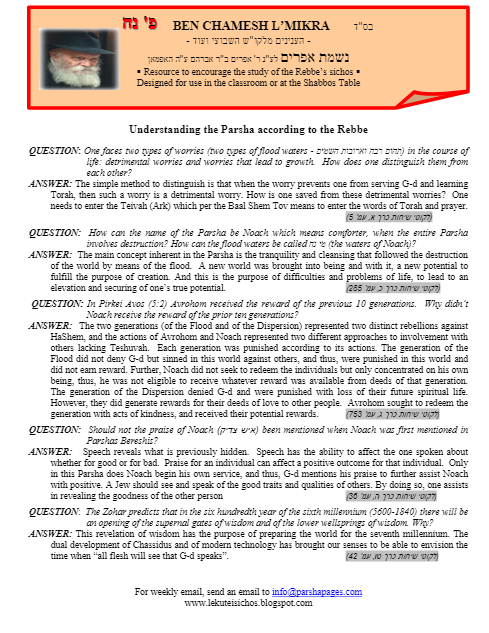

Relationship between worries about livelihood, the Flood and Mikveh טבילה = הביטל

The waters of the Flood are of 2 parts: Tehom rabba anxieties of physical matters Arubot hashamayin of spiritual matters. Way to counter - go into the Teivah-prayer

During the Flood, the whole world was negated; complete withdrawal from the world; followed by leaving the Ark. Purpose to cleanse impure matters to perceive inner meaning & purpose. Go into the Ark, not to stay there, but to be inspired to go back to the world in order to transform it into a dwelling for G-d. Avodah of Tishrei separates one from worldliness; purpose to go back to the world retaining the lessons of mesiras nefesh

מי נח

Called the waters of Noach since Noach did not pray for his generation, even when commanded to enter the Ark. We are all responsible for each other; Alter Rebbe promises his Chasidim success

הוספות

(א) Building a city and tower so that it should appear tall and formidable, will not even accomplish this purpose; rather, the building must serve a higher purpose, which brings success and transforms all the forces hindering the city's growth into benefiting others

(ו) The generation of the flood were punished in this world (Noach did not receive their reward). The generation of the dispersal were punished in the next world (each according to their deeds); Avrohom received their reward since operated with kindness, drawing people to G-d. In holy matters, a city and a tower refer to yeshivos & synagogues; these “buildings” offer true protection, not only from visible enemies, but also from those who conceal their evil designs. By doing kindness & awakening those far from their Jewish heritage, revealing the sparks of G-dliness in every Jew prior to the Redemption, we also receive the reward for the positive actions of the earlier generations

זכר צדיק לברכה

Only in this Parsha does it refer to Noach’s good deeds which he attained on his own, not from Above; Praising a righteous individual assists him in his divine service. Since here Noach’s service begins, here his name is "accompanied by his praise". A Jew should see and speak of the good traits and qualities of others; by doing so, one assists in revealing the goodness of the other person

אלה תולדות

אך indicates that Noah remained alone. He felt loneliness; or he was alone in the burden of maintaining the Ark, including the 24-hour feedings. =אוי א groan =כוהה דם כ bare existence. Sometimes one feels depressed as if one has no chance to fulfill one’s mission; to overcome this despair one must rejoice in one’s shlichus
PDF Preview

