What It Takes to Daven Like a Chosid
Cyber Farbrengens | October 31, 2024
Print This Article
View Original PDF

What It Takes to Daven Like a Chosid

Cyber Farbrengens | June 27, 2025

Dear Alumni Sheyichyu!
Sholom U’Brocho!
Mazeltov to Rabbi and Mrs. Shaya Zirkind on the birth of their daughter. May they bring her up lTOveCHuMAA”T mitoch harchovo, and to be a true chayolo! (If anyone is aware of any mazeltov’s that I omitted please let me know).
Thank you very much, as always, for the feedback, it is much appreciated!

What does it take to daven like a chosid?

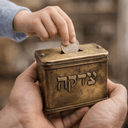
We all know what the Alter Rebbe writes in Likutei Torah, - that there are 3 prerequisites to be able to daven properly. One is to immerse oneself in the mikve, one is to give tzedaka, and one is to learn “ideas from mussar, and especially the mussar that is contained in the Zohar”, i.e., to learn chassidus.

Of course, these are all just prerequisites, they are the necessary preparation to be able to daven properly afterwards. But after all of the preparations, one must actually daven; - he must actually say every word, know what they mean, and think about what he’s saying and about Whom he is saying it to.

The third preparation – learning chassidus – itself contains two parts. There’s the learning itself, studying a subject in chassidus for enough time, and with enough concentration, to be able to adequately grasp the subject matter (each person lefum shiuro dilei). And that is followed by hisbonenus, - contemplating and meditating about the concept, the idea, in chassidus, to be able to actually connect with it and internalize it.

The question is often asked: What connection is there between learning and hisbonenus in chassidus and davening? Of course, there are many places in Chassidus (in Likutei Torah and in other maamorim) where specific pesukim or phrases are explained, and enhanced based on pnimiyus haTorah. There is even an entire siddur with d’ach. But that is not all of chassidus, it may be often, but not everywhere, and nowhere are we told to learn only those maamorei chassidus which explain parts of davening.

Furthermore, even those maamorim seem to only help out with specific parts of davening; - what effect or bearing do – even those parts of chassidus – have on the rest of davening?

In truth, there would seem to be two simple explanations to this (that are both correct). Firstly, a basic criteria of davening (even according to nigleh, and halacha, and as the Rebbe quoted on numerous occasions from R’ Chaim etc.) is to have the sense that you are standing before the King, that you are actually speaking to the Eibishter. This is very challenging for most of us (I don’t mean you, I am speaking for myself...) for the simple reason that Eibishter is – at best – abstract to us. Our mindset, our reality is one of olamos be pshitus, the world is what we relate with, and Elokus is (halevai should be at least) behischadshus. The very fact that wordliness is our reality, the very definition of which is concealment of G-dliness, means that we don’t easily relate with Eibishter. So to have the genuine sense that we are standing before Hashem and conversing with Him will not come either easily or naturally. However, through the effort we put into grasping a maamar chassidus, into contemplating the abstracts and intricacies of knowing Elokus, we force our mind to relate with G-dliness in a tangible way, and make the sense of עומד לפני המלך throughout davening more achievable.

In addition, everything we’re saying in the actual words of davening, both the simple pirush hamilos and the deeper interpretations, are all speaking about the Eibishter. We are describing His greatness, in so many ways, and elaborating on it. And no matter what you learn in chassidus, ultimately, enhances your understanding and appreciation of Elokus, and thus, by extension, will enhance every part of davening.

The above would seem to be included in the response of the Frierdige Rebbe to the Rebbe (that the Rebbe quotes in his reshimos), when the Rebbe asked him what connection is there between the hisbonenus and the davening. [The Rebbe even went so far as to suggest (to the frierdige Rebbe) that, since “machshovos zoros” (which are so frowned upon during davening) refers – not to negative thoughts but – to any thoughts that are “zoros”, that are foreign to the davening on hand, in that case why should hisbonenus that is seemingly not connected to the davening, not be included in machshovos zoros?]. The Frierdige Rebbe said "שייך ושייך", - there is in fact a direct connection between what is learned and meditated about in chassidus and (any part of) the davening itself.

But there would seem to be more to it, as is illustrated in the following story (also quoted in the same reshimos):

The Story of the RaZA and the Rebbe Rashab

In the year (circa) 5657, the RaZA (R’ Zalman Aharon, the older brother of the Rebbe Rashab) was discussing this very subject with the Rebbe Rashab. ‘In fact’ the RaZA questioned, ‘there does not appear to be any connection between the hisbonenus and the davening?’ The Rebbe Rashab replied: “There is, in fact, a connection, but it will take 12 years until you understand this”. This seems like somewhat of a strange reply. ‘But’, the ‘Frierdige says, in the year 5669 (after 12 years had passed) my father’s meaning became clear to me: It was that year in which the RaZA passed away’!

Besides the open Ruach hakodesh of the Rebbe Rashab that this story (derech agav) shows, the story seems hard to understand. Could the impact that hisbonenus has on davening not be explained to the RaZA? Why was this something that he needed to pass away from the world in order to understand?

Perhaps, in fact, the above two explanations would not be applicable to the RaZA. The RaZA, as son of a Rebbe and a brother of a Rebbe etc. and himself a very lofty chosid (we even read elsewhere in reshimos how on one occasion he – together with his brother the Rebbe Rashab – listened to a maamar from his father, the Rebbe MahaRaSH years after his histalkus), was to begin with in a loftier plane. His peshitus was G-dliness to begin with, and he didn’t require any special effort to enhance the words of his davening. For someone on his level, he had the question (perhaps) - what influence does the hisbonenus in chassidus in general have on the davening.

However, there is really much more to it. The essence of davening (תפלה מלשון הטופל כלי חרס) is connecting to Elokus. There are no limits to the levels of connection that the neshomo can have with Elokus. The better and more perfect the davening is, the deeper the connection. But, while the neshomo is enclothed in a physical body, residing in a physical world, it cannot fully sense that connection. After it departs from this world, then and only then it is able to see the full extent of what was achieved through it davening. (As it says כי לא יראני האדם, וחי אבל במיתתן רואים).

The Rebbe Rashab said – perhaps – to his brother that there is no limit to the effect that chassidus has on the davening and the resulting improvement to the davening and to the neshomo of the one davening. But he will only be able to see this, to truly appreciate it, twelve years down the line when he is unhindered by bodily concealments.

The Parsha of this week is about avodas hatefilah: In numerous maamorim and in farbrengens of the Rebbe they discuss how בא אל התיבה refers to immersing ourselves in the words of Torah and davening. We may be surrounded by the mayim rabim, the mei mabul, the raging waters of olam hazeh that threaten to engulf us and drown us ch”v. The very existence of olam hazeh is the antithesis of Elokus, and our merely thinking about it, being preoccupied with it, puts us at risk of becoming distanced from G-dliness ch”v.

But our protection, our lifeboat, is readily available as well. We have to merely put more effort, involve ourselves more, in our davvening. The result will be that – not only will the waters of worldliness no longer pose a threat, but – those waters themselves will serve to raise us ever higher.

We all know this, we learned it, we heard it, we even preached it. But when it comes to practicality, our davening seems more like a marathon (and sometimes we manage to finish before we even started). When we think about applying it to ourselves, here, now, today, me, it becomes very daunting. We think to ourselves that it is too overwhelming, that I am not shayach to such lofty goals (as much as I would have loved to). We tend to overestimate the avoda of davening and underestimate ourselves.

But avodas hatefilla (like any avoda) can be at many levels, to each person according to their stage. It doesn’t necessarily take many many hours of davening like the chassidim of yesteryear to achieve this. One doesn’t necessarily need to possess a yacht or a cruise ship to be able to float above the water. While they may be more impressive, the same goal can be reached (in most cases) with much smaller boats. You can have a houseboat, a pontoon boat, a sailboat, a rowboat, a kayak or a tiny canoe. Or you can even start off with your own little surfboard. It seems so tiny and insignificant compared to some of the others, but it is a flotation device, and if you use it properly then the waters will not only not endanger you, they will give you a great ride and provide you with pleasure and excitement!

Every single person needs – according to their level – to start working harder on davening. It doesn’t mean to fly to heaven and grab many malochim. But it does mean to actually daven. To start with the 3 basic prerequisites listed by the Alter Rebbe (that were mentioned above). You have to find some time – each person according to shiura dilei – to learn chassidus and to think about what you learned in chassidus. And to give some tzedaka. And to dip in the mikva.

And after all that you have to actually daven. Take away all of your distractions. Forget about anything waiting for you when you’re done, turn off your phone, and put all of your focus on your davening. Think about the words, think about their meaning (at whatever level you are able), and think about the Eibishter and the fact that you are actually talking to Him.

Inevitably, you have to be committed to spending a bit more time on your davening, but it need not be many hours, it can even be a few minutes. [R’ Pinye once shared (while farbrengin in Oholei Torah) that chassidim were very meticulous about halacha, it was something that was very dear to them. This included completing the brocho גאל ישראל with the minyan, which is the halachik requirement of tefilah betzibur. And yet they forfeited this regularly – and would miss it by a few minutes – for the sake of davening with a bit more concentration and taking a bit more time].

It’s about changing your priorities, and allowing – during the time of davening – your davening to the Eibishter to be the most important thing in your life right now. You can even start by choosing a small designated part of davening, Boruch she’omar, a Halelukah or Shma for example, and start by working on davening (at least) that part of davening properly. And then you can gradually work on expanding it.

Most importantly, we must dispel, once and for all, this notion that it is somehow a chassidisher minhag to daven fast, and the faster it is – the more chassidish. How many chazonim do we hear that are flying through the davening, and they don’t realize that they are only getting a speeding ticket. There are speeds in which it is impossible to be thinking anything about what they are saying. And there are speeds in which I question the ability to truly pronounce every word (somehow the words that are said out loud require slowing down, and they still stumble...).

The Rebbe is unambiguous – both in the famous farbrengen of Parshas Noach and on other occasions – that a chosid must work on his davening, and each of us must step up the plate and put more effort into our davening at some level. The chassidishe way of davening is to think about what you are saying, think about the Eibishter, and inevitably it will take more and more time.

There was once a yungerman, a chassidisher Yid, who was a chiyuv, and davening before the omud in 770, in the Rebbe’s minyan. Following the common mindset that the Rebbe appreciates speed, this yungerman davened very swiftly. One day, the Rebbe called over Rabbi Leibel Groner, and said to him “Ich darf noch yoggen di chazzan” (I am needing to chase after the chazzan). A day or two later, the Rebbe made the same remark to him again. Leibel called over the yungerman, and told that he’s davening too fast. But the yungerman was incredulous. “How can you say that?!” he demanded. “I am davening according to the Rebbe’s speed, I complete Boruch she’omar according to where the Rebbe is holding, I say Yishtabach when the Rebbe is up to there, and, of course, I only finish Shma and shmoneh esreh when the Rebbe is ready!” But Rabbi Groner did not back off. “If you daven fast, the Rebbe will keep up with you. The Rebbe is able to daven much faster than you as well, if he wants. But the fact is that you are davening too fast”. Finally, the yungerman grasped – “You aren’t telling me your own idea, but what you heard “from above”, and he adjusted his davening accordingly.

We all spent Tishrei enthusiastically collecting suitcases and valises filled with giluy Elokus. Now is the time for us to unpack. One of the ways to do that is by davening. Let us all take advantage of the inspiration of Parshas Noach to be very proactive about improving our davening. Start by whatever step is most realistic and viable for you right now, but find some way to put it into action.

And we should reach the ultimate tefilah, the ultimate connection with the Eibishter, with the very speedy geulah ho’amitis vehashleimah (which, if you just pay a bit more attention to your davening, you’ll find is the subject and focus of so much of davening) teikef umiyad mamosh!

L’chaim! May we all put more kochos into our davening and our connection with the Eibishter, and may the Eibishter bring about the ultimate connection with the immediate hisgalus of Moshiach Tzidkeinu NOW!!!

Rabbi Akiva Wagner

לזכות ב"ש ד בן מרים, 'שיט"ל אויוש מתוך בריאות הנכונה ס"וכט בטוב! ג"ה נרו הנ
לזכות ת"ה רה אהרן בן, חנה ק"ל רפושו ט"ו אויוש
לזכות ח"ה רה 'ר מ"מ הכהן בן, חוה ש"ל רפו ובריאות הנכונה ט"ו אויוש

Dear Alumni Sheyichyu!
Sholom U’Brocho!
Mazeltov to Rabbi and Mrs. Shaya Zirkind on the birth of their daughter. May they bring her up lTOveCHuMAA”T mitoch harchovo, and to be a true chayolo! (If anyone is aware of any mazeltov’s that I omitted please let me know).
Thank you very much, as always, for the feedback, it is much appreciated!

What does it take to daven like a chosid?

We all know what the Alter Rebbe writes in Likutei Torah, - that there are 3 prerequisites to be able to daven properly. One is to immerse oneself in the mikve, one is to give tzedaka, and one is to learn “ideas from mussar, and especially the mussar that is contained in the Zohar”, i.e., to learn chassidus.

Of course, these are all just prerequisites, they are the necessary preparation to be able to daven properly afterwards. But after all of the preparations, one must actually daven; - he must actually say every word, know what they mean, and think about what he’s saying and about Whom he is saying it to.

The third preparation – learning chassidus – itself contains two parts. There’s the learning itself, studying a subject in chassidus for enough time, and with enough concentration, to be able to adequately grasp the subject matter (each person lefum shiuro dilei). And that is followed by hisbonenus, - contemplating and meditating about the concept, the idea, in chassidus, to be able to actually connect with it and internalize it.

The question is often asked: What connection is there between learning and hisbonenus in chassidus and davening? Of course, there are many places in Chassidus (in Likutei Torah and in other maamorim) where specific pesukim or phrases are explained, and enhanced based on pnimiyus haTorah. There is even an entire siddur with d’ach. But that is not all of chassidus, it may be often, but not everywhere, and nowhere are we told to learn only those maamorei chassidus which explain parts of davening.

Furthermore, even those maamorim seem to only help out with specific parts of davening; - what effect or bearing do – even those parts of chassidus – have on the rest of davening?

In truth, there would seem to be two simple explanations to this (that are both correct). Firstly, a basic criteria of davening (even according to nigleh, and halacha, and as the Rebbe quoted on numerous occasions from R’ Chaim etc.) is to have the sense that you are standing before the King, that you are actually speaking to the Eibishter. This is very challenging for most of us (I don’t mean you, I am speaking for myself...) for the simple reason that Eibishter is – at best – abstract to us. Our mindset, our reality is one of olamos be pshitus, the world is what we relate with, and Elokus is (halevai should be at least) behischadshus. The very fact that wordliness is our reality, the very definition of which is concealment of G-dliness, means that we don’t easily relate with Eibishter. So to have the genuine sense that we are standing before Hashem and conversing with Him will not come either easily or naturally. However, through the effort we put into grasping a maamar chassidus, into contemplating the abstracts and intricacies of knowing Elokus, we force our mind to relate with G-dliness in a tangible way, and make the sense of עומד לפני המלך throughout davening more achievable.

In addition, everything we’re saying in the actual words of davening, both the simple pirush hamilos and the deeper interpretations, are all speaking about the Eibishter. We are describing His greatness, in so many ways, and elaborating on it. And no matter what you learn in chassidus, ultimately, enhances your understanding and appreciation of Elokus, and thus, by extension, will enhance every part of davening.

The above would seem to be included in the response of the Frierdige Rebbe to the Rebbe (that the Rebbe quotes in his reshimos), when the Rebbe asked him what connection is there between the hisbonenus and the davening. [The Rebbe even went so far as to suggest (to the frierdige Rebbe) that, since “machshovos zoros” (which are so frowned upon during davening) refers – not to negative thoughts but – to any thoughts that are “zoros”, that are foreign to the davening on hand, in that case why should hisbonenus that is seemingly not connected to the davening, not be included in machshovos zoros?]. The Frierdige Rebbe said "שייך ושייך", - there is in fact a direct connection between what is learned and meditated about in chassidus and (any part of) the davening itself.

But there would seem to be more to it, as is illustrated in the following story (also quoted in the same reshimos):

The Story of the RaZA and the Rebbe Rashab

In the year (circa) 5657, the RaZA (R’ Zalman Aharon, the older brother of the Rebbe Rashab) was discussing this very subject with the Rebbe Rashab. ‘In fact’ the RaZA questioned, ‘there does not appear to be any connection between the hisbonenus and the davening?’ The Rebbe Rashab replied: “There is, in fact, a connection, but it will take 12 years until you understand this”. This seems like somewhat of a strange reply. ‘But’, the ‘Frierdige says, in the year 5669 (after 12 years had passed) my father’s meaning became clear to me: It was that year in which the RaZA passed away’!

Besides the open Ruach hakodesh of the Rebbe Rashab that this story (derech agav) shows, the story seems hard to understand. Could the impact that hisbonenus has on davening not be explained to the RaZA? Why was this something that he needed to pass away from the world in order to understand?

Perhaps, in fact, the above two explanations would not be applicable to the RaZA. The RaZA, as son of a Rebbe and a brother of a Rebbe etc. and himself a very lofty chosid (we even read elsewhere in reshimos how on one occasion he – together with his brother the Rebbe Rashab – listened to a maamar from his father, the Rebbe MahaRaSH years after his histalkus), was to begin with in a loftier plane. His peshitus was G-dliness to begin with, and he didn’t require any special effort to enhance the words of his davening. For someone on his level, he had the question (perhaps) - what influence does the hisbonenus in chassidus in general have on the davening.

However, there is really much more to it. The essence of davening (תפלה מלשון הטופל כלי חרס) is connecting to Elokus. There are no limits to the levels of connection that the neshomo can have with Elokus. The better and more perfect the davening is, the deeper the connection. But, while the neshomo is enclothed in a physical body, residing in a physical world, it cannot fully sense that connection. After it departs from this world, then and only then it is able to see the full extent of what was achieved through it davening. (As it says כי לא יראני האדם, וחי אבל במיתתן רואים).

The Rebbe Rashab said – perhaps – to his brother that there is no limit to the effect that chassidus has on the davening and the resulting improvement to the davening and to the neshomo of the one davening. But he will only be able to see this, to truly appreciate it, twelve years down the line when he is unhindered by bodily concealments.

The Parsha of this week is about avodas hatefilah: In numerous maamorim and in farbrengens of the Rebbe they discuss how בא אל התיבה refers to immersing ourselves in the words of Torah and davening. We may be surrounded by the mayim rabim, the mei mabul, the raging waters of olam hazeh that threaten to engulf us and drown us ch”v. The very existence of olam hazeh is the antithesis of Elokus, and our merely thinking about it, being preoccupied with it, puts us at risk of becoming distanced from G-dliness ch”v.

But our protection, our lifeboat, is readily available as well. We have to merely put more effort, involve ourselves more, in our davvening. The result will be that – not only will the waters of worldliness no longer pose a threat, but – those waters themselves will serve to raise us ever higher.

We all know this, we learned it, we heard it, we even preached it. But when it comes to practicality, our davening seems more like a marathon (and sometimes we manage to finish before we even started). When we think about applying it to ourselves, here, now, today, me, it becomes very daunting. We think to ourselves that it is too overwhelming, that I am not shayach to such lofty goals (as much as I would have loved to). We tend to overestimate the avoda of davening and underestimate ourselves.

But avodas hatefilla (like any avoda) can be at many levels, to each person according to their stage. It doesn’t necessarily take many many hours of davening like the chassidim of yesteryear to achieve this. One doesn’t necessarily need to possess a yacht or a cruise ship to be able to float above the water. While they may be more impressive, the same goal can be reached (in most cases) with much smaller boats. You can have a houseboat, a pontoon boat, a sailboat, a rowboat, a kayak or a tiny canoe. Or you can even start off with your own little surfboard. It seems so tiny and insignificant compared to some of the others, but it is a flotation device, and if you use it properly then the waters will not only not endanger you, they will give you a great ride and provide you with pleasure and excitement!

Every single person needs – according to their level – to start working harder on davening. It doesn’t mean to fly to heaven and grab many malochim. But it does mean to actually daven. To start with the 3 basic prerequisites listed by the Alter Rebbe (that were mentioned above). You have to find some time – each person according to shiura dilei – to learn chassidus and to think about what you learned in chassidus. And to give some tzedaka. And to dip in the mikva.

And after all that you have to actually daven. Take away all of your distractions. Forget about anything waiting for you when you’re done, turn off your phone, and put all of your focus on your davening. Think about the words, think about their meaning (at whatever level you are able), and think about the Eibishter and the fact that you are actually talking to Him.

Inevitably, you have to be committed to spending a bit more time on your davening, but it need not be many hours, it can even be a few minutes. [R’ Pinye once shared (while farbrengin in Oholei Torah) that chassidim were very meticulous about halacha, it was something that was very dear to them. This included completing the brocho גאל ישראל with the minyan, which is the halachik requirement of tefilah betzibur. And yet they forfeited this regularly – and would miss it by a few minutes – for the sake of davening with a bit more concentration and taking a bit more time].

It’s about changing your priorities, and allowing – during the time of davening – your davening to the Eibishter to be the most important thing in your life right now. You can even start by choosing a small designated part of davening, Boruch she’omar, a Halelukah or Shma for example, and start by working on davening (at least) that part of davening properly. And then you can gradually work on expanding it.

Most importantly, we must dispel, once and for all, this notion that it is somehow a chassidisher minhag to daven fast, and the faster it is – the more chassidish. How many chazonim do we hear that are flying through the davening, and they don’t realize that they are only getting a speeding ticket. There are speeds in which it is impossible to be thinking anything about what they are saying. And there are speeds in which I question the ability to truly pronounce every word (somehow the words that are said out loud require slowing down, and they still stumble...).

The Rebbe is unambiguous – both in the famous farbrengen of Parshas Noach and on other occasions – that a chosid must work on his davening, and each of us must step up the plate and put more effort into our davening at some level. The chassidishe way of davening is to think about what you are saying, think about the Eibishter, and inevitably it will take more and more time.

There was once a yungerman, a chassidisher Yid, who was a chiyuv, and davening before the omud in 770, in the Rebbe’s minyan. Following the common mindset that the Rebbe appreciates speed, this yungerman davened very swiftly. One day, the Rebbe called over Rabbi Leibel Groner, and said to him “Ich darf noch yoggen di chazzan” (I am needing to chase after the chazzan). A day or two later, the Rebbe made the same remark to him again. Leibel called over the yungerman, and told that he’s davening too fast. But the yungerman was incredulous. “How can you say that?!” he demanded. “I am davening according to the Rebbe’s speed, I complete Boruch she’omar according to where the Rebbe is holding, I say Yishtabach when the Rebbe is up to there, and, of course, I only finish Shma and shmoneh esreh when the Rebbe is ready!” But Rabbi Groner did not back off. “If you daven fast, the Rebbe will keep up with you. The Rebbe is able to daven much faster than you as well, if he wants. But the fact is that you are davening too fast”. Finally, the yungerman grasped – “You aren’t telling me your own idea, but what you heard “from above”, and he adjusted his davening accordingly.

We all spent Tishrei enthusiastically collecting suitcases and valises filled with giluy Elokus. Now is the time for us to unpack. One of the ways to do that is by davening. Let us all take advantage of the inspiration of Parshas Noach to be very proactive about improving our davening. Start by whatever step is most realistic and viable for you right now, but find some way to put it into action.

And we should reach the ultimate tefilah, the ultimate connection with the Eibishter, with the very speedy geulah ho’amitis vehashleimah (which, if you just pay a bit more attention to your davening, you’ll find is the subject and focus of so much of davening) teikef umiyad mamosh!

L’chaim! May we all put more kochos into our davening and our connection with the Eibishter, and may the Eibishter bring about the ultimate connection with the immediate hisgalus of Moshiach Tzidkeinu NOW!!!

Rabbi Akiva Wagner

לזכות ב"ש ד בן מרים, 'שיט"ל אויוש מתוך בריאות הנכונה ס"וכט בטוב! ג"ה נרו הנ
לזכות ת"ה רה אהרן בן, חנה ק"ל רפושו ט"ו אויוש
לזכות ח"ה רה 'ר מ"מ הכהן בן, חוה ש"ל רפו ובריאות הנכונה ט"ו אויוש

PDF Preview