Parsha Pearls
Menucha Magazine | August 11, 2023
Print This Article
View Original PDF

Parsha Pearls

Menucha Magazine | December 31, 2025

In the very beginning of parshas Re’eh, Hashem is informing us that He is placing in front of us blessings and curses. Of course, we want blessings. In the 2nd verse of the parsha, the Torah is letting us know how to get the blessings:

אֶֶֽׁת־הַבְּרָכָה אֲשֶׁר תִּשְּמְּעוּ אֶׁל־מִּצְּוֹת ה' אֱלֶֽקיכֶׁם אֲשֶׁר אָנֹכִּי מְּצַוֶּׁה אֶׁתְּכֶׁם הַיּוֹם.

How would you paraphrase this verse? Probably you would paraphrase it as: “Keep the mitzvos and you’ll get the blessings.” In reality, however, based on Onkolos translation, the word תִּשְּמְּעוּ means “you will accept”. Therefore, this verse is telling us that Hashem will give us the blessings if we merely accept upon ourselves the mitzvos of the Torah. So simple? Yes. But it still requires work, commitment and continuity. Chaza”l refer to this “acceptance” of mitzvos as קבלת עול מצוות. And our sages teach us that the Torah wants us to make this קבלת עול מצוות twice a day, every single day. When? When we recite the second paragraph of Sh’ma Yisrael (Mishnayos Brachos 2:2).

So remember that in this week’s parsha Hashem promised us blessings as reward for just accepting the mitzvos. Just keep in mind קבלת עול מצוות when you recite the 2nd paragraph of Sh’ma Yisrael and you’ll receive the promised blessings.

Ask Around Your Shabbos Table

שְׁמֹר וְׁשָׁמַעְׁתָׁ אֵת כָל הַדְׁבָׁרִ ים הָׁאֵלֶּה אֲשֶּר אָׁנֹכִי מְׁצַוֶּךָׁ לְׁמַעַן יִיטַב לְׁךָ ולְׁבָׁנֶּיךָ אַחֲרֶּיךָ עַד עוֹלָׁם... דברים יב:כח

Ask Around Your Table: Since it is obvious that Hashem needs us to fulfill every mitzva that He commanded us, why does the Torah go out of its way in this verse to tell us that we need to guard and accept all mitzvos?

Answer: Rashi’s comment to this part of the verse answers our question. Rashi says, שתהא חביבה עליך מצוה קלה כמצוה חמורה – [This is teaching us] that a small mitzva should be dear to you just like a great mitzva is dear to you.] As we know, being passionate about doing mitzvos is an integral part of a Jewish life. In this verse, Hashem is telling us that this applies to absolutely all mitzvos.
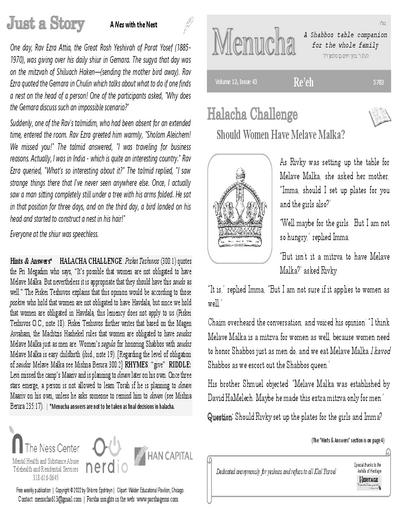

In the very beginning of parshas Re’eh, Hashem is informing us that He is placing in front of us blessings and curses. Of course, we want blessings. In the 2nd verse of the parsha, the Torah is letting us know how to get the blessings:

אֶֶֽׁת־הַבְּרָכָה אֲשֶׁר תִּשְּמְּעוּ אֶׁל־מִּצְּוֹת ה' אֱלֶֽקיכֶׁם אֲשֶׁר אָנֹכִּי מְּצַוֶּׁה אֶׁתְּכֶׁם הַיּוֹם.

How would you paraphrase this verse? Probably you would paraphrase it as: “Keep the mitzvos and you’ll get the blessings.” In reality, however, based on Onkolos translation, the word תִּשְּמְּעוּ means “you will accept”. Therefore, this verse is telling us that Hashem will give us the blessings if we merely accept upon ourselves the mitzvos of the Torah. So simple? Yes. But it still requires work, commitment and continuity. Chaza”l refer to this “acceptance” of mitzvos as קבלת עול מצוות. And our sages teach us that the Torah wants us to make this קבלת עול מצוות twice a day, every single day. When? When we recite the second paragraph of Sh’ma Yisrael (Mishnayos Brachos 2:2).

So remember that in this week’s parsha Hashem promised us blessings as reward for just accepting the mitzvos. Just keep in mind קבלת עול מצוות when you recite the 2nd paragraph of Sh’ma Yisrael and you’ll receive the promised blessings.

Ask Around Your Shabbos Table

שְׁמֹר וְׁשָׁמַעְׁתָׁ אֵת כָל הַדְׁבָׁרִ ים הָׁאֵלֶּה אֲשֶּר אָׁנֹכִי מְׁצַוֶּךָׁ לְׁמַעַן יִיטַב לְׁךָ ולְׁבָׁנֶּיךָ אַחֲרֶּיךָ עַד עוֹלָׁם... דברים יב:כח

Ask Around Your Table: Since it is obvious that Hashem needs us to fulfill every mitzva that He commanded us, why does the Torah go out of its way in this verse to tell us that we need to guard and accept all mitzvos?

Answer: Rashi’s comment to this part of the verse answers our question. Rashi says, שתהא חביבה עליך מצוה קלה כמצוה חמורה – [This is teaching us] that a small mitzva should be dear to you just like a great mitzva is dear to you.] As we know, being passionate about doing mitzvos is an integral part of a Jewish life. In this verse, Hashem is telling us that this applies to absolutely all mitzvos.

PDF Preview

