Summary of Chapters 2–3 of the Maamar
Lessons in Likutay Torah | August 20, 2025
Print This Article
View Original PDF

Summary of Chapters 2–3 of the Maamar

Lessons in Likutay Torah | December 31, 2025

Summary of Chapters 2 – 3 of the Maamar

Q1 What is the idea that Hashem commands us to fulfill the Mitzvos specifically “today”?
A1 “Today” means in this physical world that we are currently in. The Torah is telling us that only in the physical world do we have the power to fulfill the Mitzvos since, in this world, there is a revelation of Hashem's "encompassing Light," which connects us to His Essence through the Mitzvos. For this reason, we can only do Teshuva in the physical world where the “encompassing Light” is revealed and gives us the ability to change ourselves and our actions from bad to good.

Whereas in the spiritual world of Gan Eden, which is called “tomorrow” when we receive the spiritual reward for the Mitzvos, we cannot do Teshuva by ourselves, since on that level only Hashem's "internalizing Light" is expressed, which does not allow for transformation.

Q2 What is the main purpose of the G-dly soul’s descent into this world?
A2 To refine and transform the human intellect, the animal soul, and the body to holiness. This is accomplished in particular through the contemplation during of Hashem's true existence and how He creates and guides the world and ourselves until the human intellect comes to a fiery love for Hashem and affects the animal soul and body also to love Hashem. In general, it is accomplished through studying Torah and fulfilling Mitzvos using the human intellect, animal soul, and body. The amount of time allotted for the G-dly soul to stay in this world is according to how much it needs to accomplish in effecting that transformation, since every day we refine and transform one aspect of our intellectual, emotional, and physical life through our service of Hashem. Only in this physical world can such a transformation happen, due to the revelation of the “encompassing Light” of Hashem here.

Q3 What happens if we don't accomplish that transformation of our animal soul and body to holiness because we failed to use our time properly in prayer, Torah study, and Mitzva performance, is there any way to make up for it?
A3 Through Teshuva, we can make up for whatever was lacking in revealing Hashem and transforming the body and animal soul. The reason that Teshuva is able to accomplish this is that it brings forth a new revelation from the Essence of Hashem, which is even higher than the "encompassing Light" and "internalizing Light" that was supposed to be revealed through the Mitzvos and the Torah study.

Q4 How can we reach such a high level of revealing the Essence of Hashem through Teshuva?
A4 Through Hashem revealing the 13 Attributes of Mercy in the month of Elul, He gives us the power to do Teshuva and bring about a new revelation from the Essence of Hashem.

Q5 What is the difference between the 13 Attributes of Mercy that we mention the entire year during the Tachanun prayer and the 13 Attributes of Mercy expressed specifically in Elul?
A5 The 13 Attributes of Mercy expressed year-round are for Hashem to have mercy on our physical life, and to give us the power to refine the animal soul during prayer. However, the 13 Attributes of Mercy expressed in Elul are to give the G-dly soul the power to do Teshuva from its very essence, beyond its normal capacity, and thereby connect to and reveal the Essence of Hashem.

Q6 Why do we celebrate Simchas Torah after Rosh Hashana and Yom Kippur, instead of on Shavuos, when the Torah was given?
A6 The greatest celebration is when we use the power given to us by Hashem to reveal Hashem through our own efforts in Torah, Mitzvos, and Teshuva. Since we accomplish the revelation of Hashem equal to that of all the Torah and Mitzvos that were lacking the entire year through our Teshuva during Elul, Rosh Hashana, and Yom Kippur, therefore we celebrate that new revelation of Hashem from our own efforts after Yom Kippur, after we complete the Teshuva process.
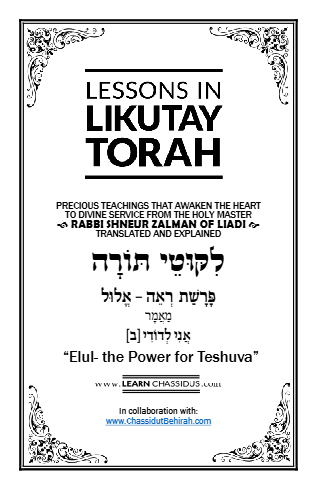

Summary of Chapters 2 – 3 of the Maamar

Q1 What is the idea that Hashem commands us to fulfill the Mitzvos specifically “today”?
A1 “Today” means in this physical world that we are currently in. The Torah is telling us that only in the physical world do we have the power to fulfill the Mitzvos since, in this world, there is a revelation of Hashem's "encompassing Light," which connects us to His Essence through the Mitzvos. For this reason, we can only do Teshuva in the physical world where the “encompassing Light” is revealed and gives us the ability to change ourselves and our actions from bad to good.

Whereas in the spiritual world of Gan Eden, which is called “tomorrow” when we receive the spiritual reward for the Mitzvos, we cannot do Teshuva by ourselves, since on that level only Hashem's "internalizing Light" is expressed, which does not allow for transformation.

Q2 What is the main purpose of the G-dly soul’s descent into this world?
A2 To refine and transform the human intellect, the animal soul, and the body to holiness. This is accomplished in particular through the contemplation during of Hashem's true existence and how He creates and guides the world and ourselves until the human intellect comes to a fiery love for Hashem and affects the animal soul and body also to love Hashem. In general, it is accomplished through studying Torah and fulfilling Mitzvos using the human intellect, animal soul, and body. The amount of time allotted for the G-dly soul to stay in this world is according to how much it needs to accomplish in effecting that transformation, since every day we refine and transform one aspect of our intellectual, emotional, and physical life through our service of Hashem. Only in this physical world can such a transformation happen, due to the revelation of the “encompassing Light” of Hashem here.

Q3 What happens if we don't accomplish that transformation of our animal soul and body to holiness because we failed to use our time properly in prayer, Torah study, and Mitzva performance, is there any way to make up for it?
A3 Through Teshuva, we can make up for whatever was lacking in revealing Hashem and transforming the body and animal soul. The reason that Teshuva is able to accomplish this is that it brings forth a new revelation from the Essence of Hashem, which is even higher than the "encompassing Light" and "internalizing Light" that was supposed to be revealed through the Mitzvos and the Torah study.

Q4 How can we reach such a high level of revealing the Essence of Hashem through Teshuva?
A4 Through Hashem revealing the 13 Attributes of Mercy in the month of Elul, He gives us the power to do Teshuva and bring about a new revelation from the Essence of Hashem.

Q5 What is the difference between the 13 Attributes of Mercy that we mention the entire year during the Tachanun prayer and the 13 Attributes of Mercy expressed specifically in Elul?
A5 The 13 Attributes of Mercy expressed year-round are for Hashem to have mercy on our physical life, and to give us the power to refine the animal soul during prayer. However, the 13 Attributes of Mercy expressed in Elul are to give the G-dly soul the power to do Teshuva from its very essence, beyond its normal capacity, and thereby connect to and reveal the Essence of Hashem.

Q6 Why do we celebrate Simchas Torah after Rosh Hashana and Yom Kippur, instead of on Shavuos, when the Torah was given?
A6 The greatest celebration is when we use the power given to us by Hashem to reveal Hashem through our own efforts in Torah, Mitzvos, and Teshuva. Since we accomplish the revelation of Hashem equal to that of all the Torah and Mitzvos that were lacking the entire year through our Teshuva during Elul, Rosh Hashana, and Yom Kippur, therefore we celebrate that new revelation of Hashem from our own efforts after Yom Kippur, after we complete the Teshuva process.

PDF Preview