The Unique Avodah of Elul: I Am to My Beloved and My Beloved Is to Me
Print This Article
View Original PDF

The Unique Avodah of Elul: I Am to My Beloved and My Beloved Is to Me

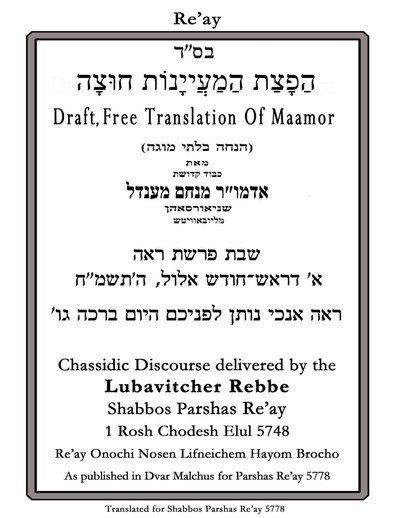
הפצת המיינות חוצה | December 31, 2025

All of the above can now be connected with the Avodah of the month of ‘Elul’ which is as the acronym [of the word אֶלוּל ] suggests with the words אֲנִי לְדוֹדִי וְדוֹדִי לִי “I am to my beloved, and my beloved is to me.”

Seemingly we need to understand; on the one hand our sages of blessed memory have stated; “HaShem does not demand more than one’s ability” and elsewhere it is explained that any Avodah that a person performs down here in this world below (Isarussa Dil’Tatoh) needs to be pre-empted by an impetus from above (Isarussa Dil’Eilah). So how can we [possibly] say that the system of Avodah in Chodesh Elul relies on a person making the first move? As the chosen Possuk illustrates that the Avodah of אֲנִי לְדוֹדִי ‘I am to my beloved’ (Issarusa Dil’Tatoh) is due first, and only afterwards comes the Avodah of וְדוֹדִי לִי ‘my beloved is to me’ (Issarusa Dil’Eilah)? (And not the opposite as it is in a different Possuk, first דוֹדִי לִי and only thereafter וְאֲנִי לוֹ)

Yet according to what we have established above we can say that when we say in Chodesh Elul that the Avodah relies on a person’s input first with an Issarusa Dil’Tatoh and only afterwards is one reciprocated with an Issarusa Dil’Eilah, that is [only] when one is referring to the system as it is within the confinement and parameters of the ‘Seder Hishtalshelus’. (It is because of these limitations that the B’nei Yisroel are only extended a state of ‘vision’ as mentioned above). However, when operating from the perspective of ‘beyond the confines and parameters’ of the ‘Seder Hishtalshelus’, then, on the contrary, the impetus for the Avodah of אֲנִי לְדוֹדִי comes from the lofty Divine level of אָנֹכִי מִי שֶׁאָנֹכִי which transcends the state of דוֹדִי. And this ‘Koach’ is given [specifically] in the month of Elul and given generously.

The Avodah of Elul

The unique service of HaShem that takes place in the month of Elul is in the manner of “I am to my beloved and only then is my beloved is to me”. Elul is a time to seriously audit one's spiritual accounts and assess the year gone by; a time to prepare for the "Days of Awe" of Rosh Hashanah and Yom Kippur by repenting the failings of the past and resolving for the future; a time to increase in Torah study, prayer and charitable activities. Elul is a month in which HaShem relates to us in a reciprocal manner.

This is one of several Pessukim which are acronyms and represent various different special services in Elul; five of them are: Torah- Torah study: (Shmos 21:13) אִ נָה ל יָדוֹ ו שַמְּתִי ל ךָ “If he did not do it by design, but it came about by an act of G-d, I will assign you a place to which he can flee”. Tefilah - prayer: (Song of Songs 6:3) א נִי ל דוֹדִי ו דוֹדִי לִ י “I am to my beloved and my beloved is to me; He browses among the lilies”. Tzedokkah - charity: (Megilas Esther 9:22) אִ יש ל רֵעֵהוּ ו מַתָנוֹת לָ אֶבְּיוֹנִים׃ “The same days on which the Jews enjoyed relief from their foes and the same month which had been transformed for them from one of grief and mourning to one of festive joy. They were to observe them as days of feasting and merry-making, and as an occasion for sending gifts to one another and presents to the poor”. Teshuvah – repentance: (Devorim 30:4) אֶ ת־ל בָבְּךָ ו אֶת־ל בַב “Then HaShem your G-d will open up your heart and the hearts of your offspring to love HaShem your G-d with all your heart and soul, in order that you may live”. Geulah - redemption: (Shmos 15:1) ל ה׳ ו יֹּאמְּרוּ לֵ אמֹר אָ שִירָה “Then Moshe and the B’nei Yisroel sang this song to HaShem. They said: I will sing to HaShem, for He has triumphed gloriously; Horse and driver He has hurled into the sea”.

The King in the Field

The Jews as a nation and our spiritual counterpart up above. I am to HaShem. This has various connotations in Chassidus and Kabbalah, the first being as in the relationship between a groom and his bride where there is loyalty and exclusivity to each other. It is a time when HaShem's "Thirteen Attributes of Mercy" illuminate His relationship with us. The Alter Rebbe explains with a metaphor: Anyone normally wishing to approach the King must go through the appropriate channels in the palace bureaucracy and gain the approval of a succession of secretaries and ministers. He must journey to the capital and pass through the many gates, corridors and antechambers that lead to the throne room. His presentation must be meticulously prepared, and he must adhere to an exacting code of dress, speech and mannerism upon entering into the royal presence. However, in the month of Elul the King comes out to the fields outside the city. At such times, anyone can approach him; the King receives them all with a smiling face and a radiant countenance. The peasant behind his plow has access to the King in a manner unavailable to the highest-ranking minister in the royal court when the King is in the palace. Devotion, I am devoted to my beloved and my beloved is devoted to me, but it also about possession meaning I belong to my Beloved and my beloved belongs to me. Also, I come to you my beloved I beseech and request forgiveness, and Hashem asks us to forgive Him. Or I forgive You my beloved and I ask You my beloved to forgive me. HaShem is specifically close to me and is mine after I am His first.
All of the above can now be connected with the Avodah of the month of ‘Elul’ which is as the acronym [of the word אֶלוּל ] suggests with the words אֲנִי לְדוֹדִי וְדוֹדִי לִי “I am to my beloved, and my beloved is to me.”

Seemingly we need to understand; on the one hand our sages of blessed memory have stated; “HaShem does not demand more than one’s ability” and elsewhere it is explained that any Avodah that a person performs down here in this world below (Isarussa Dil’Tatoh) needs to be pre-empted by an impetus from above (Isarussa Dil’Eilah). So how can we [possibly] say that the system of Avodah in Chodesh Elul relies on a person making the first move? As the chosen Possuk illustrates that the Avodah of אֲנִי לְדוֹדִי ‘I am to my beloved’ (Issarusa Dil’Tatoh) is due first, and only afterwards comes the Avodah of וְדוֹדִי לִי ‘my beloved is to me’ (Issarusa Dil’Eilah)? (And not the opposite as it is in a different Possuk, first דוֹדִי לִי and only thereafter וְאֲנִי לוֹ)

Yet according to what we have established above we can say that when we say in Chodesh Elul that the Avodah relies on a person’s input first with an Issarusa Dil’Tatoh and only afterwards is one reciprocated with an Issarusa Dil’Eilah, that is [only] when one is referring to the system as it is within the confinement and parameters of the ‘Seder Hishtalshelus’. (It is because of these limitations that the B’nei Yisroel are only extended a state of ‘vision’ as mentioned above). However, when operating from the perspective of ‘beyond the confines and parameters’ of the ‘Seder Hishtalshelus’, then, on the contrary, the impetus for the Avodah of אֲנִי לְדוֹדִי comes from the lofty Divine level of אָנֹכִי מִי שֶׁאָנֹכִי which transcends the state of דוֹדִי. And this ‘Koach’ is given [specifically] in the month of Elul and given generously.

The Avodah of Elul

The unique service of HaShem that takes place in the month of Elul is in the manner of “I am to my beloved and only then is my beloved is to me”. Elul is a time to seriously audit one's spiritual accounts and assess the year gone by; a time to prepare for the "Days of Awe" of Rosh Hashanah and Yom Kippur by repenting the failings of the past and resolving for the future; a time to increase in Torah study, prayer and charitable activities. Elul is a month in which HaShem relates to us in a reciprocal manner.

This is one of several Pessukim which are acronyms and represent various different special services in Elul; five of them are: Torah- Torah study: (Shmos 21:13) אִ נָה ל יָדוֹ ו שַמְּתִי ל ךָ “If he did not do it by design, but it came about by an act of G-d, I will assign you a place to which he can flee”. Tefilah - prayer: (Song of Songs 6:3) א נִי ל דוֹדִי ו דוֹדִי לִ י “I am to my beloved and my beloved is to me; He browses among the lilies”. Tzedokkah - charity: (Megilas Esther 9:22) אִ יש ל רֵעֵהוּ ו מַתָנוֹת לָ אֶבְּיוֹנִים׃ “The same days on which the Jews enjoyed relief from their foes and the same month which had been transformed for them from one of grief and mourning to one of festive joy. They were to observe them as days of feasting and merry-making, and as an occasion for sending gifts to one another and presents to the poor”. Teshuvah – repentance: (Devorim 30:4) אֶ ת־ל בָבְּךָ ו אֶת־ל בַב “Then HaShem your G-d will open up your heart and the hearts of your offspring to love HaShem your G-d with all your heart and soul, in order that you may live”. Geulah - redemption: (Shmos 15:1) ל ה׳ ו יֹּאמְּרוּ לֵ אמֹר אָ שִירָה “Then Moshe and the B’nei Yisroel sang this song to HaShem. They said: I will sing to HaShem, for He has triumphed gloriously; Horse and driver He has hurled into the sea”.

The King in the Field

The Jews as a nation and our spiritual counterpart up above. I am to HaShem. This has various connotations in Chassidus and Kabbalah, the first being as in the relationship between a groom and his bride where there is loyalty and exclusivity to each other. It is a time when HaShem's "Thirteen Attributes of Mercy" illuminate His relationship with us. The Alter Rebbe explains with a metaphor: Anyone normally wishing to approach the King must go through the appropriate channels in the palace bureaucracy and gain the approval of a succession of secretaries and ministers. He must journey to the capital and pass through the many gates, corridors and antechambers that lead to the throne room. His presentation must be meticulously prepared, and he must adhere to an exacting code of dress, speech and mannerism upon entering into the royal presence. However, in the month of Elul the King comes out to the fields outside the city. At such times, anyone can approach him; the King receives them all with a smiling face and a radiant countenance. The peasant behind his plow has access to the King in a manner unavailable to the highest-ranking minister in the royal court when the King is in the palace. Devotion, I am devoted to my beloved and my beloved is devoted to me, but it also about possession meaning I belong to my Beloved and my beloved belongs to me. Also, I come to you my beloved I beseech and request forgiveness, and Hashem asks us to forgive Him. Or I forgive You my beloved and I ask You my beloved to forgive me. HaShem is specifically close to me and is mine after I am His first.

PDF Preview