Classic Concepts
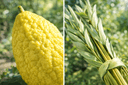
Throughout the holiday of Sukkos we fulfill several Mitzvos and yet the festival is named specifically for the mitzvah of Sukkah (rather than lulav, esrog etc.) There are several reasons given for this. One reason given is that the Mitzvah of Sukkah applies to the entire duration of the holiday, beginning from the moment Yom Tov begins, whereas the Mitzvah of Lulav and Esrog only starts the next morning. Furthermore, a Sukkah requires preparation before Sukkos begins. One cannot erect the Sukkah once the holiday has begun. Even the building of the Sukkah before Sukkos is considered to be a part of the actual Mitzvah. The Mitzvah of Lulav, on the other hand, can be taken care of once the holiday has already begun. Another difference between Sukkah and Lulav is that Sukkah is an unlimited Mitzvah. Once a person fulfilled his Lulav obligation, he is exempt from doing it until the next day. Whereas the Mitzvah of Sukkah continues throughout the entire day since the commandment is to actually dwell in the Sukkah.
There is yet another characteristic to the Mitzvah of Sukkah that sets it above over all Mitzvahs, including Lulav. All other Mitzvahs incorporate a certain aspect of the person, performed with a specific body part. Tefilin is done with the hand and the head, Brochos are made with the mouth etc. Sukkah is unique in the fact that it encompasses a person's entire body, and all of his actions as well. Everything a person does, including physical activities, he performs in the Sukkah, and through this he is fulfilling a Mitzvah.
The Chachomim tell us that ‘Whoever does not have a house is not considered a person’. This statement teaches us that without a house, a person cannot be considered ‘complete’, and the ownership of a house causes his wholeness. This does not mean that in order to be considered complete he must never leave his house; it is rather his ownership of the house that reveals his status, regardless of where he may find himself. This would indicate that during the days of Sukkos, when the Sukkah becomes his home, he is constantly associated with the Sukkah, wherever he may be.
The way we behave during Tishrei shows us how we must conduct ourselves the entire year. The Torah demands that a Jew must connect everything he does with G-dliness, including his mundane activities. Not only should a Jew be serving G-d when he learns and prays, but even when he works and eats. The power to be able to do this is taken from the Mitzvah of Sukkah. We see from this mitzvah that all of a person's activities, eating, drinking, sleeping etc. must be done in the Sukkah i.e. as a means of serving Hashem. Furthermore, even things accomplished outside the Sukkah, are still achieved while he owns a Sukkah (as we mentioned before this makes him complete). From here one must take the necessary strength to direct all of his actions throughout the entire year, even mundane ones, to serve Hashem.
The Gemara refers to the Mitzvah of Sukkah as an ‘easy Mitzvah’. When a person establishes firmly that he is a servant of Hashem, then it becomes relatively easy to elevate his physical concerns to G-dliness. And when a person transforms his world into a place for Hashem, Hashem bestows upon him all blessings necessary, from His wide and open hand.
Regarding Simchas Beis Hashoevah the Possuk writes ‘And you shall draw water with joy from the wellsprings of salvation’. This seems to indicate that the water that was drawn for the purpose of pouring it onto the Mizbeach needed to be taken from actual wellsprings. The Rambam writes, however, that if there was no water available from the Shiloach spring, then the water would be taken from the Kiyor, the washing basin of the Beis Hamikdosh, which did not have the Halachic status of a wellspring. From here we can infer that it did not matter where the water was taken from. The main issue here is that it should be drawn with joy and through this, the place from which it was taken is considered to be a ‘wellspring of salvation’.
In order to understand this, let us first analyze the difference between a wellspring and other forms of water. All other forms of water require a certain amount in order to make a person pure, whereas regarding a wellspring, even the smallest amount would be sufficient to purify. This is due to the fact that a wellspring is connected to its source and is therefore not considered its own entity, rather an extension of its source. Another difference would be that a wellspring can purify someone even while it is moving. Any other body of water must be still and contained in order to make someone pure.
Spiritually, this has a very relevant message. If a person wants to rely solely on his own resources, his own mind, feelings and calculations, without staying connected to the source, then there are going to be many conditions that will need to be met. He will have to ensure that his understanding is sufficient and adequate, even according to other people's standards. If he does not meet these requirements, then not only will he not be able to purify others, but he himself may contract Tumah. But if one makes sure to constantly stay connected to the source, then he can purify under any circumstances and no limitations apply, just like we see in the case of a wellspring. He may only have minimal spiritual energy, and he may even be ‘flowing’ i.e. unsteady. However, since he is connected to his source, he can venture out to purify others, and even purify the lowest levels of Tumah, without being concerned. It is not his own strength that he is relying on, but rather that of the source he is connected to.
We can now better understand the Possuk ‘‘And you should draw water with joy from the wellsprings of salvation’’. The ‘drawing of the water’ refers to the spiritual Avodah of Kabolas Ol. Just as water has no taste, so too Kabolas Ol is performed without any personal pleasure. Wine, which has a pleasurable taste, represents the Avoda of understanding. Kabolas Ol means that a person does not take into consideration how he feels about what he is doing; rather he connects himself with the source and fulfills Hashem's will. When the Possuk writes ‘Draw water with happiness’ it is referring to a person's Avodah of water i.e. Kabolas Ol. When a person serves Hashem without concern for his own personal gain, and does so happily, knowing that it is the will of Hashem, then automatically it becomes ‘From a wellspring of salvation’. He becomes connected to his source and is not limited by the confines of his own understanding. He now has the power of the source he has connected himself with, and is able to draw down ‘salvation’ to all areas of his life that are in need of one. Furthermore, the deliverance does not come in a way that is limited to his power, because now he is one with his source, Hashem.