Hashem Fulfills His Own Decrees and the Lesson of Hidden Giving
Inspired by a Story | February 20, 2026
Print This Article
View Original PDF

Hashem Fulfills His Own Decrees and the Lesson of Hidden Giving

Inspired by a Story | February 20, 2026

In the Talmud Yerushalmi (Rosh Hashanah 1-3) Chazal tell us, normally by a human king who makes a decree if he wants he fulfills it himself and if he doesn’t want he doesn’t fulfill it, only others have to fulfill it. But Hashem is not like that. When He makes a decree He fulfills it Himself first. And the Gemara brings a few Pesukim to prove it.

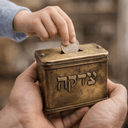
We all know there is a Mitzvah of Tzedaka giving charity to the needy. Chazal tell us and the Shulchan Aruch writes that one of the highest level of giving charity to the needy is when it is “Matan Beseiser” – giving charity secretly not to embarrass the person receiving help.

How does Hashem fulfill this Mitzvah of giving secretly?

In this week’s Parsha Hashem told Moshe that the Yidden should contribute towards the building of the Mishkan. The Passuk uses an interesting phrase, that the Jews ‘should take for me a donation’. Many commentaries try and explain this strange expression. A person gives a donation, a person doesn’t take to contribute. Why did Hashem say that Klal Yisrael should take for Me a donation?

Furthermore, Klal Yisrael had just come out of Mitzrayim six months earlier. When they left, they had a ‘rechush gadol’ – they left with enormous wealth. They emptied Mitzrayim and asked for everything from the Egyptians before they left plus they got even more when they emptied the pockets of the Egyptians who died by Kriyas Yam Suf. The Gemara in Bechoros (5:) says that they each had minimum ninety white donkeys carrying silver and gold.

How many Jews left Mitzrayim?

600.000 men from the age of 20 till 60. So most probably from under twenties and over sixties there were at least a similar number. And we can calculate that there were a similar amount of women. That means there were about 2.5 million Jews.

The Passuk tells us that both men and women took part in donating to the Mishkan.

The Passuk also tells us how much gold they brought. 29 kikar and 730 shekel hakodesh. Chazal tell us that the shekel hakodesh was double the normal shekels.

According to Rashi a Kikar is about 42.5 kg/93.5 lbs. That means 30 kikar is approximately one and a quarter ton of gold. If we divide that into 2.5 million Jews that means everyone gave about half a gram/1% of an ounce of gold.

Half a gram from 90 donkeys carrying gold and silver?!

Not only that, the Passuk writes that it should come from any Jew who is charitable and from these charitable people’s donations Hashem built the Mishkan.

How do we understand this? Every Jew giving such a tiny donation is charitable?

But before we try and understand them let us try and understand ourselves.

We know that we aren’t perfect but we do lots of Mitzvos and we are positive that our future place with be in Gan Eden.

Let us take one small example.

Hashem gives us life, health, and a healthy appetite. We use our healthy teeth to eat and the food goes into our bodies and is broken down into different parts. Each part has its purpose for our sustenance and health. Hashem gives us Parnassa and we bought all different sorts of delicious food which we prepared to our heart’s desire.

And from all of that when we finally take a bite what do we give Hashem?

A Berocho.

And for that we are so sure that we deserve Gan Eden.

What is the Berocho in return for so much kindness that Hashem has bestowed on us? Is it any different than half a gram donation from ninety donkeys carrying so much wealth? And let us not talk about how our Berochos look like.

Now we can understand what Hashem told Moshe. The Jews aren’t really giving anything to Hashem. They are taking and taking. And from all the abundance of wealth and health we give something so small in return, half a gram, a fraction of an ounce, a few short words of appreciation and recognition that all what we have is from Hashem.

But Hashem doesn’t need our donations, He wants our heart. If what the Jews gave was with their whole heart, it managed to build a Mishkan for His Divine Presence.

Similarly, we receive so much but at least the Berocho we make should be with sincerity and concentration.

Our reward will be for the quality and perfection of our Mitzvos.

Maybe with this explanation we can understand our first question. Hashem gives us so much but He made the world in a way that there is nature. We imagine that our health is natural, our Parnassa is through our hard work and effort, our food comes from our money.

So where is Hashem in the picture?

He is hiding in the world of nature. He secretly gives us so much but we don’t even realize that it is all from Him.

Our job is to uncover Hashem in everything we have, to understand and recognize that everything is from Him and show our appreciation through our Mitzvos that we do with our full heart and concentration.

If we take a deeper look this is one of the important messages and lessons we have to learn from Megilas Esther.

We celebrate Purim for such great miracles. But if we look in the Megilah we won’t find Hashem’s name mentioned even once. The story of the Megilas Esther looks like a natural story that happened. We have to study it to see that there are so many miracles all the way through.

That is why Hashem’s name is only found hidden in the Megilah in abbreviations to teach us that the miracle of Purim is like our day to day life. We don’t automatically see Hashem in everything. But if we look carefully and tune in we can see that just like the Megilah is full of Hashem’s name hiding, so too Hashem is there hiding all over in our day to day life watching over us and giving us everything we have.

By Rabbi Dovid Caro
In the Talmud Yerushalmi (Rosh Hashanah 1-3) Chazal tell us, normally by a human king who makes a decree if he wants he fulfills it himself and if he doesn’t want he doesn’t fulfill it, only others have to fulfill it. But Hashem is not like that. When He makes a decree He fulfills it Himself first. And the Gemara brings a few Pesukim to prove it.

We all know there is a Mitzvah of Tzedaka giving charity to the needy. Chazal tell us and the Shulchan Aruch writes that one of the highest level of giving charity to the needy is when it is “Matan Beseiser” – giving charity secretly not to embarrass the person receiving help.

How does Hashem fulfill this Mitzvah of giving secretly?

In this week’s Parsha Hashem told Moshe that the Yidden should contribute towards the building of the Mishkan. The Passuk uses an interesting phrase, that the Jews ‘should take for me a donation’. Many commentaries try and explain this strange expression. A person gives a donation, a person doesn’t take to contribute. Why did Hashem say that Klal Yisrael should take for Me a donation?

Furthermore, Klal Yisrael had just come out of Mitzrayim six months earlier. When they left, they had a ‘rechush gadol’ – they left with enormous wealth. They emptied Mitzrayim and asked for everything from the Egyptians before they left plus they got even more when they emptied the pockets of the Egyptians who died by Kriyas Yam Suf. The Gemara in Bechoros (5:) says that they each had minimum ninety white donkeys carrying silver and gold.

How many Jews left Mitzrayim?

600.000 men from the age of 20 till 60. So most probably from under twenties and over sixties there were at least a similar number. And we can calculate that there were a similar amount of women. That means there were about 2.5 million Jews.

The Passuk tells us that both men and women took part in donating to the Mishkan.

The Passuk also tells us how much gold they brought. 29 kikar and 730 shekel hakodesh. Chazal tell us that the shekel hakodesh was double the normal shekels.

According to Rashi a Kikar is about 42.5 kg/93.5 lbs. That means 30 kikar is approximately one and a quarter ton of gold. If we divide that into 2.5 million Jews that means everyone gave about half a gram/1% of an ounce of gold.

Half a gram from 90 donkeys carrying gold and silver?!

Not only that, the Passuk writes that it should come from any Jew who is charitable and from these charitable people’s donations Hashem built the Mishkan.

How do we understand this? Every Jew giving such a tiny donation is charitable?

But before we try and understand them let us try and understand ourselves.

We know that we aren’t perfect but we do lots of Mitzvos and we are positive that our future place with be in Gan Eden.

Let us take one small example.

Hashem gives us life, health, and a healthy appetite. We use our healthy teeth to eat and the food goes into our bodies and is broken down into different parts. Each part has its purpose for our sustenance and health. Hashem gives us Parnassa and we bought all different sorts of delicious food which we prepared to our heart’s desire.

And from all of that when we finally take a bite what do we give Hashem?

A Berocho.

And for that we are so sure that we deserve Gan Eden.

What is the Berocho in return for so much kindness that Hashem has bestowed on us? Is it any different than half a gram donation from ninety donkeys carrying so much wealth? And let us not talk about how our Berochos look like.

Now we can understand what Hashem told Moshe. The Jews aren’t really giving anything to Hashem. They are taking and taking. And from all the abundance of wealth and health we give something so small in return, half a gram, a fraction of an ounce, a few short words of appreciation and recognition that all what we have is from Hashem.

But Hashem doesn’t need our donations, He wants our heart. If what the Jews gave was with their whole heart, it managed to build a Mishkan for His Divine Presence.

Similarly, we receive so much but at least the Berocho we make should be with sincerity and concentration.

Our reward will be for the quality and perfection of our Mitzvos.

Maybe with this explanation we can understand our first question. Hashem gives us so much but He made the world in a way that there is nature. We imagine that our health is natural, our Parnassa is through our hard work and effort, our food comes from our money.

So where is Hashem in the picture?

He is hiding in the world of nature. He secretly gives us so much but we don’t even realize that it is all from Him.

Our job is to uncover Hashem in everything we have, to understand and recognize that everything is from Him and show our appreciation through our Mitzvos that we do with our full heart and concentration.

If we take a deeper look this is one of the important messages and lessons we have to learn from Megilas Esther.

We celebrate Purim for such great miracles. But if we look in the Megilah we won’t find Hashem’s name mentioned even once. The story of the Megilas Esther looks like a natural story that happened. We have to study it to see that there are so many miracles all the way through.

That is why Hashem’s name is only found hidden in the Megilah in abbreviations to teach us that the miracle of Purim is like our day to day life. We don’t automatically see Hashem in everything. But if we look carefully and tune in we can see that just like the Megilah is full of Hashem’s name hiding, so too Hashem is there hiding all over in our day to day life watching over us and giving us everything we have.

By Rabbi Dovid Caro

PDF Preview