Purim When There Is No One Else
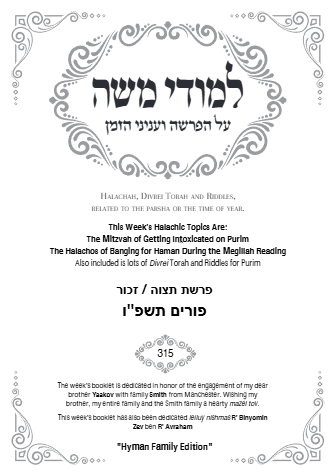
למודי משה | February 28, 2026
Print This Article
View Original PDF

Purim When There Is No One Else

למודי משה | February 28, 2026

Chazal tell us (Megillah 15b) that Esther invited Haman to her feast “so that the Jewish people would not say, ‘We have a sister in the king’s palace,’ and turn their hearts away from mercy.”

At first glance, this seems difficult to understand. Once the king’s gezeira was issued, the Jews were already plunged into mourning, fasting, crying, and praying. Mordechai even instituted an additional three-day fast at Esther’s request. Why, then, would Esther be concerned that they might stop relying on tefillah and place their trust in her?

Rav Asher Druk answers that Esther knew that Klal Yisrael was davening with intensity and reciting Tehillim, crying out to Hashem, begging for salvation. But she also understood that even during heartfelt prayer, a subtle thought can slip in: “After all, we do have a sister in the palace. Surely, she will manage something. Somehow, she’ll save us.”

The moment that thought enters, the tefillah is no longer complete. It is no longer a cry of total dependence on Hashem, but a prayer mixed with reliance on human solutions.

That is why Esther invited Haman to the feast. She wanted Klal Yisrael to believe that she had aligned herself with the wicked Haman, that there were no connections, no influence, no one left to rely on. Only Hashem.

When the Yidden truly felt: אין לנו על מי להישען אלא על אבינו שבשמים – “There is no one to rely on, besides for out Father in Heaven”, their tefillah changed entirely. That tefillah born from complete helplessness pierced all the heavens and brought the salvation.

The Torah says (Shemos 2:23): “And it was during those many days that the king of Egypt died, and Klal Yisrael sighed from the labor and cried out, and their outcry ascended to Hashem.”

The simple translation sounds puzzling. Only after Pharaoh died did they begin to cry out? Were they not suffering before then?

Rashi explains that Pharaoh became afflicted with tzara’as and began slaughtering Jewish children to bathe in their blood and that triggered their cry. But the Ramban offers a profound explanation based on human psychology.

It is the nature of an oppressed nation to cling to hope. As long as Pharaoh was alive, the Jews believed that when he would finally die, the decrees would ease and freedom would follow. They waited, they hoped, they endured. But then Pharaoh died and nothing changed.

They were still enslaved. The suffering continued. In fact, the new regime was no better, perhaps worse. At that moment, they realized: Our last hope is gone. There is no human solution. No political change. No relief on the horizon.

That is when “Klal Yisrael sighed from the labor and cried out.” Now their cry came from the depths of despair. And therefore, the Torah continues: “Hashem heard their groaning.” Why now? Because this tefillah came from a place of absolute dependence.

A parable is brought down in sefer Yechi Reuvain in Parshas Re’eh of a poor man who knocks on the door of a wealthy man, begging for help to marry off his daughter. The wealthy man listens politely but turns him away. The poor man leaves and tries others. After some time, he returns and knocks again. “Why did you come back?” asks the wealthy man. The poor man answers honestly: “Because I realized I have no one else. There is no other door for me to knock on. Only you.” At that moment, the wealthy man has a change of heart and responds generously. So too with tefillah. When a person still feels he has other options, other addresses, other solutions, then his prayer is weaker. But when he returns to Hashem and says, “Ribbono Shel Olam, there is nowhere else to turn”, that prayer is transformed.

Rabbeinu Bechaya says this is the meaning of the pasuk regarding the orphan and widow: “If he cries out to Me, I will surely hear his cry” (Shemos 22:22). It’s not that Hashem listens only to the cries of orphans and widows, but because they have no one else, their tefillos are pure and accepted.

That was the tefillah of Klal Yisrael in Mitzrayim. That was the tefillah Esther sought to awaken. And that is the kind of tefillah that we should always aspire for; the kind of tefillah that truly breaks through the heavens.

Chazal tell us (Megillah 15b) that Esther invited Haman to her feast “so that the Jewish people would not say, ‘We have a sister in the king’s palace,’ and turn their hearts away from mercy.”

At first glance, this seems difficult to understand. Once the king’s gezeira was issued, the Jews were already plunged into mourning, fasting, crying, and praying. Mordechai even instituted an additional three-day fast at Esther’s request. Why, then, would Esther be concerned that they might stop relying on tefillah and place their trust in her?

Rav Asher Druk answers that Esther knew that Klal Yisrael was davening with intensity and reciting Tehillim, crying out to Hashem, begging for salvation. But she also understood that even during heartfelt prayer, a subtle thought can slip in: “After all, we do have a sister in the palace. Surely, she will manage something. Somehow, she’ll save us.”

The moment that thought enters, the tefillah is no longer complete. It is no longer a cry of total dependence on Hashem, but a prayer mixed with reliance on human solutions.

That is why Esther invited Haman to the feast. She wanted Klal Yisrael to believe that she had aligned herself with the wicked Haman, that there were no connections, no influence, no one left to rely on. Only Hashem.

When the Yidden truly felt: אין לנו על מי להישען אלא על אבינו שבשמים – “There is no one to rely on, besides for out Father in Heaven”, their tefillah changed entirely. That tefillah born from complete helplessness pierced all the heavens and brought the salvation.

The Torah says (Shemos 2:23): “And it was during those many days that the king of Egypt died, and Klal Yisrael sighed from the labor and cried out, and their outcry ascended to Hashem.”

The simple translation sounds puzzling. Only after Pharaoh died did they begin to cry out? Were they not suffering before then?

Rashi explains that Pharaoh became afflicted with tzara’as and began slaughtering Jewish children to bathe in their blood and that triggered their cry. But the Ramban offers a profound explanation based on human psychology.

It is the nature of an oppressed nation to cling to hope. As long as Pharaoh was alive, the Jews believed that when he would finally die, the decrees would ease and freedom would follow. They waited, they hoped, they endured. But then Pharaoh died and nothing changed.

They were still enslaved. The suffering continued. In fact, the new regime was no better, perhaps worse. At that moment, they realized: Our last hope is gone. There is no human solution. No political change. No relief on the horizon.

That is when “Klal Yisrael sighed from the labor and cried out.” Now their cry came from the depths of despair. And therefore, the Torah continues: “Hashem heard their groaning.” Why now? Because this tefillah came from a place of absolute dependence.

A parable is brought down in sefer Yechi Reuvain in Parshas Re’eh of a poor man who knocks on the door of a wealthy man, begging for help to marry off his daughter. The wealthy man listens politely but turns him away. The poor man leaves and tries others. After some time, he returns and knocks again. “Why did you come back?” asks the wealthy man. The poor man answers honestly: “Because I realized I have no one else. There is no other door for me to knock on. Only you.” At that moment, the wealthy man has a change of heart and responds generously. So too with tefillah. When a person still feels he has other options, other addresses, other solutions, then his prayer is weaker. But when he returns to Hashem and says, “Ribbono Shel Olam, there is nowhere else to turn”, that prayer is transformed.

Rabbeinu Bechaya says this is the meaning of the pasuk regarding the orphan and widow: “If he cries out to Me, I will surely hear his cry” (Shemos 22:22). It’s not that Hashem listens only to the cries of orphans and widows, but because they have no one else, their tefillos are pure and accepted.

That was the tefillah of Klal Yisrael in Mitzrayim. That was the tefillah Esther sought to awaken. And that is the kind of tefillah that we should always aspire for; the kind of tefillah that truly breaks through the heavens.

PDF Preview