Hilchos Chanukah
Torah Sweets | December 10, 2025
Print This Article
View Original PDF

Hilchos Chanukah

Torah Sweets | December 10, 2025

1) According to many Rishonim there is no requirement to have a Seudah (festive meal) on Chanukah, and any Seudah that is made is a Seudas Reshus (non-obligatory meal). Others argue and maintain that there is indeed a requirement to have a Seudah, with bread, on Chanukah. The prevalent minhag when having a Seudah on Chanukah is to sing Shiros V'Tishbachos (praises) to Hashem and/or talk Divrei Torah, thus making it a Seudas Mitzvah according to all opinions.

2) It is customary to eat foods made with cheese on Chanukah in commemoration of the miracle of Yehudis' slaying of the Syrian-Greek general Heliphornius which is considered one of the miracles of Chanukah, in which cheese played a role. (See Rema, Siman 670:2 and Mishnah Berurah (S"K 10) for more on the story.

3) The Minhag is that women do not do "Melacha" (work or chores) for the first thirty minutes after the Chanukah menorah is lit. Some have this Minhag on each of the eight nights of Chanukah (Shibolei HaLeket). Others have this Minhag only on the first and last night of Chanukah (Shiltei Giborim, Kol Bo, Maharil and others According to some opinions, the type of "Melacha" that the women shouldn't do is any "Melacha" that is prohibited on any other Yom Tov (the Levush, the Bach, Rav Shlomo Zalman Auerbach, ZT”L, and others).

According to other opinions, only Melachos that women refrain from doing on Rosh Chodesh and Chol HaMoed are prohibited, such as sewing, laundry, ironing etc., but baking, cooking etc. is allowed. (Moed L'Kol Chai, Rav Moshe Feinstein, ZT”L, Debreciner Rav in Be'er Moshe, Rav Chaim Kanievsky, ZT”L, in the name of his father the Steipler ZT”L) 4) Some Poskim maintain that the minhag not to do Melacha applies to men as well. (Elya Rabba's understanding of the Maharil, the Bach, and a few others).

However, most Poskim maintain that this is a special Minhag for women only, as they had particularly harsh decrees targeting them, namely that all Jewish brides were required to spend the night with the Greek general before being allowed to get married, and the women had a special part in the miracle of Chanukah (referring to the story of Yehudis who slayed the Greek general). Through her heroic actions, before he was able to defile her and the decree was abolished.

5) During Chanukah, it is proper to strengthen ourselves in the areas of learning Torah, davening (prayer), and Gemilas Chasadim (acts of kindness). (See Pri Megadim [Siman 670] at length for a fascinating explanation of how the Yevanim were trying to prevent the Jews from upholding the three pillars of the world: Torah, Avodah, and Gemilas Chasadim, and thus we need to intensify our efforts precisely in these areas.)

6) It is customary to give extra Tzedaka on the days of Chanukah, especially to support poor people who spend their lives dedicated to learning Torah. (Kitzur Shulchan Aruch, Siman 139:1) The Yesod V'Shoresh H'Avodah (Sha'ar 12:1) expounds on this, based on the Zohar Hakadosh and the writings of the Arizal, one who is lax in giving of Tzedakah all year round can rectify the harm this laxity caused by increasing his/her Tzedakah on Chanukah, especially if giving to support those who learn Torah. For final rulings, please consult a Rav.

To sign up for free, email [email protected]
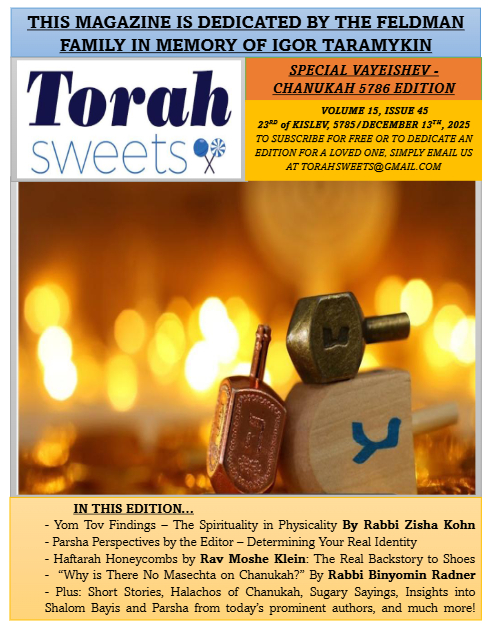
1) According to many Rishonim there is no requirement to have a Seudah (festive meal) on Chanukah, and any Seudah that is made is a Seudas Reshus (non-obligatory meal). Others argue and maintain that there is indeed a requirement to have a Seudah, with bread, on Chanukah. The prevalent minhag when having a Seudah on Chanukah is to sing Shiros V'Tishbachos (praises) to Hashem and/or talk Divrei Torah, thus making it a Seudas Mitzvah according to all opinions.

2) It is customary to eat foods made with cheese on Chanukah in commemoration of the miracle of Yehudis' slaying of the Syrian-Greek general Heliphornius which is considered one of the miracles of Chanukah, in which cheese played a role. (See Rema, Siman 670:2 and Mishnah Berurah (S"K 10) for more on the story.

3) The Minhag is that women do not do "Melacha" (work or chores) for the first thirty minutes after the Chanukah menorah is lit. Some have this Minhag on each of the eight nights of Chanukah (Shibolei HaLeket). Others have this Minhag only on the first and last night of Chanukah (Shiltei Giborim, Kol Bo, Maharil and others According to some opinions, the type of "Melacha" that the women shouldn't do is any "Melacha" that is prohibited on any other Yom Tov (the Levush, the Bach, Rav Shlomo Zalman Auerbach, ZT”L, and others).

According to other opinions, only Melachos that women refrain from doing on Rosh Chodesh and Chol HaMoed are prohibited, such as sewing, laundry, ironing etc., but baking, cooking etc. is allowed. (Moed L'Kol Chai, Rav Moshe Feinstein, ZT”L, Debreciner Rav in Be'er Moshe, Rav Chaim Kanievsky, ZT”L, in the name of his father the Steipler ZT”L) 4) Some Poskim maintain that the minhag not to do Melacha applies to men as well. (Elya Rabba's understanding of the Maharil, the Bach, and a few others).

However, most Poskim maintain that this is a special Minhag for women only, as they had particularly harsh decrees targeting them, namely that all Jewish brides were required to spend the night with the Greek general before being allowed to get married, and the women had a special part in the miracle of Chanukah (referring to the story of Yehudis who slayed the Greek general). Through her heroic actions, before he was able to defile her and the decree was abolished.

5) During Chanukah, it is proper to strengthen ourselves in the areas of learning Torah, davening (prayer), and Gemilas Chasadim (acts of kindness). (See Pri Megadim [Siman 670] at length for a fascinating explanation of how the Yevanim were trying to prevent the Jews from upholding the three pillars of the world: Torah, Avodah, and Gemilas Chasadim, and thus we need to intensify our efforts precisely in these areas.)

6) It is customary to give extra Tzedaka on the days of Chanukah, especially to support poor people who spend their lives dedicated to learning Torah. (Kitzur Shulchan Aruch, Siman 139:1) The Yesod V'Shoresh H'Avodah (Sha'ar 12:1) expounds on this, based on the Zohar Hakadosh and the writings of the Arizal, one who is lax in giving of Tzedakah all year round can rectify the harm this laxity caused by increasing his/her Tzedakah on Chanukah, especially if giving to support those who learn Torah. For final rulings, please consult a Rav.

To sign up for free, email [email protected]

PDF Preview