Praying for Miracles
Praying for Miracles
Shulchan Aruch (187:4) states, "If one forgot to say Al HaNisim [in Birkas Hamazon], he can say it in the הרחמןs... נסים לנו יעשה הוא הרחמן ...יוחנן בן מתתיהו בימי הזה בזמן ההם בימים שעשה כמו, 'May Hashem perform miracles for us just as He performed miracles in those days...'"
Similarly, if one forgets Al HaNisim in Shemonah Esrei, he should say this הרחמן at the end of Shemonah Esrei (see Mishnah Berurah 682:4).
Perhaps the explanation is that when one forgets to say Al HaNisim, he is heartbroken that he lost out on a special opportunity. His broken and humble heart makes him a fitting candidate for miracles.
Praying for a refuah sheleimah isn't considered praying for a miracle, even when doctors have given up. Doctors are permitted to heal but not to cause people to despair. Similarly, one should pray for parnassah, shidduchim, nachas, and all other kinds of yeshuos. The Gemara teaches, "If one davened and his tefillos weren't answered, he should pray again. As it states (Tehillim 27:14), 'ה אל וקוה לבך ויאמץ חזק 'ה אל קוה, 'Trust in Hashem, strengthen your heart, and trust on Hashem.'"
The Shaul u'Meishiv (Divrei Shaul) zt'l asks that it is known that we don't pray for miracles, so how can we say לנו יעשה הוא הרחמן נסים, "May Hashem perform miracles for us"?
The Shaul u'Meishiv proves that we don't daven for miracles from the following Gemara (Taanis 24:):
Rava's beis din gave malkus to a sinner, and the person died. The king heard about this and wanted to punish Rava. The king's mother warned her son, "Don't start up with the Yidden, because whatever they ask from their G-d, He gives them. When they pray for rain, it rains!"
The king replied, "That's because they pray for rain in the winter season. It was going to rain, regardless. Let them pray now, in the summer, and let's see if they could bring rain!"
The king's mother had rachmanus on Rava, so she sent him a message, warning him to daven for rain. Rava davened, but it didn’t rain.
Rava said, "Ribono Shel Olam, (Tehillim 47) בימיהם פעלת פועל לנו ספרו אבותינו שמענו באזנינו אלקים קדם בימי, 'with our ears we heard, our forefathers told us; You performed miracles in their days, in days of old,' but we didn't see these miracles with our own eyes."
Suddenly, it started pouring – in the middle of the summer! The streets of Mechuzah were flooded, and the water flowed into the Chidekel River. His tefillos were answered, and he was saved from the king's punishment.
That night, Rava saw his father in a dream. His father said, "How could one make Heaven work so hard [to bring rain in the wrong season]?" His father instructed him not to sleep in his bed. Rava got up and slept somewhere else that night. In the morning, Rava saw his bed stabbed and cut with knives. Rashi explains that sheidim came to harm Rava.
We learn from this Gemara that it is dangerous and improper to daven for miracles. Hashem chose to lead the world according to the rules of nature, and it is wrong to try to alter those rules.
Yet, on Chanukah, we daven for miracles. What is the explanation?
The Shaul u'Meishiv (Divrei Shaul) zt'l answers that throughout the year, Hashem leads the world according to the rules of nature, but on Chanukah, Hashem leads the world in miracle mode. Therefore, we may daven for nisim.
It states (Mishlei 9:1), שבעה עמודיה חצבה "Hashem set up the world on seven pillars." Many factors of the world are related to the number seven, such as the seven days of the week, seven notes of music, seven kinds of wisdom, and more. In the future, the world will be run according to the number eight, as it states (Tehilllim 6:1), השמינית על למנצח, “A song played on a harp of eight strings.” This represents a world beyond nature. Chanukah is eight days because on Chanukah, the world is run beyond the rules of nature.
The Maharal (Ner Mitzvah) writes, "The natural world is made up of seven. Eight is beyond nature. Milah is beyond nature [because a child’s creation is beyond nature]; therefore, milah is on the eighth day. The Torah was given after seven, as it states (Devarim 16:9), 'Count seven weeks...' and on the fiftieth day, the Torah was given. Chapter 119 in Tehillim, which discusses Torah, contains eight pesukim for each letter of the alef beis (אפי תמניא) representing Torah, which is beyond nature." The Maharal explains that the Chanukah miracle came in the merit of the Torah, which is beyond nature. This is why the menorah miraculously remained lit for eight days.
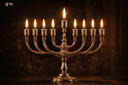
Chazal (Shabbos 21:) say, according to Beis Shamai, שמונה מדליק ראשון יום, "The first day, he lights eight [lamps]." The Chidushei HaRim zt'l says that this refers to Hakadosh Baruch Hu. [His proof is that it is written in singular, "he lights," and it doesn't state מדליקין, "we light."] On the first night of Chanukah, Hashem lights eight, which means he brings into existence a world beyond nature.
Tzaddikim tell us: When you serve Hashem with mesirus nefesh, beyond the limits of your nature, Hashem will perform miracles for you beyond the rules of nature. This applies to every day of the year, especially on Chanukah, a time for miracles. If you serve Hashem beyond your limits, Hashem will perform great miracles for you.
Personal Miracle Stories
A member of our chaburah related that his wife wasn't feeling well for a few weeks, and the doctor who examined her ordered an MRI. The diagnosis was that she had a cancerous growth r”l. The husband arranged an appointment with a medical specialist. He scheduled the meeting for the nighttime after he lit Chanukah lecht so that he could have the merit of this holy mitzvah. When the specialist looked at the MRI results, he said, "There is no growth here. You have nothing to worry about."
Another story we know (from a member of our chaburah in Elad) is of a boy who was unconscious since rosh chodesh Kislev due to a car accident. Miraculously, he began talking regularly at the start of the first night of Chanukah. They had their Chanukah personal miracle in the merit of Chanukah, a time beyond nature.