The Opportunity of Chanukah
BET Journal | December 13, 2025
Print This Article
View Original PDF

The Opportunity of Chanukah

BET Journal | December 31, 2025

There is a well-known dispute between Beis Shammai and Beis Hillel regarding the mitzvah of ner Chanukah. Beis Shammai maintains that on the first night of Chanukah, we light eight candles, the second night seven candles, etc., culminating in the lighting of a single candle on the last night of Chanukah. Beis Hillel disagrees. According to their opinion, we begin with a single candle on the first night and add a candle every night, culminating in the kindling of eight candles on the final night of Chanukah. Beis Hillel’s opinion is, of course, the normative opinion. Nonetheless, Beis Shammai’s opinion illuminates the nature of Chanukah.

One of the two reasons offered for Beis Shammai’s opinion is that Chazal modeled ner Chanukah on the Korbanos Mussaf of Succos. Just as the number of parim dropped one per day on Succos, so too, the number of candles diminishes one per day on Chanukah. Chazal do not, however, elaborate on the relevance of the model of Succos for Chanukah. What connection is there between Succos and Chanukah?

Succos and Chanukah share an extraordinary defining feature. In essence, they are both holidays of the Beis Hamikdash, whose observance takes place at all times and in all places. It’s forbidden to derive non-mitzvah benefit from the schach (and walls) of the succah. This prohibition is rooted in a remarkable drasha. Just as Hashem’s Name is associated with the Korban Chagigah (prohibiting benefit therefrom), so too, His Name is associated with the succah (generating a similar prohibition). The succah possesses the sanctity of a korban. Similarly, the mitzvah of lulav is essentially a Mikdash-centered mitzvah, as evidenced by the fact that mitzvas lulav is operative min HaTorah the entire seven days of Succos only in the Mikdash. Chanukah is also a yom tov of the Mikdash.

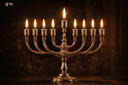
The defining mitzvah of Chanukah is hadlakas hamenorah. The Ramban (at the beginning of Parshas Beha’aloscha), elaborating upon the words of Chazal, explains that our mitzvas ner Chanukah is a direct continuation of the mitzvah in the Mikdash. According to the Baal Hameor, we are prohibited from deriving any personal benefit from neiros Chanukah because we must relate to them as to the neiros of the Menorah in the Mikdash.

Thus we see that both Succos and Chanukah are essentially holidays of the Mikdash. Each of these yomim tovim affords the remarkable opportunity to be exposed to the kedushah of the Mikdash, even two millennia after its destruction. We can be “to’aim” the kedushah of Mikdash on these holidays.

Chanukah is also a time of initiative and awakening. The initiative of the Chashmonaim was the catalyst for the events of Chanukah. Their awakening and mesiras nefesh was rewarded by Hakadosh Baruch Hu with the miracle(s) of Chanukah. (The Sefas Emes, 5636, develops this theme as well). We are encouraged to take initiative in a halachically sanctioned fashion by fulfilling the mitzvah of ner Chanukah according to the mehadrin or mehadrin min hamehadrin.

These two motifs of Chanukah - Mikdash and awakening/initiative - are intertwined. The mitzvah of building the Beis Hamikdash is prescribed in the Torah as “you shall seek out His presence and come there.” The Ramban (Parshas Korach) explains that we are supposed to awaken ourselves to fulfill the mitzvah of building the Beis Hamikdash. We must awaken ourselves to pursue kedushah. Kedushah is not attained through passivity.

Thus, Chanukah, a yom tov of the Mikdash, is also a time for personal religious awakening. It is a time to awaken ourselves, to accept upon ourselves resolutions to improve our avodas Hashem. Perhaps one will accept upon himself to cherish the Shabbos and observe it accordingly: to prepare for Shabbos early and to devote extended time to studying Torah and singing zemiros on Shabbos. Perhaps one will accept upon himself to recite brachos slowly, thoughtfully, without simultaneously engaging in any other activities. Perhaps our bein adam lachaveiro can be improved. Indeed, there are many other possible resolutions; each individual must prioritize them for themselves. However we rededicate ourselves, Chanukah is a priceless opportunity to absorb kedushah and take the initiative in improving our avodas Hashem.

RABBI PINCHAS KASNETT
RABBI MAYER TWERSKY
There is a well-known dispute between Beis Shammai and Beis Hillel regarding the mitzvah of ner Chanukah. Beis Shammai maintains that on the first night of Chanukah, we light eight candles, the second night seven candles, etc., culminating in the lighting of a single candle on the last night of Chanukah. Beis Hillel disagrees. According to their opinion, we begin with a single candle on the first night and add a candle every night, culminating in the kindling of eight candles on the final night of Chanukah. Beis Hillel’s opinion is, of course, the normative opinion. Nonetheless, Beis Shammai’s opinion illuminates the nature of Chanukah.

One of the two reasons offered for Beis Shammai’s opinion is that Chazal modeled ner Chanukah on the Korbanos Mussaf of Succos. Just as the number of parim dropped one per day on Succos, so too, the number of candles diminishes one per day on Chanukah. Chazal do not, however, elaborate on the relevance of the model of Succos for Chanukah. What connection is there between Succos and Chanukah?

Succos and Chanukah share an extraordinary defining feature. In essence, they are both holidays of the Beis Hamikdash, whose observance takes place at all times and in all places. It’s forbidden to derive non-mitzvah benefit from the schach (and walls) of the succah. This prohibition is rooted in a remarkable drasha. Just as Hashem’s Name is associated with the Korban Chagigah (prohibiting benefit therefrom), so too, His Name is associated with the succah (generating a similar prohibition). The succah possesses the sanctity of a korban. Similarly, the mitzvah of lulav is essentially a Mikdash-centered mitzvah, as evidenced by the fact that mitzvas lulav is operative min HaTorah the entire seven days of Succos only in the Mikdash. Chanukah is also a yom tov of the Mikdash.

The defining mitzvah of Chanukah is hadlakas hamenorah. The Ramban (at the beginning of Parshas Beha’aloscha), elaborating upon the words of Chazal, explains that our mitzvas ner Chanukah is a direct continuation of the mitzvah in the Mikdash. According to the Baal Hameor, we are prohibited from deriving any personal benefit from neiros Chanukah because we must relate to them as to the neiros of the Menorah in the Mikdash.

Thus we see that both Succos and Chanukah are essentially holidays of the Mikdash. Each of these yomim tovim affords the remarkable opportunity to be exposed to the kedushah of the Mikdash, even two millennia after its destruction. We can be “to’aim” the kedushah of Mikdash on these holidays.

Chanukah is also a time of initiative and awakening. The initiative of the Chashmonaim was the catalyst for the events of Chanukah. Their awakening and mesiras nefesh was rewarded by Hakadosh Baruch Hu with the miracle(s) of Chanukah. (The Sefas Emes, 5636, develops this theme as well). We are encouraged to take initiative in a halachically sanctioned fashion by fulfilling the mitzvah of ner Chanukah according to the mehadrin or mehadrin min hamehadrin.

These two motifs of Chanukah - Mikdash and awakening/initiative - are intertwined. The mitzvah of building the Beis Hamikdash is prescribed in the Torah as “you shall seek out His presence and come there.” The Ramban (Parshas Korach) explains that we are supposed to awaken ourselves to fulfill the mitzvah of building the Beis Hamikdash. We must awaken ourselves to pursue kedushah. Kedushah is not attained through passivity.

Thus, Chanukah, a yom tov of the Mikdash, is also a time for personal religious awakening. It is a time to awaken ourselves, to accept upon ourselves resolutions to improve our avodas Hashem. Perhaps one will accept upon himself to cherish the Shabbos and observe it accordingly: to prepare for Shabbos early and to devote extended time to studying Torah and singing zemiros on Shabbos. Perhaps one will accept upon himself to recite brachos slowly, thoughtfully, without simultaneously engaging in any other activities. Perhaps our bein adam lachaveiro can be improved. Indeed, there are many other possible resolutions; each individual must prioritize them for themselves. However we rededicate ourselves, Chanukah is a priceless opportunity to absorb kedushah and take the initiative in improving our avodas Hashem.

RABBI PINCHAS KASNETT
RABBI MAYER TWERSKY

PDF Preview