Wisdom and Symbolism in Parshas Vayeishev
Parsha Pages | December 03, 2023
Print This Article
View Original PDF

Wisdom and Symbolism in Parshas Vayeishev

Parsha Pages | December 31, 2025

Wisdom

בראשית לז ,ג: וְיִשְרָּאֵל אָּהַב אֶׁת־יוֹסֵף מִכָּל־בָּנָּיו כִי־בֶׁן־זְקֻנִים הוא לוֹ
The Baal HaTurim writes that the word זקנים serves as an acronym for the names of the orders of the Mishneh: זרעים (agriculture) קדשים (holy items) נשים (women) ישועות (salvations another name for נזיקין) and מועד (holidays).

Several commentators note that the sixth order of טהרות (purity) has no allusion. Many explanations are provided. It is possible that Yaacov taught Yosef most of the Seder Taharos but did not complete the order because he deemed the material of tractate Nidos, laws pertaining to a menstruant, unsuitable for one who was young not yet the proper age (18) for marriage.

Leader

בראשית לז ,ג: וְעָּשָּה לוֹ כְתֹנֶׁת פַסִים:
The Baal haTurim points out that the word "Pasim" is spelt 'Pey', 'Samech', 'Yud', 'Mem', hinting at the eighty years ('Pey') that Yosef was destined to become king, out of a life-span of a hundred and ten ('Samech' + 'Yud' + 'Mem').

Yosef was thirty years old when he became second in command of Egypt, and he lived till he was one hundred and then years old.

The Staff

בראשית לח ,יח : ומַטְךָ אֲשֶׁר בְיָּ דֶׁךָ וַיִתֶׁן־לָּהּ
The Baal haTurim observes the word מטך appears twice: once here and once in Beshalach (17:5), where G-d instructed Moshe to take his stick with which he struck the River (Nile) and strike the rock, to obtain water on behalf of the people. This teaches us that the staff that Yehudah handed Tamar was the same staff that Moshe later used to strike the Nile and to perform all the miracles in Egypt.

One Medrash states that this staff was passed from Yaacov to Yehudah to Moshe to Aharon and to his descendants who succeeded him until the destruction of the Bais haMikdash when it was hidden. The staff would reappear in the hands of King Moshiach.

Better to be Thrown into a Fiery Furnace

בראשית לח ,כד : הוֹצִיאוהָּ וְתִשָּרֵף
Rashi (Brachos 43b) says that Tamar did not simply say that Yehudah impregnated her. Rather she only sent the payment, saying, "The man to whom these items belong is responsible for my pregnancy. If he admits it fine, and if not, let them burn me rather than my embarrassing him." From this we derive that it is preferable for a person to throw himself into a fiery cauldron rather than embarrassing his fellow man.

The Baal haTurim says that Yehudah's words do not mean that she was to be burned to death, but rather, that a mark be made on her face with a burning brand, as a constant sign to her sin. If so, what is the proof that it is preferable to be burned to death, as that wasn't going to be her punishment? As well, how do we derive that it is preferable to "throw oneself" as she was not about to do this to herself, but rather, it would be done by others?

The answer lies in Rashi's words "mikan amru." "Kan," here, is not the happening in the verse. Rather, "mikan," is from the words of Tamar, "Even if they were to throw me into a fiery cauldron I will not embarrass him." This was not the punishment they were about to administer. We thus derive that she was ready to suffer an extremely greater punishment. Thus, we derive that even suffering death by fire is preferable to embarrassing your fellow man.

Paaneiach Raza writes that it is forbidden to believe that the Baal haTurim wrote this comment.
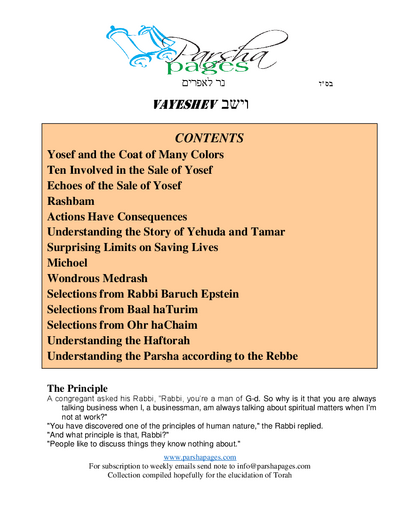
Wisdom

בראשית לז ,ג: וְיִשְרָּאֵל אָּהַב אֶׁת־יוֹסֵף מִכָּל־בָּנָּיו כִי־בֶׁן־זְקֻנִים הוא לוֹ
The Baal HaTurim writes that the word זקנים serves as an acronym for the names of the orders of the Mishneh: זרעים (agriculture) קדשים (holy items) נשים (women) ישועות (salvations another name for נזיקין) and מועד (holidays).

Several commentators note that the sixth order of טהרות (purity) has no allusion. Many explanations are provided. It is possible that Yaacov taught Yosef most of the Seder Taharos but did not complete the order because he deemed the material of tractate Nidos, laws pertaining to a menstruant, unsuitable for one who was young not yet the proper age (18) for marriage.

Leader

בראשית לז ,ג: וְעָּשָּה לוֹ כְתֹנֶׁת פַסִים:
The Baal haTurim points out that the word "Pasim" is spelt 'Pey', 'Samech', 'Yud', 'Mem', hinting at the eighty years ('Pey') that Yosef was destined to become king, out of a life-span of a hundred and ten ('Samech' + 'Yud' + 'Mem').

Yosef was thirty years old when he became second in command of Egypt, and he lived till he was one hundred and then years old.

The Staff

בראשית לח ,יח : ומַטְךָ אֲשֶׁר בְיָּ דֶׁךָ וַיִתֶׁן־לָּהּ
The Baal haTurim observes the word מטך appears twice: once here and once in Beshalach (17:5), where G-d instructed Moshe to take his stick with which he struck the River (Nile) and strike the rock, to obtain water on behalf of the people. This teaches us that the staff that Yehudah handed Tamar was the same staff that Moshe later used to strike the Nile and to perform all the miracles in Egypt.

One Medrash states that this staff was passed from Yaacov to Yehudah to Moshe to Aharon and to his descendants who succeeded him until the destruction of the Bais haMikdash when it was hidden. The staff would reappear in the hands of King Moshiach.

Better to be Thrown into a Fiery Furnace

בראשית לח ,כד : הוֹצִיאוהָּ וְתִשָּרֵף
Rashi (Brachos 43b) says that Tamar did not simply say that Yehudah impregnated her. Rather she only sent the payment, saying, "The man to whom these items belong is responsible for my pregnancy. If he admits it fine, and if not, let them burn me rather than my embarrassing him." From this we derive that it is preferable for a person to throw himself into a fiery cauldron rather than embarrassing his fellow man.

The Baal haTurim says that Yehudah's words do not mean that she was to be burned to death, but rather, that a mark be made on her face with a burning brand, as a constant sign to her sin. If so, what is the proof that it is preferable to be burned to death, as that wasn't going to be her punishment? As well, how do we derive that it is preferable to "throw oneself" as she was not about to do this to herself, but rather, it would be done by others?

The answer lies in Rashi's words "mikan amru." "Kan," here, is not the happening in the verse. Rather, "mikan," is from the words of Tamar, "Even if they were to throw me into a fiery cauldron I will not embarrass him." This was not the punishment they were about to administer. We thus derive that she was ready to suffer an extremely greater punishment. Thus, we derive that even suffering death by fire is preferable to embarrassing your fellow man.

Paaneiach Raza writes that it is forbidden to believe that the Baal haTurim wrote this comment.

PDF Preview