The Depths of the Heart
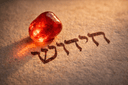
On Yom Kippur, we are at the deepest level of closeness with Hashem we can reach. It is reached only in the very innermost depths of our heart, where our true power of choice lies. The external layer of our heart is where we seek atonement in order that we shouldn’t suffer, and so that we should have Gan Eden and Olam HaBa, etc. But the depth of seeking atonement which we need to reveal is, that it should pain you, deeply, that there is a barrier between you and Hashem, which has been created from sin. That can spur you on to do true teshuvah, and that is where the true atonement lies.
Any of the other reasons of why we need atonement are also true (at least to some level), but on Yom Kippur, when we keep seeking atonement, through continuously the words סלח לנו, מחל לנו, כפר לנו, “Forgive us, pardon us, atone us”, the inner intention of these words that we should ideally have is, that we want to be cleansed from sin, and not just to simply be forgiven, as we ask during the rest of the year in Shemoneh Esrei, in the blessing of סלח לנו.
Every person will need to clarify to himself, internally, why he wants to be “forgiven” from Hashem. If it is because he wants to avoid being punished and because he wants to have spiritual success, then the words we are saying here are very far from him. But if a person seeks truth, and to live a truthful life, a life of closeness with Hashem, his main request for atonement on Yom Kippur is to desire more closeness with Hashem.
“My soul thirsts for G-d” – one can feel how distant he is from Hashem and it is painful to him, bitterer than death, and this is what he asks Hashem for, that the barriers be removed between him and Hashem. If that it his entire concern on Yom Kippur, then he attains a certain level of closeness already, and even if it is not the complete level, it is something worthy. When one is mainly concerned with this in his requests on Yom Kippur as he continuously says the words סלח לנו, מחל לנו, כפר לנו, and if this is what he desires in life, he is closer to doing “complete teshuvah”, and he will feel the closeness with Hashem, and then he can know with certainty that his sins have been forgiven.
Chazal teach that if a person wants to know if his sins have been forgiven or not, he should try to sense afterwards (after doing teshuvah) if he feels closer to Hashem or not. If he feels closer to Hashem than before, it is a sign that his sins have been atoned.
If this is what a person wants in his life – to desire closeness with Hashem – he can then reach the level that is after the atonement of Yom Kippur, which is the atonement of death.
The atonement of “Yom Kippur” itself is an obligation upon every person to try to reach, by every person, no matter what level he is on; but in order to reach the higher level of atonement on Yom Kippur, of “death atones”, which we read about on Yom Kippur when we read the deaths of Nadav and Avihu, we need to go deeper. Yom Kippur is the gateway that leads us to sensing a palpable closeness with Hashem, to reach a point in which we are willing to give our entire life for this – to reach closeness with Hashem.
We cannot live on this level during the rest of the year, for it is a very high level to stay on. But we can at least have one time of the year where we access it, on Yom Kippur, which is called the “day of HaKadosh Baruch Hu”. It was the day where the Kohen Gadol entered before Hashem in the Kodesh Kodashim, and the Nefesh HaChaim explains that one can enter the Kodesh Kodashim on an inner level, in the depths of his own heart, resembling the Kohen Gadol who entered the Kodesh Kodashim on Yom Kippur.
This is at the innermost depths the heart. When one is willing to enter into this deep place, a person is faced with the ultimate choice: Are you prepared to go further into the atonement of Yom Kippur, by entering into the next step, of “death” – by being willing to give your life for this? If you can even touch upon this level, you are connecting to the depths of the avodah of this day.