Yosef's Shock and Urgency
Ben Chamesh L'Mikra | December 17, 2023
Print This Article
View Original PDF

Yosef's Shock and Urgency

Ben Chamesh L'Mikra | December 31, 2025

Yosef’s shock

This is what Yosef was expressing in his shock of his father Yaakov still being alive.

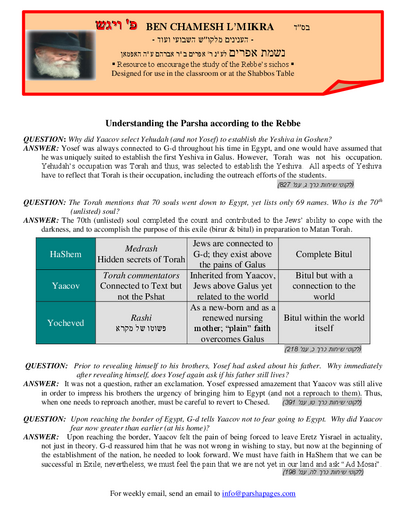
Yosef inferred, that given the fact that “I am Yosef,”—meaning, that he was alive—it must be that my father is still mourning my death. He therefore asked, “Is my father still alive?!” For, if Yosef was alive and Yaakov was still mourning for him, he therefore understood that his father had been suffering for all this time. He therefore asked in shock: how can it be that my father is still alive after his twenty two years of tremendous emotional pain?!

He was not asking a question, but was expressing that his father must be going through tremendous emotional pain.

It is now also understood why Yosef expressed this surprise specifically when he did, immediately after revealing himself.

Being that his father was going through such an extensive period of mourning, he therefore told his brothers that the time had come for them to bring their father to Egypt. His statement, “I am Yosef. Is my father still alive?” served as a preface to his next statement, that they bring their father to Egypt.

Yosef continued and instructed them, “Hasten and go up to my father, and say to him, 'So said your son, Yosef: "G-d has made me a lord over all the Egyptians. Come down to me, do not tarry.”

Hence, Yosef’s previous statement was not merely a statement of shock, but also a preface that they rush and bring their father to Egypt.

The reason they needed to hurry was that every moment that they did not inform Yaakov of Yosef’s well-being, Yaakov was experiencing tremendous pain, which was also dangerous to his health—especially after the 22 years of mourning Yosef’s loss.

The questions above are consequently answered:

  1. Yosef’s shock was not that Yaakov was alive at such an old age, but rather, that he was still alive despite the tremendous emotional pain of his mourning.
  2. The beginning of his statement, “I am Yosef,” was an introduction to the end of his statement, “Is my father still alive.” Being that he was Yosef, and alive, it was therefore shocking that his father, having been in a state of constant mourning, and tremendous pain for all those years, was also alive.
  3. Yosef therefore expressed these words right at the beginning of his conversation with his brothers. He did not want any unnecessary time to pass, during which his father would, G-d forbid, be in more pain, and his health would be endangered.
Yosef’s shock

This is what Yosef was expressing in his shock of his father Yaakov still being alive.

Yosef inferred, that given the fact that “I am Yosef,”—meaning, that he was alive—it must be that my father is still mourning my death. He therefore asked, “Is my father still alive?!” For, if Yosef was alive and Yaakov was still mourning for him, he therefore understood that his father had been suffering for all this time. He therefore asked in shock: how can it be that my father is still alive after his twenty two years of tremendous emotional pain?!

He was not asking a question, but was expressing that his father must be going through tremendous emotional pain.

It is now also understood why Yosef expressed this surprise specifically when he did, immediately after revealing himself.

Being that his father was going through such an extensive period of mourning, he therefore told his brothers that the time had come for them to bring their father to Egypt. His statement, “I am Yosef. Is my father still alive?” served as a preface to his next statement, that they bring their father to Egypt.

Yosef continued and instructed them, “Hasten and go up to my father, and say to him, 'So said your son, Yosef: "G-d has made me a lord over all the Egyptians. Come down to me, do not tarry.”

Hence, Yosef’s previous statement was not merely a statement of shock, but also a preface that they rush and bring their father to Egypt.

The reason they needed to hurry was that every moment that they did not inform Yaakov of Yosef’s well-being, Yaakov was experiencing tremendous pain, which was also dangerous to his health—especially after the 22 years of mourning Yosef’s loss.

The questions above are consequently answered:

  1. Yosef’s shock was not that Yaakov was alive at such an old age, but rather, that he was still alive despite the tremendous emotional pain of his mourning.
  2. The beginning of his statement, “I am Yosef,” was an introduction to the end of his statement, “Is my father still alive.” Being that he was Yosef, and alive, it was therefore shocking that his father, having been in a state of constant mourning, and tremendous pain for all those years, was also alive.
  3. Yosef therefore expressed these words right at the beginning of his conversation with his brothers. He did not want any unnecessary time to pass, during which his father would, G-d forbid, be in more pain, and his health would be endangered.
PDF Preview