Aryeh Kaplan on Creation
Parsha Pages | October 09, 2023
Print This Article
View Original PDF

Aryeh Kaplan on Creation

Parsha Pages | December 31, 2025

Aryeh Kaplan on Creation

Based on a post by Alan Brill

Aryeh Kaplan’s Handbook of Jewish Thought has become a classic of synthesizing the classic positions of Jewish thought into an order fashion both an introductory guide and simultaneously a reference book

Following is a pdf of a full chapter of Aryeh Kaplan’s Handbook of Jewish Thought left out of the published work possibly because he presents evolution as part of the basic tenets of Judaism. Rabbi Kaplan is explicit in his affirmation of evolution in this piece. The already typeset chapter has an editor’s note across the top asking if the chapter is “fixable” and “true kosher”? There is also an editor’s note that dates the chapter to 1968.

The Handbook of Jewish Thought was published in two volumes, the first, containing 13 chapters, appeared in the author’s lifetime in 1979. The second volume edited by Avraham Sutton, was published posthumously in 1992. That volume has 25 chapters. While the first volume had no introduction from the author, the second volume contains the following statement:

The bulk of the present volume is from the author’s original 1967- 1969 manuscript that consisted of 40 chapters. Thirteen of these chapters were prepared for publication by Rabbi Kaplan himself and published in 1979 as the Handbook of Jewish thought – Volume I. It is clear that the remaining chapters were set aside with the thought of eventually preparing them for publication. Of these remaining chapters, 25 are presented here. Quick arithmetic – 13 (volume 1) and 25 (volume 2) indicates that 2 chapters of the original 40 not included. His chapter on Creation (and one other) were not included.

Creation - Overview

In the first three paragraphs, he states that the creation account in Genesis is not literal and not science but narrated to teach the history of Israel. He believes that new concepts in science are always being discovered beyond the limited science known in the Biblical and rabbinical era. We are, according to Rabbi Kaplan, to continuously interpret the Biblical text according to currently available knowledge.

Even though the explicit text is to narrate Israel’s history, nevertheless Rabbi Kaplan states that the scientific knowledge is hinted at in the Masoretic text through “subtle variations.” In addition, we have traditions that aid in our discovering the scientific truth in the text. Maimonides and other medieval interpreted the text based on Aristotle. Maimonides in his Guide II:29 explains how he would be willing to read texts based on current science; similarly, Ramchal in his commentary of the Aggadot.

Rabbi Kaplan consider the creation of the universe as billions of years ago when there was the initial creation as the creation of matter as well as the initial creation of time/space. The creation at the start of Genesis was billions of years ago according to Rabbi Kaplan, even if the Torah does not explicitly state it.

Rabbi Kaplan explains that G-d did not really verbalize in the creation of the world, rather G-d speaks means the impression of will upon matter thereby giving it a new property. G-d speech involves modulating creation to desired results. (There is already a sense here of Rabbi Kaplan’s later focus on mental acts – meditation). Rabbi Kaplan in his spiritualizing of the text successfully manages to be deeply Maimonidean and Nahmanidean at the same time. He can cite simultaneously Maimonides’ Guide of the Perplexed on how locutions such as “G-d spoke”, “G-d’s mouth” or “G-d spoke to Moses” are anthropomorphic and not to be taken literally. Simultaneously, Rabbi Kaplan appeals to Ramban 1:3 in that Divine will impressed upon the primordial matter of hiyuli, G-d is not literally speaking but engaged in the coming to be of the lower hypostatic element, which in turn will create the world. Rabbi Kaplan foreshadows his later thought and treats kabbalah in a non-literal manner.

Rabbi Kaplan further spiritualizes the process so the steps of creation did not happen at the stated time, just that the prerequisites for G-d’s goal was complete even though the actual goal would not manifest until later (15:8)

Rabbi Kaplan explains the phrase “it was good” to mean the completion of something essential for the evolution of the universe, destruction of prior worlds means evolution to something higher. The world is evolving to higher stages. The destruction of prior world does not mean there were prior worlds just that lower forms of this world. (15:9) (He cites Maharal Beer Hagolah 39b)
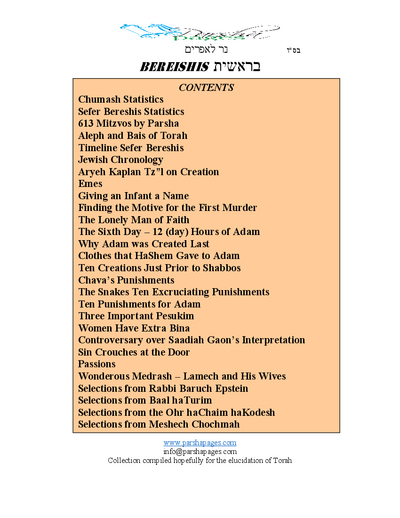

Aryeh Kaplan on Creation

Based on a post by Alan Brill

Aryeh Kaplan’s Handbook of Jewish Thought has become a classic of synthesizing the classic positions of Jewish thought into an order fashion both an introductory guide and simultaneously a reference book

Following is a pdf of a full chapter of Aryeh Kaplan’s Handbook of Jewish Thought left out of the published work possibly because he presents evolution as part of the basic tenets of Judaism. Rabbi Kaplan is explicit in his affirmation of evolution in this piece. The already typeset chapter has an editor’s note across the top asking if the chapter is “fixable” and “true kosher”? There is also an editor’s note that dates the chapter to 1968.

The Handbook of Jewish Thought was published in two volumes, the first, containing 13 chapters, appeared in the author’s lifetime in 1979. The second volume edited by Avraham Sutton, was published posthumously in 1992. That volume has 25 chapters. While the first volume had no introduction from the author, the second volume contains the following statement:

The bulk of the present volume is from the author’s original 1967- 1969 manuscript that consisted of 40 chapters. Thirteen of these chapters were prepared for publication by Rabbi Kaplan himself and published in 1979 as the Handbook of Jewish thought – Volume I. It is clear that the remaining chapters were set aside with the thought of eventually preparing them for publication. Of these remaining chapters, 25 are presented here. Quick arithmetic – 13 (volume 1) and 25 (volume 2) indicates that 2 chapters of the original 40 not included. His chapter on Creation (and one other) were not included.

Creation - Overview

In the first three paragraphs, he states that the creation account in Genesis is not literal and not science but narrated to teach the history of Israel. He believes that new concepts in science are always being discovered beyond the limited science known in the Biblical and rabbinical era. We are, according to Rabbi Kaplan, to continuously interpret the Biblical text according to currently available knowledge.

Even though the explicit text is to narrate Israel’s history, nevertheless Rabbi Kaplan states that the scientific knowledge is hinted at in the Masoretic text through “subtle variations.” In addition, we have traditions that aid in our discovering the scientific truth in the text. Maimonides and other medieval interpreted the text based on Aristotle. Maimonides in his Guide II:29 explains how he would be willing to read texts based on current science; similarly, Ramchal in his commentary of the Aggadot.

Rabbi Kaplan consider the creation of the universe as billions of years ago when there was the initial creation as the creation of matter as well as the initial creation of time/space. The creation at the start of Genesis was billions of years ago according to Rabbi Kaplan, even if the Torah does not explicitly state it.

Rabbi Kaplan explains that G-d did not really verbalize in the creation of the world, rather G-d speaks means the impression of will upon matter thereby giving it a new property. G-d speech involves modulating creation to desired results. (There is already a sense here of Rabbi Kaplan’s later focus on mental acts – meditation). Rabbi Kaplan in his spiritualizing of the text successfully manages to be deeply Maimonidean and Nahmanidean at the same time. He can cite simultaneously Maimonides’ Guide of the Perplexed on how locutions such as “G-d spoke”, “G-d’s mouth” or “G-d spoke to Moses” are anthropomorphic and not to be taken literally. Simultaneously, Rabbi Kaplan appeals to Ramban 1:3 in that Divine will impressed upon the primordial matter of hiyuli, G-d is not literally speaking but engaged in the coming to be of the lower hypostatic element, which in turn will create the world. Rabbi Kaplan foreshadows his later thought and treats kabbalah in a non-literal manner.

Rabbi Kaplan further spiritualizes the process so the steps of creation did not happen at the stated time, just that the prerequisites for G-d’s goal was complete even though the actual goal would not manifest until later (15:8)

Rabbi Kaplan explains the phrase “it was good” to mean the completion of something essential for the evolution of the universe, destruction of prior worlds means evolution to something higher. The world is evolving to higher stages. The destruction of prior world does not mean there were prior worlds just that lower forms of this world. (15:9) (He cites Maharal Beer Hagolah 39b)

PDF Preview