Undeserved Kindness
Torah Wellsprings | December 13, 2025
Print This Article
View Original PDF

Undeserved Kindness

Torah Wellsprings | December 31, 2025

Machzor Vitri writes that חנוכה comes from the word חנינה (or חנם), to give gifts, even to those who don't deserve them. The Ruzhiner zt'l explains, "On חנוכה, Hashem gives us bounty, similar to the blessings that descend on Rosh Hashanah. The difference is that on Rosh Hashanah, we receive the bounty if we are worthy, and on Chanukah, we receive the bounty even if we don't deserve it."

Rashi (Bereishis 8:11) says that the dove that Noach sent from the teivah said, "Ribono Shel Olam! May my parnassah be bitter like an olive, but given from Your hands, and not sweet like honey, given by a human being." Rebbe Moshe of Razvadov zt'l says that these words hint at Chanukah. The dove represents the Jewish nation (see Brachos 53:). They say to Hashem, "כזית מרורין מזונותי יהיו, let my parnassah come from Chanukah when we use שמן זית, olive oil, ה"הקב של בידו because then the parnassah comes from Hakadosh Baruch Hu's compassionate hand. We prefer that over the parnassah that comes from Rosh Hashanah, כדבש מתוקין, the time of year when we eat an apple with honey, because then it is ודם בשר בידי, dependent on man's deeds. If one deserves, he receives; if he doesn’t deserve, he doesn't."

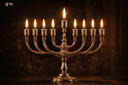
Parnassah and all the brachos come down when we light Chanukah lecht, but that shouldn't be our focus. We light the lecht because it is a mitzvah and because we want to publicize the nisim. The parnassah and bounty will certainly flow in this merit, but we shouldn't think about that when we perform the mitzvah. This is hinted in Chazal (Shabbos 22.), חנוכה נר כנגד מעות להרצות אסור. We can translate it to mean, “It is forbidden to want money when lighting the Chanukah candles.” However, when we perform the mitzvah properly, we will receive many brachos and yeshuos, b'ruchniyos and b'gashmiyos.

Machzor Vitri writes that חנוכה comes from the word חנינה (or חנם), to give gifts, even to those who don't deserve them. The Ruzhiner zt'l explains, "On חנוכה, Hashem gives us bounty, similar to the blessings that descend on Rosh Hashanah. The difference is that on Rosh Hashanah, we receive the bounty if we are worthy, and on Chanukah, we receive the bounty even if we don't deserve it."

Rashi (Bereishis 8:11) says that the dove that Noach sent from the teivah said, "Ribono Shel Olam! May my parnassah be bitter like an olive, but given from Your hands, and not sweet like honey, given by a human being." Rebbe Moshe of Razvadov zt'l says that these words hint at Chanukah. The dove represents the Jewish nation (see Brachos 53:). They say to Hashem, "כזית מרורין מזונותי יהיו, let my parnassah come from Chanukah when we use שמן זית, olive oil, ה"הקב של בידו because then the parnassah comes from Hakadosh Baruch Hu's compassionate hand. We prefer that over the parnassah that comes from Rosh Hashanah, כדבש מתוקין, the time of year when we eat an apple with honey, because then it is ודם בשר בידי, dependent on man's deeds. If one deserves, he receives; if he doesn’t deserve, he doesn't."

Parnassah and all the brachos come down when we light Chanukah lecht, but that shouldn't be our focus. We light the lecht because it is a mitzvah and because we want to publicize the nisim. The parnassah and bounty will certainly flow in this merit, but we shouldn't think about that when we perform the mitzvah. This is hinted in Chazal (Shabbos 22.), חנוכה נר כנגד מעות להרצות אסור. We can translate it to mean, “It is forbidden to want money when lighting the Chanukah candles.” However, when we perform the mitzvah properly, we will receive many brachos and yeshuos, b'ruchniyos and b'gashmiyos.

PDF Preview