The Light of Chanukah and Its Blessings
A father brought his infant son to the Ribnitzer Rebbe zt'l (when the rebbe was in Los Angeles for Chanukah.) It states (Tehillim 115:17) ה"י יהללו המתים לא, "Neither will the dead praise Hashem..." The Chidushei HaRim zt'l said that we can understand from this pasuk an opposite lesson: When people praise Hashem, they will live. Chanukah was established to praise Hashem, so this holiday is mesugal for a long life.
This is also alluded to in Mishlei (16:15) חיים מלך פני באור, "In the light of the King's countenance is life." With the light of Chanukah, we merit life.
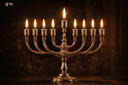
Another hint is from Chazal (Shabbos 22.): "The light of Chanukah should be on the left and the mezuzah on the right." The mezuzah represents long life as it states (Devarim 11:21) בניכם וימי ימיכם ירבו למען, "So that your days may increase and the days of your children..." So, also Chanukah lecht is mesugal for long life.
Rebbe Moshe Kobriner zt'l said that Chanukah lecht brings refuos to the world.
The father told the rebbe that his son was born prematurely and was placed in an incubator with a bandage over his eyes to protect him from the strong light. However, the bandage fell off, and the child became blind in both eyes, r'l. The rebbe stared forcefully at the Chanukah lecht, and then looked at the child. Then he looked again at the Chanukah lecht, and once again, at the child. After repeating this several times, the rebbe announced, "Baruch Hashem, the child sees with his right eye." The rebbe continued looking at the lecht and then at the child, and then he said, "The child still doesn’t see with his left eye, but eventually he will." Twenty years later, the rebbe received an invitation to the chasunah of this child, who now saw well with both eyes.