Story of the Week The Tschenger Rav Saves a Yid from Destruction While Ending His Addiction to Gambling
Pardes Yehuda | August 11, 2023
Print This Article
View Original PDF

Story of the Week The Tschenger Rav Saves a Yid from Destruction While Ending His Addiction to Gambling

Pardes Yehuda | December 31, 2025

HaRav Asher Anshel Yungreis kwweumz, author of Sefer Menuchas Asher, was the distinguished Rov of the city of Tschenger. His Yahrzeit is (s"kr, ukxfc wv). Recently his Kever has attracted thousands of people who saw Yeshuos there in many ways.

In Tschenger many men wasted away precious time playing cards. The atmosphere was catchy and one talmid chacham fell into their circle and became addicted to their empty pastime. Before long, his livelihood began to suffer, losing his money in gambling, not to mention his davening and learning. His worthy wife pleaded with him over his decline in his spiritual and material levels. Her pleas were to no avail. She desired to consult the Tschenger Rav for counsel but was too embarrassed to tell him of her husband's deep fall from his spiritual heights, caused by card-playing.

Things became serious, however, when her husband had yahrtzeit for his father the following day. His usual custom was to learn Mishnayos the night of the yahrtzeit, but instead, he spent the precious night hours with his addiction to cards and his new friends. The good woman cried bitterly about his neglecting to learn Mishnayos for the elevation of his father's soul, but he answered that it was sufficient for him to daven at the amud in shul and provide "Tikkun" for the worshippers. This disrespect of his usual and proper standards was enough to overcome her modest shyness and she found herself knocking on Tschenger Rav's door early the next morning. She poured her heart out to the Rav, telling him how unbearable it was to live with a card player, one who used to toil in the Torah all the time. She told the Rav that the man would be coming to that shacharis since he had yahrtzeit, and she begged the Rav to use that chance to talk some sense into her husband and turn him from his degraded ways. Failing that, she wept; she would demand a divorce.

Rather than addressing her directly, the Rav started pacing back and forth between his quarters and the synagogue, this way and that, casting a pall of fear over the trembling woman. After a time, the Rav let out these mysterious words: "It's not working. It's not going. What do they want from me? Do I have to struggle against them all night long? Go home, my daughter. In the morning, I'll see a clear way to deal with them!" Although these words caused her uneasiness, she still felt calm knowing that the tzaddik was engaged in her case and went home with trust in Hashem. It was already in the morning and she went to wake her husband, to please go to shul to observe the yahrtzeit. However, having come home late from the card games, he shrugged her off.

"Let me sleep, the first minyan is impossible, but I'll make it to the second one. Wake me in a half hour." Meanwhile, the Rav was looking out for the man, and, seeing that he didn't appear, assumed that he would come for the second minyan, and informed his gabbay accordingly that he would also daven then. When the husband walked into Shul, he was overwhelmed by the Rav's wide-armed, embracing welcome. "I hear you have yahrtzeit today, so of course you'll take the amud and give a nice tikkun to the people." The man readily agreed, which prompted the Rav to announce, "This gentleman has yahrtzeit today, and there will be an amazing tikkun. All invited!" The regular worshippers knew that something was brewing when they saw the Rav's behavior. The Rav never altered his schedule, and his somewhat bizarre announcement was in line with his usual standard of conduct.

The man led the services as chazan, but when he reached chazoras hashatz (repetition of the Shmona Esrei prayer), he saw that the Rav had entered into an intense state of devotion and was now in a distant sphere, and it was evident that the Rav would take a long time to finish the Shemna Esrai. The problem was that he was extremely drowsy from having stayed up half the previous night, and he dozed off, even while standing fully upright. In his sleep, he had a dream, and he began to talk in his sleep and relate that he was now playing a card game! A complete game was recanted for all to hear. The whole Shul listened and was astonished to hear and see such a stance! Finally, he woke up and realized, to his horror, where he was and that the assembled townspeople were witnesses to his shame. The humiliation of publicly relating his pastime finally shattered his stubborn soul. He desperately threw himself at the Rav's feet, sobbing, "Rebbe, I want to do teshuva, I sincerely want to repent of my rotten ways. Help me, Rebbe!" Said the Rav with a smile, "Stand up, my son. Didn't I tell you that a major 'Tikkun' (the word 'Tikkun' has a dual meaning. One is bringing whisky, cake, and herring for the worshippers a kind of 'repair' for the departed soul. It also means to rectify one's soul) was in store for us today?"

The Rav had the gabbay appoint a different chazan to finish the davening and directed the husband to immerse himself in the mikva and then report to the Rav's private chamber adjoining the shul, with no one else present. He was to bring his deck of cards with him. When he arrived in the room with the Rav, the man was moved to the core, and shed bitter tears, repeating without end, "I don't want to play with those stupid things anymore!" His cries pierced the hearts of anyone overhearing them through the door. Next, the Rav told him sharply: "Take a look! These are the Chevra you have been wasting your precious time with." The man was puzzled. "Spread your cards out on the floor and tell me what you see." "I see strange figures dancing around in a circle. What's going on?" Said the Rav: "What you see, are agents from the Soton himself who entrapped you in their snare. Once you entered their circle, the Soton went all out to destroy your attachment to the Torah!” I have managed to banish them, contingent on your solemn oath never to have anything to do with gambling as long as you live."

The man accepted the solemn vow. After removing evil from the poor man, the Rav lost no time in summoning the man's wife, who joyfully welcomed her husband into the "real world," with peace and harmony restored between them. The man returned to his old ways and immersed himself in learning Torah for many hours. His Parnassa became solid, and he became wealthy. He also set up a Chevra Tehillim to benefit his soul, which the Rav required all of the townspeople to participate in, with the man himself leading the recitation with a sweet and holy voice. A powerful story of transformation and redemption to see how the Tschenger Rav was able to help this man break free from his addiction to gambling and return to a life of Torah and spiritual growth.
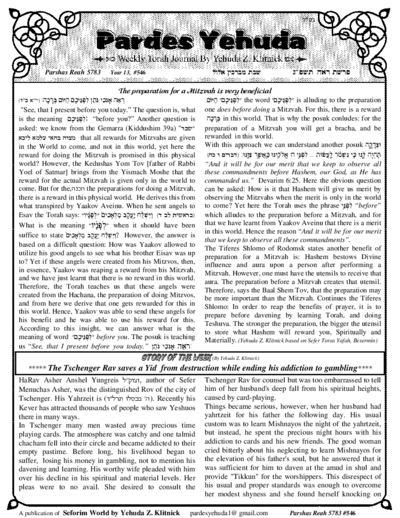
HaRav Asher Anshel Yungreis kwweumz, author of Sefer Menuchas Asher, was the distinguished Rov of the city of Tschenger. His Yahrzeit is (s"kr, ukxfc wv). Recently his Kever has attracted thousands of people who saw Yeshuos there in many ways.

In Tschenger many men wasted away precious time playing cards. The atmosphere was catchy and one talmid chacham fell into their circle and became addicted to their empty pastime. Before long, his livelihood began to suffer, losing his money in gambling, not to mention his davening and learning. His worthy wife pleaded with him over his decline in his spiritual and material levels. Her pleas were to no avail. She desired to consult the Tschenger Rav for counsel but was too embarrassed to tell him of her husband's deep fall from his spiritual heights, caused by card-playing.

Things became serious, however, when her husband had yahrtzeit for his father the following day. His usual custom was to learn Mishnayos the night of the yahrtzeit, but instead, he spent the precious night hours with his addiction to cards and his new friends. The good woman cried bitterly about his neglecting to learn Mishnayos for the elevation of his father's soul, but he answered that it was sufficient for him to daven at the amud in shul and provide "Tikkun" for the worshippers. This disrespect of his usual and proper standards was enough to overcome her modest shyness and she found herself knocking on Tschenger Rav's door early the next morning. She poured her heart out to the Rav, telling him how unbearable it was to live with a card player, one who used to toil in the Torah all the time. She told the Rav that the man would be coming to that shacharis since he had yahrtzeit, and she begged the Rav to use that chance to talk some sense into her husband and turn him from his degraded ways. Failing that, she wept; she would demand a divorce.

Rather than addressing her directly, the Rav started pacing back and forth between his quarters and the synagogue, this way and that, casting a pall of fear over the trembling woman. After a time, the Rav let out these mysterious words: "It's not working. It's not going. What do they want from me? Do I have to struggle against them all night long? Go home, my daughter. In the morning, I'll see a clear way to deal with them!" Although these words caused her uneasiness, she still felt calm knowing that the tzaddik was engaged in her case and went home with trust in Hashem. It was already in the morning and she went to wake her husband, to please go to shul to observe the yahrtzeit. However, having come home late from the card games, he shrugged her off.

"Let me sleep, the first minyan is impossible, but I'll make it to the second one. Wake me in a half hour." Meanwhile, the Rav was looking out for the man, and, seeing that he didn't appear, assumed that he would come for the second minyan, and informed his gabbay accordingly that he would also daven then. When the husband walked into Shul, he was overwhelmed by the Rav's wide-armed, embracing welcome. "I hear you have yahrtzeit today, so of course you'll take the amud and give a nice tikkun to the people." The man readily agreed, which prompted the Rav to announce, "This gentleman has yahrtzeit today, and there will be an amazing tikkun. All invited!" The regular worshippers knew that something was brewing when they saw the Rav's behavior. The Rav never altered his schedule, and his somewhat bizarre announcement was in line with his usual standard of conduct.

The man led the services as chazan, but when he reached chazoras hashatz (repetition of the Shmona Esrei prayer), he saw that the Rav had entered into an intense state of devotion and was now in a distant sphere, and it was evident that the Rav would take a long time to finish the Shemna Esrai. The problem was that he was extremely drowsy from having stayed up half the previous night, and he dozed off, even while standing fully upright. In his sleep, he had a dream, and he began to talk in his sleep and relate that he was now playing a card game! A complete game was recanted for all to hear. The whole Shul listened and was astonished to hear and see such a stance! Finally, he woke up and realized, to his horror, where he was and that the assembled townspeople were witnesses to his shame. The humiliation of publicly relating his pastime finally shattered his stubborn soul. He desperately threw himself at the Rav's feet, sobbing, "Rebbe, I want to do teshuva, I sincerely want to repent of my rotten ways. Help me, Rebbe!" Said the Rav with a smile, "Stand up, my son. Didn't I tell you that a major 'Tikkun' (the word 'Tikkun' has a dual meaning. One is bringing whisky, cake, and herring for the worshippers a kind of 'repair' for the departed soul. It also means to rectify one's soul) was in store for us today?"

The Rav had the gabbay appoint a different chazan to finish the davening and directed the husband to immerse himself in the mikva and then report to the Rav's private chamber adjoining the shul, with no one else present. He was to bring his deck of cards with him. When he arrived in the room with the Rav, the man was moved to the core, and shed bitter tears, repeating without end, "I don't want to play with those stupid things anymore!" His cries pierced the hearts of anyone overhearing them through the door. Next, the Rav told him sharply: "Take a look! These are the Chevra you have been wasting your precious time with." The man was puzzled. "Spread your cards out on the floor and tell me what you see." "I see strange figures dancing around in a circle. What's going on?" Said the Rav: "What you see, are agents from the Soton himself who entrapped you in their snare. Once you entered their circle, the Soton went all out to destroy your attachment to the Torah!” I have managed to banish them, contingent on your solemn oath never to have anything to do with gambling as long as you live."

The man accepted the solemn vow. After removing evil from the poor man, the Rav lost no time in summoning the man's wife, who joyfully welcomed her husband into the "real world," with peace and harmony restored between them. The man returned to his old ways and immersed himself in learning Torah for many hours. His Parnassa became solid, and he became wealthy. He also set up a Chevra Tehillim to benefit his soul, which the Rav required all of the townspeople to participate in, with the man himself leading the recitation with a sweet and holy voice. A powerful story of transformation and redemption to see how the Tschenger Rav was able to help this man break free from his addiction to gambling and return to a life of Torah and spiritual growth.

PDF Preview