Parshas Tzav Sacrificing Pleasure Part 3
Ben Chamesh L'Mikra | April 08, 2025
Print This Article
View Original PDF

Parshas Tzav Sacrificing Pleasure Part 3

Ben Chamesh L'Mikra | June 27, 2025

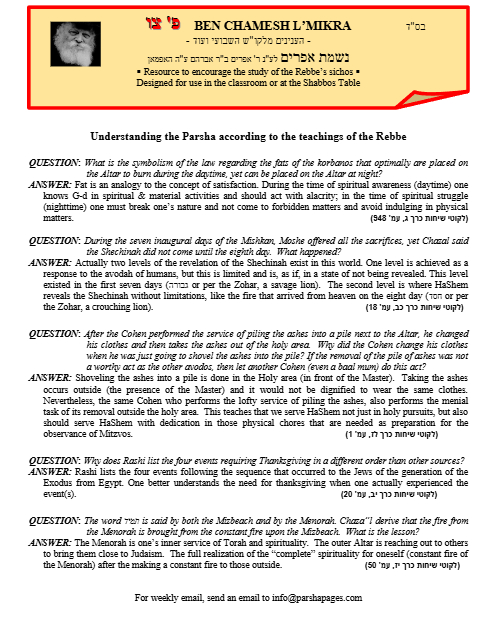
“And if any of the flesh of his peace offering is to be eaten on the third day, it shall not be accepted; it shall not count for the one who offers it; [rather,] it shall be rejected, and the person who eats of it shall bear his sin.” The Hebrew words that the Torah uses for the expression “is to be eaten,” are “ha’achol yei’achol,” employing a double expression of the root word meaning “eat.” The Talmud understands this double language in the following way:

Text 6

If [any of the flesh...] is it to be eaten [on the third day . . . it shall be an abhorred thing]: Scripture refers to two eatings—eating [of the sacrifice] by man and eating [of the sacrifice] by the altar. Talmud, Zevachim 13b

From the comparison of the eating of man and the consumption of the altar, it is understood that the laws of one apply to the other. Concerning the offerings eaten by the kohanim (priests), there is a commandment for them to eat the portion of certain offerings on the day that it was brought, and not to leave these over for the next day.

Text 7

And the flesh of his thanksgiving peace offering shall be eaten on the day it is offered up; he shall not leave any of it over until morning. Vayikra 7:15

The kohanim were instructed to eat the sacrifice on the day that it was offered and not leave it over any of it until the following morning. Through partaking of the sacrifice during the night, there are then two things that are accomplished: A) The positive commandment to eat from the sacrifice is fulfilled. B) Eating the sacrifice during the day on which it was brought prevents the prohibition of leaving it over until morning. The difference between these two ideas is as follows: Concerning the positive commandment to eat from the sacrifice, just like any other mitzvah, it must be fulfilled in a specific manner. The mitzvah of eating the korban has various parameters, in which case, if one is lacking in any of these, they are not fulfilling the mitzvah. However, regarding the second aspect of eating the sacrifice during the daytime, i.e., in order to prevent that there be anything that is leftover, it makes no difference in what manner the korban was eaten, as long as there is nothing that remained of it.

In a similar way to there being two aspects regarding the human consumption of a korban, so too, there are two elements concerning the altar’s consumption of the sacrifice: A) The service of burning the fats and limbs atop the altar. B) The aspect that burning these parts prevents that there be anything leftover from the sacrifice. Accordingly, it can be said that this is the reason why one should preferably burn these fats during the daytime and not at night.
“And if any of the flesh of his peace offering is to be eaten on the third day, it shall not be accepted; it shall not count for the one who offers it; [rather,] it shall be rejected, and the person who eats of it shall bear his sin.” The Hebrew words that the Torah uses for the expression “is to be eaten,” are “ha’achol yei’achol,” employing a double expression of the root word meaning “eat.” The Talmud understands this double language in the following way:

Text 6

If [any of the flesh...] is it to be eaten [on the third day . . . it shall be an abhorred thing]: Scripture refers to two eatings—eating [of the sacrifice] by man and eating [of the sacrifice] by the altar. Talmud, Zevachim 13b

From the comparison of the eating of man and the consumption of the altar, it is understood that the laws of one apply to the other. Concerning the offerings eaten by the kohanim (priests), there is a commandment for them to eat the portion of certain offerings on the day that it was brought, and not to leave these over for the next day.

Text 7

And the flesh of his thanksgiving peace offering shall be eaten on the day it is offered up; he shall not leave any of it over until morning. Vayikra 7:15

The kohanim were instructed to eat the sacrifice on the day that it was offered and not leave it over any of it until the following morning. Through partaking of the sacrifice during the night, there are then two things that are accomplished: A) The positive commandment to eat from the sacrifice is fulfilled. B) Eating the sacrifice during the day on which it was brought prevents the prohibition of leaving it over until morning. The difference between these two ideas is as follows: Concerning the positive commandment to eat from the sacrifice, just like any other mitzvah, it must be fulfilled in a specific manner. The mitzvah of eating the korban has various parameters, in which case, if one is lacking in any of these, they are not fulfilling the mitzvah. However, regarding the second aspect of eating the sacrifice during the daytime, i.e., in order to prevent that there be anything that is leftover, it makes no difference in what manner the korban was eaten, as long as there is nothing that remained of it.

In a similar way to there being two aspects regarding the human consumption of a korban, so too, there are two elements concerning the altar’s consumption of the sacrifice: A) The service of burning the fats and limbs atop the altar. B) The aspect that burning these parts prevents that there be anything leftover from the sacrifice. Accordingly, it can be said that this is the reason why one should preferably burn these fats during the daytime and not at night.

PDF Preview