Hashem’s Wisdom and Thoughts
Since Hashem’s “wisdom” and “thoughts” are in a completely different category than ours, we should not even be able to describe them with the same terms as our wisdom and thoughts. Why are they called “wisdom” and “thoughts”?
The only reason why we call them Hashem’s “wisdom” and “thoughts” is because they are the source of creating our wisdom and thoughts.
As it is written, “For with You (Hashem) is the source of life; from ‘Your Light,’ we will see light.” (Tehillim 36:10)
In the version of this maamar as it appears in Maamarei Admur Hazakein 5566 (vol. 2, p. 456) this is explained:
Everything in the created worlds has a source in the Ten Sefiros of Atzilus, which come into being through Hashem’s power of limiting Himself, as it were, known as Tzimtzum. This is what the verse means “For with You is the source of life,” meaning, in Your Sefiros is found the source of all living things. The verse continues to say that “from ‘Your light’ we shall see light,” from Hashem’s Light and revelation in the Sefiros of Atzilus, referred to as “Your Light,” there comes into being a lower level of light that is visible to the creations, “we shall see light.” I.e., the Light of Hashem that shines in the Sefiros is the source of the more limited type of revelation in the created worlds, which is known as “הארה דהארה-a lesser light reflected from a greater lighter.”
The meaning of “From ‘Your Light’” is Hashem’s Light as it is found in Atzilus, and when a limited expression of that Light comes down into this world, then “we can see” and understand, “a light” and revelation of wisdom and thoughts, for example, as it exists in the limitations of our world.
And the same with the Hashem’s Emotional Attribute of Chesed-Kindness; as it is written (Shemos 20:5, Devarim 5:9), “And He does kindness for thousands (of generations from the forefathers),”
This can also be read (non-literally) to mean “He creates tangible kindness through a process that involves thousands of levels.”
Meaning, that there are thousands of levels, which are caused by the multitude of stages of limitation and concealment on His Light, known as Tzimtzum, through which Hashem’s Kindness descends from its lofty state of being in Atzilus until it comes down to create kindness as it exists in our world.
As it is written (Tehillim 89:3), “In order for there to be a world, Kindness must be ‘built’”, showing that Kindness needs to “be built” and created in the tangible level of existence, by taking the abstract spiritual dimension of Kindness of Atzilus and bringing it down into tangible Kindness that creates a tangible world.
This flow of Life-force from Hashem that comes into the Keilim of Atzilus, such as Chochma-Wisdom and Chesed-Kindness so that through the condensing power of the Keilim this flow of Life can ultimately descend into our world, is derived from “Hashem’s Seven Names that may not be erased.”
For example, the Name Havaya with the vowels of Patach, spelled like this: 'יַ -הַ -וַ -הַ ' refers to the Light which shines into Chochmah. And the name of “אֵל” (pronounced “Keil”), shows on the Light and Life-force which shines into Chesed-Kindness, as it is written (Tehillim 52:3), “The Chesed-Kindness of Hashem as He is referred to as ‘Keil’ shines all day.”
These sources of Light and Life for Hashem’s Attributes are only the idea of a “name,” i.e. far from the essence itself.
The fact that Hashem “lowers Himself” to deal with us in the Attributes of the Sefiros of Atizlus is a descent from His Essential Self, as explained above. This is like a ‘name’ that is only needed in the context of relating to others.
But still, even though it is a “descent” from His Essence, after this Light (referred as His 7 Holy Names) comes into expression in His attributes of Chesed and Chochmah, this Light of Hashem becomes fully invested and united with those attributes, so that you can call them “Hashem’s Wisdom” and “Hashem’s Kindness.”
And this is the idea of what it says (Tikunei Zohar 3a) “He and His Light are one; He and the Keilim of His Sefiros are one.” Which is also like the idea (Rambam, Yesodei HaTorah 2:10) “He is the power of knowledge, He is the knower, and He is what is being known, all at the same time.”
In other words, Hashem unites with His Wisdom, as mentioned in the Rambam, and with all His Sefiros, as mentioned in the Zohar, in complete unity. This means that the Sefiros of Atzilus, Hashem’s Wisdom and other attributes, are not merely “messengers” or “tools” that Hashem uses to interact with us. Hashem limits Himself, as it were, to relate to us in a way of wisdom and kindness etc. Therefore, in Atzilus it is “Hashem’s Wisdom” and “Hashem’s Kindness” so that meeting Hashem through these attributes is equivalent to meeting Hashem Himself, since He puts Himself into these attributes.
As the verse states, “Yours Hashem, are greatness, strength etc.” referring to the Hashem’s Attributes in Atzilus. This means that they unite and they literally become “Yours — Hashem.”
Now, this process of bringing the inner dimension of His Infinite Light and Life force to come into His attributes, such as Kindness and Wisdom, which, by themselves, are not in the same category of His Infinite Light at all, since “You are Wise, but with wisdom that could be known by the creations,” and “He is not limited to any of these Attributes at all,” – this process of making that connection is dependent on the “Awakening from below,” on the service of the Jewish people, through the actions of the mitzvos.
As explained above, there are two “dimensions” of the Light that Hashem uses to express Himself to us in the Sefiros/Attributes. The “outer dimension” of that Light is expressed all the time in the Sefiros, in terms of His “regular” interactions with creations. But when a Jew does a mitzvah, this brings the “inner dimension” of that Light into the Sefiros, so that Hashem can interact with the Jewish people on an infinitely deeper level than He interacts with the creations in general.
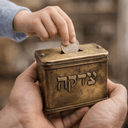
Meaning, that through a mitzvah which is associated with Chochmah-Wisdom, i.e., Torah study, he draws down the inner dimension of His Infinite Light into Chochmah of Atzilus, and through a mitzvah associated with Chesed-Kindness, e.g. giving Tzedaka, he draws the inner dimension of His Infinite Light into Chesed of Atzilus.
And this is the idea of drawing down the Inner Dimension of Hashem’s “Names” and causing them to be invested into Chochmah and Chesed — for example, drawing down the Inner aspect of the Light represented by the Name Havaya spelled with a “Patach” into the Kli of Chochmah, etc.
In other words, the “Names” represent the Light of Hashem that He uses to invest Himself into the Sefiros. When a Jew does a mitzvah, they cause the hidden, inner dimension of that “Name,” that Light, to come down into the Sefiros, so Hashem can relate to us on a deeper level. Each mitzvah reveals the inner dimension of a different “Name” of Hashem, a different Light of Hashem, connected to a particular Sefirah.
And this is why the mitzvos are referred to as “The limbs of the King”:
For just as the life of the soul is enclothed in the limbs of the body, by way of example, to the point that this life becomes united with the limbs; similarly, the Infinite Light of Hashem, meaning, the expression of this Light as found in Hashem’s “Names” — shines into and becomes invested into the Keilim of the Sefiros, such as the levels of the Sefiros of Chochmah and Chesed; and this process is accomplished through the actions of mitzvos; and this Light of Hashem (drawn down through our mitzvos) becomes so fully invested into the Sefiros until it, the Kli of each Sefira, becomes truly united with the Infinite Light of Hashem that is drawn down into it.