The Proper Outlook on Marriage
למודי משה | January 05, 2026
Print This Article
View Original PDF

The Proper Outlook on Marriage

למודי משה | January 09, 2026

In Parshas Chayei Sorah we learn about how after Avraham eulogizes Sorah and mourns her loss, he proceeds to obtain a burial plot for her. The Mishnah (Kiddushin 2a) teaches that one of the three methods by which a woman can be betrothed is giving her money. The Gemara derives this from the shared use of the word קח – acquire – in the Torah’s discussion of marriage and in Avraham’s purchase of the burial plot.

Just as the phrase קח ממני – take the money from me – that Avraham said to Ephron refers to acquiring an item through the transfer of money, so too the mitzvah of marriage, which is described as (Devorim 24:1) כי יקח איש אשה – when a man takes a woman – can also take effect by giving money to the woman. Why does the Torah specifically use the narrative of Avraham’s efforts to acquire a burial plot for Sorah to teach us a law governing marriage, and what lesson is it intended to teach us?

Rabbi Chaim Zvi Senter beautifully suggests that this was done intentionally in order to teach us the proper outlook on marriage, and on relationships in general. Even though Sorah was no longer alive and was incapable of ever giving Avraham any additional benefits or pleasure, he was still willing to spend an exorbitant amount of money in order to secure an appropriate final resting place for his beloved wife. Avraham’s willingness to do so demonstrates that his relationship with Sorah was not motivated by the pursuit of his own pleasure and happiness, but rather on how he could give to his wife and help her.

In deriving one of the laws defining the concept of a marriage from this episode, the Torah is teaching us the proper outlook on marriage, namely that the very essence of the relationship is intended to be one that is focused on giving to and sharing with one’s spouse, rather than a selfish focus on fulfilling one’s own desires. Entering into marriage or any other relationship with this Torah perspective is a proven recipe for improving our middos and enriching our bonds with others.

The Bobover Rebbe points out that when Ephron sold the land containing Me’aras Hamachpela to Avraham, he was convinced he was making a killing. In exchange for a rocky field, he was receiving top dollar and was certain that he was shrewdly taking advantage of the buyer’s naivete. At the same time, Avraham recognized that this was no ordinary field. He knew it contained the cave where Adam and Chava were buried and possessed tremendous kedusha. Even though Avraham paid 400 silver shekels for the land, he understood that he was the one who was getting the deal of a lifetime.

Rav Halberstam explains that this transaction, in which each party staunchly believed that he was coming out ahead, is the ideal paradigm for marriage. The Torah specifically connects the laws of betrothal to Avraham’s purchase of Ephron’s field to hint to us that as a chosson and kallah prepare to spend the rest of their lives together, each of them should be so focused on the positive qualities of the other that he is certain that he is getting the better end of the deal. (R’ Ozer Alport)
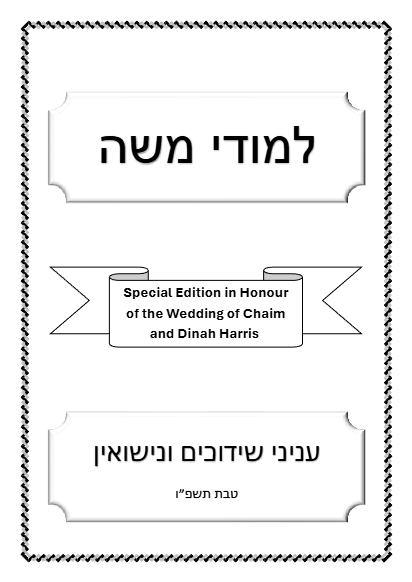

In Parshas Chayei Sorah we learn about how after Avraham eulogizes Sorah and mourns her loss, he proceeds to obtain a burial plot for her. The Mishnah (Kiddushin 2a) teaches that one of the three methods by which a woman can be betrothed is giving her money. The Gemara derives this from the shared use of the word קח – acquire – in the Torah’s discussion of marriage and in Avraham’s purchase of the burial plot.

Just as the phrase קח ממני – take the money from me – that Avraham said to Ephron refers to acquiring an item through the transfer of money, so too the mitzvah of marriage, which is described as (Devorim 24:1) כי יקח איש אשה – when a man takes a woman – can also take effect by giving money to the woman. Why does the Torah specifically use the narrative of Avraham’s efforts to acquire a burial plot for Sorah to teach us a law governing marriage, and what lesson is it intended to teach us?

Rabbi Chaim Zvi Senter beautifully suggests that this was done intentionally in order to teach us the proper outlook on marriage, and on relationships in general. Even though Sorah was no longer alive and was incapable of ever giving Avraham any additional benefits or pleasure, he was still willing to spend an exorbitant amount of money in order to secure an appropriate final resting place for his beloved wife. Avraham’s willingness to do so demonstrates that his relationship with Sorah was not motivated by the pursuit of his own pleasure and happiness, but rather on how he could give to his wife and help her.

In deriving one of the laws defining the concept of a marriage from this episode, the Torah is teaching us the proper outlook on marriage, namely that the very essence of the relationship is intended to be one that is focused on giving to and sharing with one’s spouse, rather than a selfish focus on fulfilling one’s own desires. Entering into marriage or any other relationship with this Torah perspective is a proven recipe for improving our middos and enriching our bonds with others.

The Bobover Rebbe points out that when Ephron sold the land containing Me’aras Hamachpela to Avraham, he was convinced he was making a killing. In exchange for a rocky field, he was receiving top dollar and was certain that he was shrewdly taking advantage of the buyer’s naivete. At the same time, Avraham recognized that this was no ordinary field. He knew it contained the cave where Adam and Chava were buried and possessed tremendous kedusha. Even though Avraham paid 400 silver shekels for the land, he understood that he was the one who was getting the deal of a lifetime.

Rav Halberstam explains that this transaction, in which each party staunchly believed that he was coming out ahead, is the ideal paradigm for marriage. The Torah specifically connects the laws of betrothal to Avraham’s purchase of Ephron’s field to hint to us that as a chosson and kallah prepare to spend the rest of their lives together, each of them should be so focused on the positive qualities of the other that he is certain that he is getting the better end of the deal. (R’ Ozer Alport)

PDF Preview