The Haftarah for Shabbat Chanukah
Rabbi Gershon Winkler
The navi Zecharya spread the word of Hashem to the returnees from the Babylonian exile at the beginning of the Second Commonwealth. He, together with his contemporary Chaggai, shared words of encouragement to the newly returned exiles who faced the challenge of resuscitating the Jewish community that had been gone for fifty years. Both prophets encouraged these “chalutzim” to rebuild the Beit Hamikdash and return to G-d, an important message to those who made the long trek back to Jerusalem only to find their Temple in ruins and their beloved city decimated. It was certainly understandable, that such a community felt incapable of conquering the challenges that now faced them and needed the reassurance and inspiration that the nevi’im would give them.
In today’s haftarah (one also read for Parashat B’ha’alot’cha) Zecharya envisages a glorious future for the nation when G-d would return to dwell in the Holy City once more. Referring to the returning exiles as an “ud mutzal me’esh”, a firebrand that had barely escaped the destructive flames. Hashem’s angel, in the prophet’s vision, admonishes Satan for his attempts to prosecute their holy Kohen Gadol, Yehoshua, and, by extension, the people themselves. The navi goes on to describe his vision of G-d removing the soiled garments of the High Priest and dressing him in clean attire, symbolic of the purification of the entire nation and the removal of any sin.
Zecharya also addresses the political leader of the returnees, Zerubavel, a descendant of the Judean royal family, by describing the vision of the Menorah and sharing Hashem’s explanation of its symbolism: “Lo v’chayil v’lo vcho’ach-ki im b’ruchi”, Israel’s success in rebuilding their lives, their city and their Temple does not depend upon physical strength or material wealth but rather on G-d’s spirit. The message given to the small and impoverished Jewish community would spur them to overcome the adversities and succeed in their undertakings.
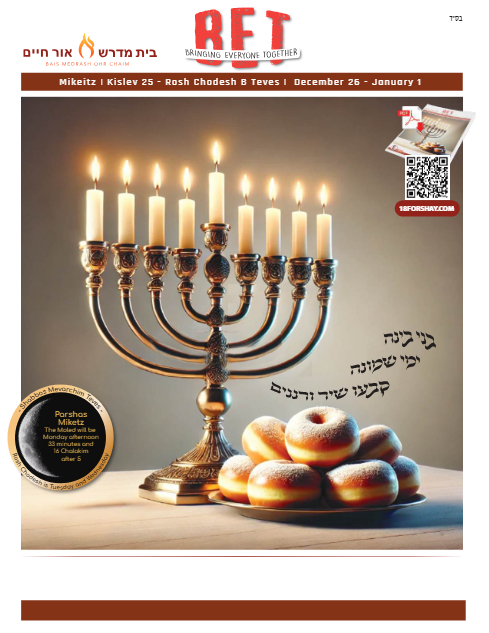
The connection of this haftarah to the holiday of Chanukah would appear to be quite obvious. Certainly, the vision of the seven branched Menorah connects powerfully to the very symbol of the holiday, the nine-branched menorah. But far more significant is the message left for that generation: that overcoming the obstacles and meeting the challenges depend upon the strength of spirit, something that is also a basic theme of Chanukah and a lesson from the struggle of the Maccabees as well.
We look back upon the struggles that our State has faced over the past 76+ years and we should draw inspiration from the message of our haftarah and of Chanukah. As we have seen so often, the prophets of the past still speak to us today. We only have to listen.